The state’s first e-bike rebate program offers some valuable lessons for future rollouts.


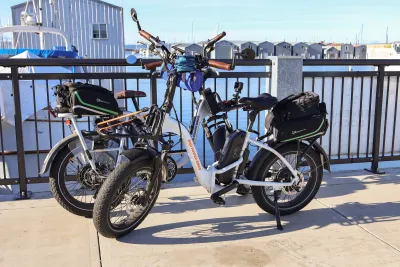
Washington’s first attempt at an e-bike voucher program revealed some key lessons for future incentives, writes Ryan Packer in The Urbanist.
The state offered two levels of rebates for residents of various income levels: a $1,200 rebate for lower-income households and a $300 rebate for those making more than 80 percent of county area median income.
Of applicants who got a $1,200 rebate, 84 percent followed through on an e-bike purchase, while just 24 percent of people who received $300 rebates redeemed theirs. “Under a legislative mandate, 40% of the total rebate funding was intended for the pool of $300 rebates, but in the end less than 13% of the total dollars handed out went to those applicants, after a sizable majority let theirs expire without buying a bike.”
Even though more than twice as many $300 rebates were offered, only 1,087 of them were redeemed, versus 1,880 of the larger rebates. “Clearly, the larger rebates provided winners with a much bigger incentive to see their purchases through,” Packer notes.
These stats reveal that a $300 rebate may not be enough to motivate people to buy an e-bike, particularly as the cost of bikes goes up due to tariffs.
The state legislature has earmarked $7 million for a second round of the program in 2026.
FULL STORY: Washington’s First Try at E-bike Rebates Leaves Thousands of Vouchers Unredeemed

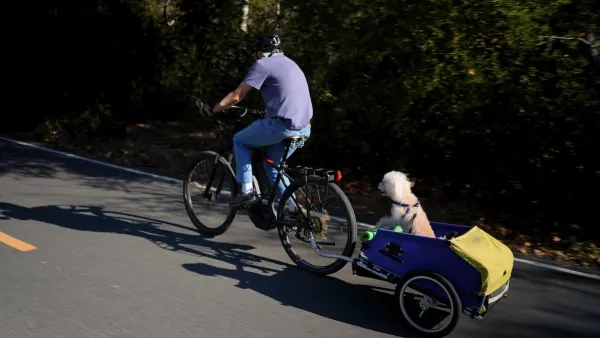
California E-Bike Rebate Demand Far Exceeds Supply
The queue to apply for California’s new e-bike incentive program, which only offered 1,500 vouchers, reached 100,000 people.
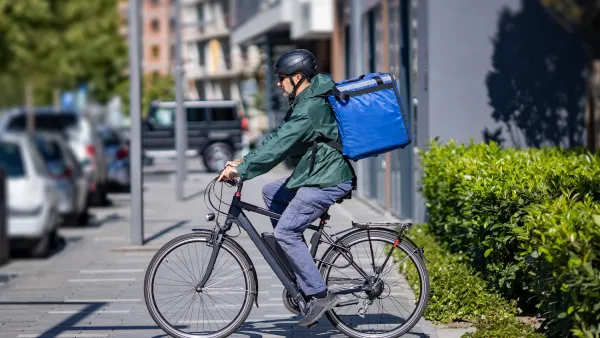
California Cuts Funding for E-bike Rebates
The state cancelled an upcoming round of applications for the wildly popular e-bike incentive program that provided up to $2,000 toward the cost of an electric bike.
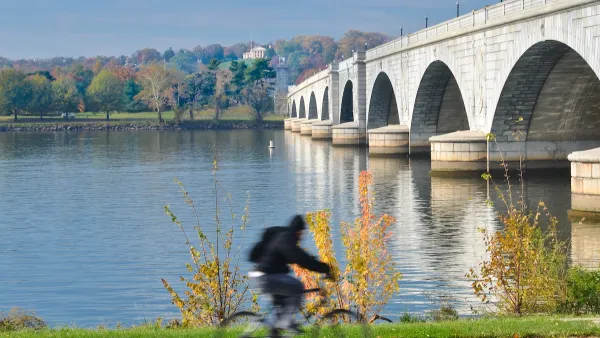
DC Launches New Round of E-Bike Rebates
District residents can apply for a subsidy of up to $1,500 to purchase e-bikes.

Planetizen Federal Action Tracker
A weekly monitor of how Trump’s orders and actions are impacting planners and planning in America.

The state-sanctioned urbicide of Austin
People don’t kill cities. Freeways do.

US to reduce Colorado River water deliveries to Mexico
A new Colorado Treaty amendment reduces Mexico’s Colorado River water allocation by 250,000 acre feet.

Baltimore to break ground on $50 million Transit Priority Project
The project will bring faster bus trips, safer streets and better bike connections to Baltimore.

Airbnb launches $250 million 'last-dollar financing' housing accelerator, makes first investment in Austin
The company will put $6.4 million towards affordable housing development in Texas’ capital.

Guerilla urbanists are building DIY bus stop benches in Chicago
A before-and-after of one of the bus stops with a new bench. The new benches are not officially sanctioned or permitted, but the residents who placed them hope they will be the start of a network of DIY benches across the city.

FREE Course: Walkable City 1: Why Walkability?
After describing his path towards focusing on walkability as the essence of good planning, Jeff Speck marches through his five principal reasons for making more walkable places.
Reinventing Malls: Planning Alchemy—Turning Gray Fields Into Gold
The course focuses on the opportunities and imperatives that shape reinvention of mall sites.

Eagle County Government
Harvard University Graduate School of Design
Nashville Planning Department
The Architects Foundation
University of Cincinnati Online
The Pocatello Development Authority
The Urban Renewal Agency of the City of Pocatello
Journal of the American Planning Association