The shift to work-from-home policies drove more than 60 percent of the dramatic recent growth in U.S. house prices, according to a Fed study.


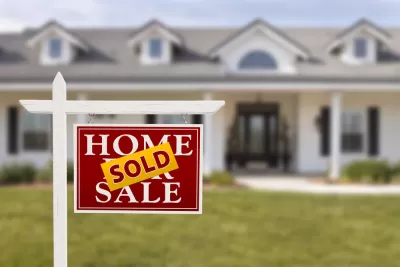
Research from the Federal Bank of San Francisco reveals that remote work caused over 60 percent of the sharp rise in home prices during the pandemic, reports Catarina Saraiva for Bloomberg. Average house prices increased by 24 percent between November 2019 and November 2021. Meanwhile, remote work remains popular, with 30 percent of workers still working from home, a rate three times larger than before the pandemic.
“The authors, who adjusted housing data to account for the migration from expensive cities to more affordable areas that occurred during the pandemic, found that each 1 percentage point increase in remote work results in about a 0.9 percentage point increase in house prices.” According to the Fed’s report, “This suggests that the fundamentals of housing demand have changed, such that the persistence of remote work is likely to affect the future path of real estate prices and inflation.”
While rates of remote work vary vastly between different cities, home prices remain high around the country as workers continue to spread out and seek larger homes to accommodate home offices and new household arrangements.
Read the full story: Remote Work Drove Over 60% of House-Price Surge, Fed Study Finds

Home Prices, Demand on Downward Trajectory
The once-overheated housing market continues to cool as rising interest rates reduce demand.
Manhattan Home Sales Slow, Rent Growth Continues
The Manhattan housing market is seeing lower sale prices and a slowdown in demand, but rents in the city are still going up.
Where Housing Costs Are Falling Fastest
Although median home prices remain close to record highs in many cities, some of the country’s priciest metro areas are seeing home prices plummet.

Planetizen Federal Action Tracker
A weekly monitor of how Trump’s orders and actions are impacting planners and planning in America.

California plans to bury El Niño’s downpour
If the state plays its cards right, it may be able to store a billion acre-feet of El Niño’s water in aquifers.

Chicago breaks ground on $3 billion megadevelopment
The new neighborhood, titled Foundry Park, will one day host 3,700 residences.

Satanic Place Names
From streams and lakes to valleys and canyons, I mapped more than 1,000 places named after the Devil.

California High-Speed Rail Authority CEO resigns after $600,000 scandal
Under Ian Choudri, the authority used taxpayer dollars to fund first class flights and trips to nightclubs.

Want to study the Missouri River? Soon, you may need unanimous approval from 10 states
Legislation would require 10 governors’ permission to study or build projects moving water outside the basin.

FREE Course: Walkable City 1: Why Walkability?
After describing his path towards focusing on walkability as the essence of good planning, Jeff Speck marches through his five principal reasons for making more walkable places.
Reinventing Malls: Planning Alchemy—Turning Gray Fields Into Gold
The course focuses on the opportunities and imperatives that shape reinvention of mall sites.

City of Rosemead
Rutgers University, Edward J. Bloustein School of Planning and Public Policy
One Hundred Miles
Hunter College, City University of New York (CUNY)
The Architects Foundation
University of Cincinnati Online
City of Cambridge
Montrose County
The Pocatello Development Authority