Originally proposed in 2019, the Buffalo Park East Master Plan, which would extend Buffalo Bayou Park to the East End and Fifth Ward neighborhoods, is suddenly in high gear.


The Kinder Foundation this week announced a $100 million gift to launch a plan to expand Buffalo Bayou Park in Houston to the east to the East End and Fifth Ward neighborhoods.
“This visionary plan integrates new bayou parks, trails, housing, cultural destinations, and infrastructure improvements into the Greater East End and Fifth Ward neighborhoods,” according to a September 26 press release from the Buffalo Bayou Partnership. The Kinder Foundation gift represents a down payment on the $310 million total investment planned in the first ten years of the Buffalo Bayou East Master Plan, first announced in 2019. The Buffalo Bayou East Master Plan envisions parks and destinations that reflect the cultural and industrial legacies of Buffalo Bayou East for a four-mile stretch of the bayou from US 59 to the Port of Houston Turning Basin.
The announcement comes with an acknowledgement of the housing pressures in the two neighborhoods—the Fifth Ward in particular has been identified as one of the hot beds of gentrification in Houston. To address community needs for affordable housing, the proposal includes 13 acres of mixed-income development, funded with $24 million in 9% federal tax credits and Housing and Urban Development Community Development Block Grant financing.
Both the City Council and Harris County Commissioners Court are expected to sign off on final documents this week, according to a paywalled article published by the Houston Chronicle. Additional coverage of the gift and the Buffalo Bayou East Master Plan is available from Chron and Houston Public Media. More details on Buffalo Park East are also available on the Kinder Foundation website.
Read the full story: Buffalo Bayou Partnership Announces Kinder Foundation’s $100M Catalyst Gift to Accelerate Buffalo Bayou East Master Plan

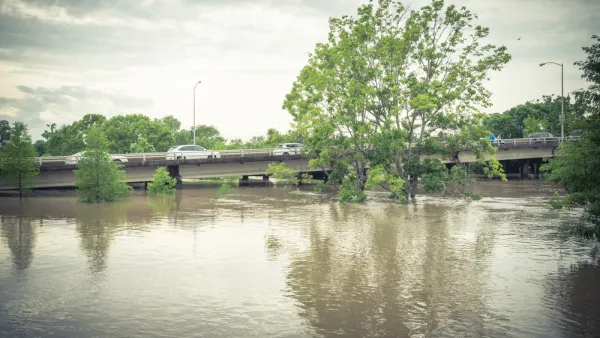
Criticism for Army Corps' Houston Flood Protection Plans
The U.S. Army Corps of Engineers has revised a plan to protect the Houston region from flooding by tossing out a proposed tunnel and opting instead to dig Buffalo Bayou wider and deeper.
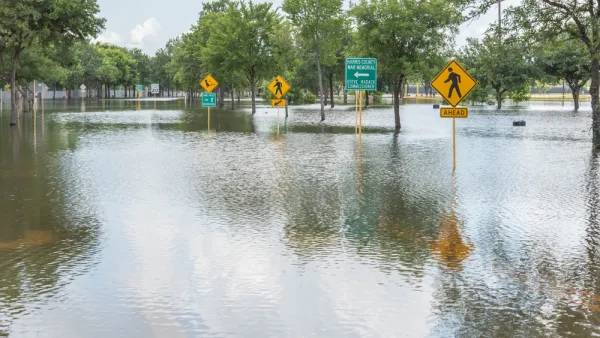
Houston's Latest Stormwater Project: 'Massive, Underground Tunnels'
The most recent post-Harvey proposal would mean the city could endure enormous rain events, but so far it's not clear who would pay for it.
Houston's Historic Buffalo Bayou Park Cistern Opens to the Public
Houston's Buffalo Bayou Park Cistern, commissioned in 1926 and decommissioned in 2007, is now the city's hottest attraction.

Planetizen Federal Action Tracker
A weekly monitor of how Trump’s orders and actions are impacting planners and planning in America.

The state-sanctioned urbicide of Austin
People don’t kill cities. Freeways do.
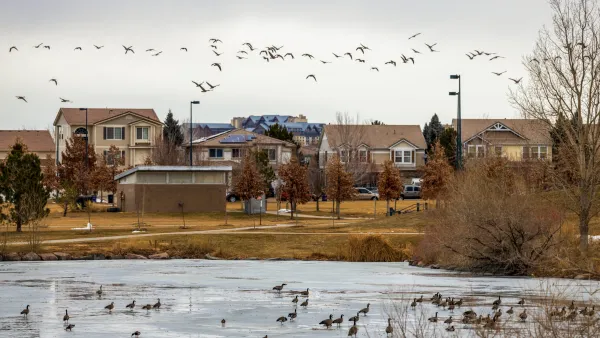
Colorado’s Largest Data Center Could Rise Next to Homes — Without a Public Hearing
The proposed campus would consume 11 times the power of Denver International Airport; as it has across the country, opposition mounts.

Nation's most wind-powered state turns to coal as data centers increase energy demand
For the first time in decades, Iowa has increased its generation of coal power.

NYC cools commuters with city's first rain garden above a bus stop
New York City officials say the plants in the rain garden can absorb 16 gallons of rainwater during heavy storms.

Brightline West’s future may rely on $6 billion federal loan
The company has until Nov. 2 to make a $400 million equity investment into its proposed high-speed rail line.

FREE Course: Walkable City 1: Why Walkability?
After describing his path towards focusing on walkability as the essence of good planning, Jeff Speck marches through his five principal reasons for making more walkable places.
Reinventing Malls: Planning Alchemy—Turning Gray Fields Into Gold
The course focuses on the opportunities and imperatives that shape reinvention of mall sites.

Greater Baltimore Committee
Eagle County Government
Harvard University Graduate School of Design
The Architects Foundation
University of Cincinnati Online
The Pocatello Development Authority
The Urban Renewal Agency of the City of Pocatello
Journal of the American Planning Association