Funding and zoning changes are likely necessary but insufficient on their own, to borrow a phrase from Nolan Gray. Pittsburgh hopes to deploy both to spur adaptive reuse in the city.


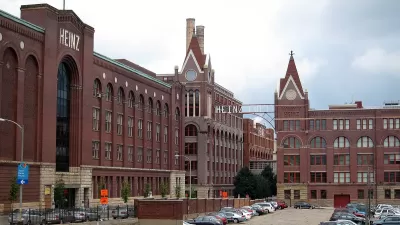
Pittsburgh is using $2.1 million in funding from the American Rescue Plan Act to fund a portion of a pilot program to make it easier to convert vacant or obsolete commercial buildings into housing. The reinvigorated focus on adaptive reuse in the Steel City is also made possible by a slate of zoning changes under consideration by the city in September. Adaptive reuse is a hot topic in 2022, as cities look to shift downtown land uses as significant numbers of downtown workers continue to work from home in the third year of the Covid-19 pandemic.
According to an article by Julia Felton, the zoning changes would remove the requirement for planning commission review for new residential development in the Golden Triangle area of the city. “The legislation also looks to change a requirement that all exterior renovations with a price tag of $50,000 or more earn Planning Commission approval. That piece of the zoning code dates back to at least 1983,” reports Felton. The new price threshold would be $250,000.
Felton also reported in July on the city’s planned using of American Rescue Plan Act funding for its adaptive reuse program, which was part of the OnePGH program launched by former mayor Bill Peduto.
Read the full story: Proposed zoning changes would make it easier to convert unused Downtown office space into housing

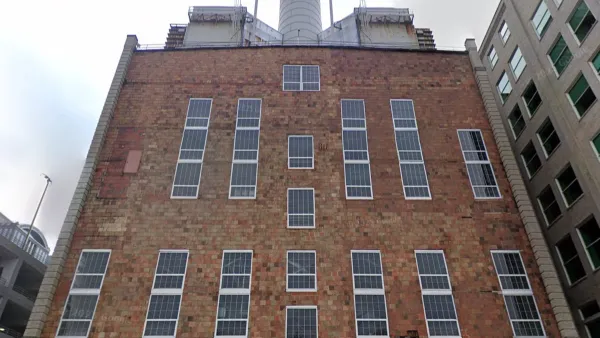
Defunct Pittsburgh Power Plant to Become Residential Tower
A decommissioned steam heat plant will be redeveloped into almost 100 affordable housing units.

Texas Legislature’s Surprising Pro-Housing Swing
Smaller homes on smaller lots, office to apartment conversions, and 40% less say for NIMBYs, vote state lawmakers.

Downtown Pittsburgh Set to Gain 1,300 New Housing Units
Pittsburgh’s office buildings, many of which date back to the early 20th century, are prime candidates for conversion to housing.

Planetizen Federal Action Tracker
A weekly monitor of how Trump’s orders and actions are impacting planners and planning in America.

California plans to bury El Niño’s downpour
If the state plays its cards right, it may be able to store a billion acre-feet of El Niño’s water in aquifers.

Chicago breaks ground on $3 billion megadevelopment
The new neighborhood, titled Foundry Park, will one day host 3,700 residences.

Satanic Place Names
From streams and lakes to valleys and canyons, I mapped more than 1,000 places named after the Devil.

California High-Speed Rail Authority CEO resigns after $600,000 scandal
Under Ian Choudri, the authority used taxpayer dollars to fund first class flights and trips to nightclubs.

Want to study the Missouri River? Soon, you may need unanimous approval from 10 states
Legislation would require 10 governors’ permission to study or build projects moving water outside the basin.

FREE Course: Walkable City 1: Why Walkability?
After describing his path towards focusing on walkability as the essence of good planning, Jeff Speck marches through his five principal reasons for making more walkable places.
Reinventing Malls: Planning Alchemy—Turning Gray Fields Into Gold
The course focuses on the opportunities and imperatives that shape reinvention of mall sites.


City of Rosemead
Rutgers University, Edward J. Bloustein School of Planning and Public Policy
One Hundred Miles
Hunter College, City University of New York (CUNY)
The Architects Foundation
University of Cincinnati Online
City of Cambridge
Montrose County
The Pocatello Development Authority