The ForwardDallas initiative is attempting for the Holy Grail of planning: development certainty.



The Dallas Development Code was written in 1965 and last updated in 1987, but the city’s Planning and Urban Design Department has been hard at work on an update—including “drafting a comprehensive future land use map, and digitizing boxes of paper records,” according to an article by April Towery for CandysDirt.com.
The future land use map overhaul, called ForwardDallas, launched in 2021 and is now under the leadership of Dallas planning director Julia Ryan, who has been at the helm of the department for about a year. The article devotes significant ink to allowing Ryan to discuss the challenges facing planning in Dallas, as well as the solutions enabled by ForwardDallas.
One of the key goals of ForwardDallas, according to the article, is reducing the city’s backlog of project approvals. Ryan says some of the city’s backlogs can be addressed with improved zoning—such as the city’s large amount of planning developments. “Having more than 1,200 [planned developments] is absurd. The more we can simplify zoning and increase what can be built by right, the better we can prevent [a permitting backlog] from happening again,” says Ryan, as quoted in the article.
FULL STORY: Dallas, We Have a Plan: Zoning Could Get Easier And Faster, Says Director of Planning and Urban Design

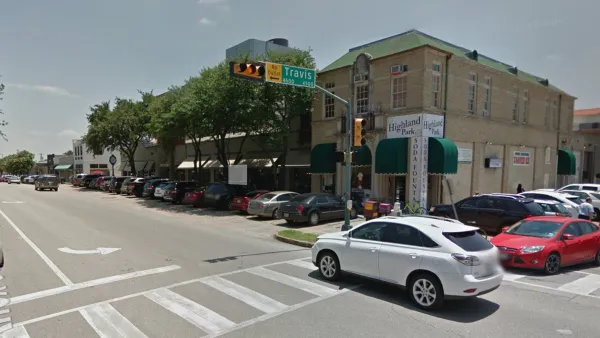
Dallas Exploring Parking Requirement Reform
Dallas relies on a formula introduced in 1965 to determine parking requirements for new developments, but city planners are studying how to update the city's development code for the future.

Dallas Launches New Comprehensive Plan Process—15 Years After ForwardDallas
The city of Dallas adopted the ForwardDallas plan in 2006, setting a grand ambition for a more walkable, transit-friendly city. Some of the work toward that vision will have to continue with the next comprehensive plan.
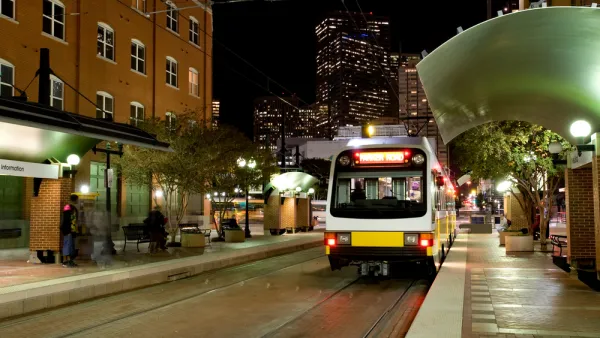
Dallas' First-Ever Strategic Mobility Plan Ties Land Use to New Transportation Ideas
The Connect Dallas Strategic Mobility Plan is open for public comment. Expect more big plans from Dallas soon—the ForwardDallas! comprehensive plan update will also kick off this year.

The state-sanctioned urbicide of Austin
People don’t kill cities. Freeways do.

US to reduce Colorado River water deliveries to Mexico
A new Colorado Treaty amendment reduces Mexico’s Colorado River water allocation by 250,000 acre feet.

New Jersey’s second-largest city bans standalone data centers
Jersey City will continue to allow co-location facilities, such as those meant for research institutions that store their own data.

Amtrak not solely to blame for New Jersey commuter rail's unreliability, report finds
A new study from the Garden State Initiative found that NJ Transit’s budget grew 20% across a 4 year period, but reliability declined significantly over the same period.

EPA erases limits on planet-warming pollution from power plants
Under Monday’s plan, power plants would still have some limits on how much mercury, arsenic and other contaminants they can emit.

Phoenix announces new on-demand transit service, more frequent RAPID buses
Both new services will launch in October, and are part of Phoenix's Project Effective Access Solutions for Easing Congestion.

FREE Course: Walkable City 1: Why Walkability?
After describing his path towards focusing on walkability as the essence of good planning, Jeff Speck marches through his five principal reasons for making more walkable places.
Reinventing Malls: Planning Alchemy—Turning Gray Fields Into Gold
The course focuses on the opportunities and imperatives that shape reinvention of mall sites.

Eagle County Government
Harvard University Graduate School of Design
Nashville Planning Department
The Architects Foundation
University of Cincinnati Online
The Pocatello Development Authority
The Urban Renewal Agency of the City of Pocatello
Journal of the American Planning Association