Ridership on shared bike and scooter fleets showed numbers higher than before the pandemic in the second part of 2021, according to a new report.



Ridership on shared mobility devices like scooters and bikes is starting to reach pre-pandemic levels, according to the North American Bikeshare & Scootershare Association’s 2021 Shared Micromobility State of the Industry Report. As Charles Pekow reports in Smart Cities Dive, “North Americans took an estimated 128 million trips on shared mobility vehicles in 2021 — 53% more than in 2020, but 18% lower than in 2019, the report stated.”
The pandemic likely introduced more people to micromobility, says NABSA Exeutive Director Samantha Herr. “Many more people tried it during the pandemic … As horrible as the pandemic has been, it really did highlight the importance of shared micromobility.”
The report also includes statistics about device fleets, highlighting the growth of e-scooter deployment, which increased by 57 percent during 2021. More providers also implemented reduced fare programs, but only 21 percent have started offering adaptive devices for people with mobility challenges. The report also notes that “Men and those between the ages of 25 and 44 were overrepresented as a share of the population that use shared micromobility.”
Read the full story: E-bike, e-scooter use recovering after pandemic decline, NABSA shared micromobility report finds
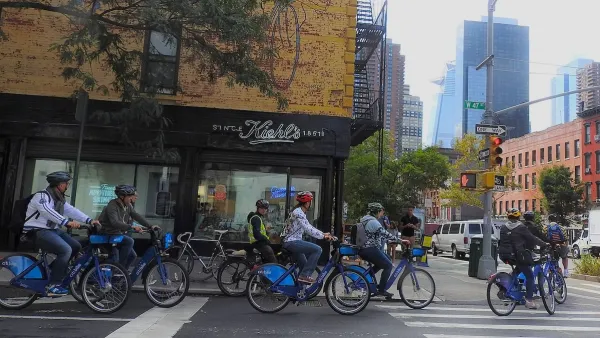
Report: Bike and Scooter Shares are up Again, This Time by 31%. Has the Future Arrived?
The new micromobility report is out, and despite rising costs and tight regulations, it is bigger than ever, and still growing. After nearly a decade of adjustment, cities’ mobility systems may be changed for good.
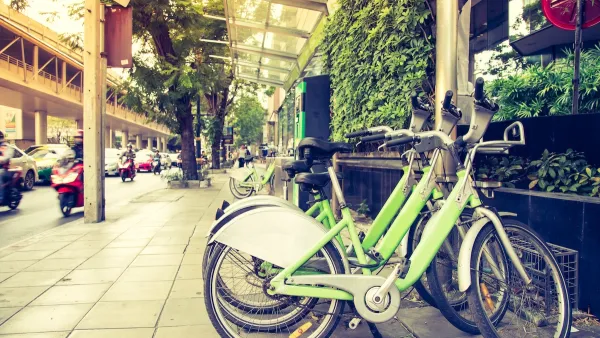
Making Shared Micromobility More Inclusive
Cities and shared mobility system operators can do more to include people with disabilities in planning and operations, per a new report.
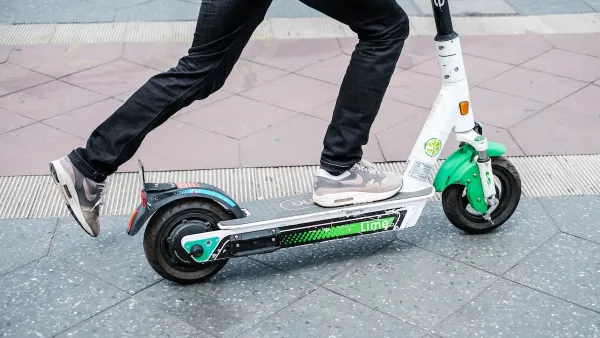
NYC E-Scooter Program Threatened Despite High Ridership
Rental scooters in Queens and the Bronx provided close to two million trips in 2024, with many trips starting or ending near transit. Some city officials want to remove them.

Planetizen Federal Action Tracker
A weekly monitor of how Trump’s orders and actions are impacting planners and planning in America.

Washington state to charge fee to drivers with fuel-efficient cars
Revenue from the fee will go towards supporting the state’s highways.

Illinois considers spending $1 billion in taxpayer money on data center
A quantum computing campus and data center are currently under construction in Chicago.

Did data centers change how voters cast their ballots?
Texas, Ohio, and Georgia all flipped party control. But in rural counties, the effect of local data centers was mixed.

Amtrak invests in eight new Airo trainsets
The new trainsets will begin serving passengers in 2031.

HUD to end aid for mixed-immigration-status households
The new rule is projected to impact 80,000 people, nearly half of whom are children.

FREE Course: Walkable City 1: Why Walkability?
After describing his path towards focusing on walkability as the essence of good planning, Jeff Speck marches through his five principal reasons for making more walkable places.
Reinventing Malls: Planning Alchemy—Turning Gray Fields Into Gold
The course focuses on the opportunities and imperatives that shape reinvention of mall sites.

City of Charlotte
City of Rosemead
Rutgers University, Edward J. Bloustein School of Planning and Public Policy
University of Michigan School for Environment and Sustainability (SEAS)
Hunter College, City University of New York (CUNY)
The Architects Foundation
University District Partnership