Advocates for unhoused people are calling on the city and county to provide more resources for supportive housing, open more cooling centers, and build more shelter beds.


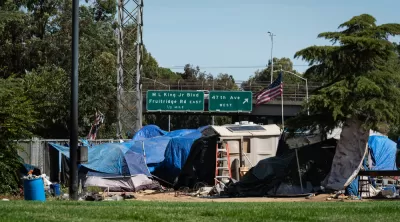
A federal judge ruled that Sacramento can’t displace unhoused residents living in encampments until at least the end of August, reports Melanie Wingo for KCRA. “As part of its rationale for the ruling, the court made note of the Sacramento area's summertime temperatures.”
The ruling came in response to an action filed by the California Homeless Union. “Every time the city, either through the police, or code enforcement, or utilities department, breaks up an encampment, they exile people into the streets and areas away from where they had some means of protection,” said Anthony Prince, CHU lead organizer and general counsel.
In addition to calling for more resources to place people in permanent supportive housing and make more affordable housing available to low-income residents, “The California Homeless Union also asked the court to require Sacramento County to open more cooling centers and extend cooling center hours.The judge did not do that, according to Prince.”
The city disputes the assertion that it has been conducting sweeps. According to a statement from the city, they “will be back before the court when the injunction expires in order to ‘inform the Court that it has not been sweeping encampments and welcomes the opportunity to continue to clarify its position and unhoused protocols – especially surrounding critical infrastructure — and to explore solutions with community partners.’”
Meanwhile, an article by Theresa Clift in the Sacramento Bee relates that “The Sacramento City Council could pull or alter a measure it placed on the November ballot that would force the city to provide more shelter for homeless residents, according to the lead proponent for the initiative.” The same article notes that roughly 9,287 people experience homelessness nightly in Sacramento, twice as many as in January 2019.
FULL STORY: Federal judge blocks 'sweeps' of unhoused people in Sacramento

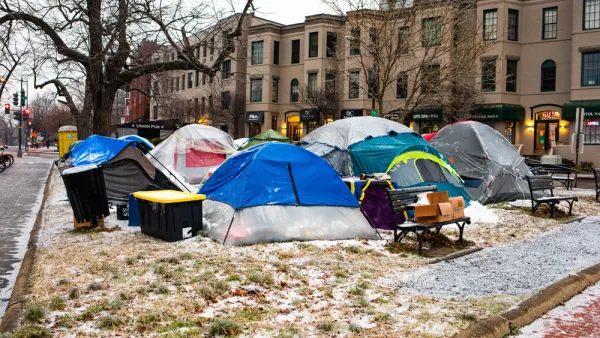
Evaluating D.C.’s Plan to House Encampment Residents
One year into a pilot program to reduce encampments by offering housing and services to residents, almost three-quarters of participants have moved into housing.

California Sues Norwalk Over Shelter Moratorium
The state says the city of Norwalk’s prohibition on new shelters and transitional and supportive housing violates anti-discrimination and fair housing laws.
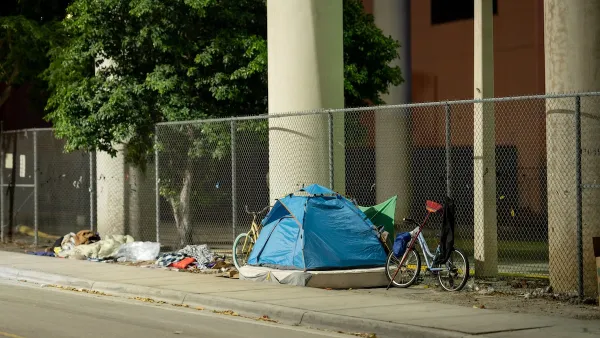
Grants Pass Homelessness Ruling Brings Issues Into Sharp Focus
Advocates for unhoused people are rallying to protect homeless populations as new legislation criminalizing homelessness rolls out around the country.

Planetizen Federal Action Tracker
A weekly monitor of how Trump’s orders and actions are impacting planners and planning in America.

The state-sanctioned urbicide of Austin
People don’t kill cities. Freeways do.

US to reduce Colorado River water deliveries to Mexico
A new Colorado Treaty amendment reduces Mexico’s Colorado River water allocation by 250,000 acre feet.

5 New England states march closer to 800 megawatt wind energy project
Securing federal approval for the project may be complicated under the Trump administration, which has historically been hostile towards domestic wind power.

Baltimore to break ground on $50 million Transit Priority Project
The project will bring faster bus trips, safer streets and better bike connections to Baltimore.

Airbnb launches $250 million 'last-dollar financing' housing accelerator, makes first investment in Austin
The company will put $6.4 million towards affordable housing development in Texas’ capital.

FREE Course: Walkable City 1: Why Walkability?
After describing his path towards focusing on walkability as the essence of good planning, Jeff Speck marches through his five principal reasons for making more walkable places.
Reinventing Malls: Planning Alchemy—Turning Gray Fields Into Gold
The course focuses on the opportunities and imperatives that shape reinvention of mall sites.

Eagle County Government
Harvard University Graduate School of Design
Nashville Planning Department
The Architects Foundation
University of Cincinnati Online
The Pocatello Development Authority
The Urban Renewal Agency of the City of Pocatello
Journal of the American Planning Association