President Biden’s Housing Supply Action Plan is a catchall of existing proposals, tiny tweaks, and things Congress would have to fund—plus a few genuinely interesting administrative moves. Here’s the rundown.


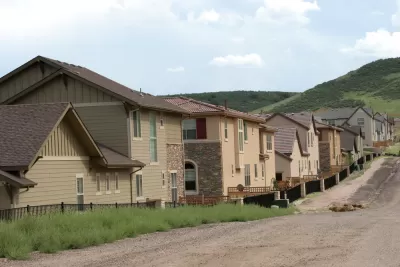
President Joe Biden released a far-reaching Housing Supply Action Plan in May that announces or proposes dozens of measures meant to sharply boost housing production. They include incentives for local zoning reform, new financing products from Freddie Mac and Fannie Mae, budget hikes for federal programs like HOME and LIHTC, efforts to promote manufactured housing and accessory dwelling units (ADUs), supply chain improvements, and increased recruitment of construction workers.
Many of the proposals are unlikely to come to fruition in the near future, including tens of billions of dollars of funding requests from Build Back Better, the reconciliation bill that died in the Senate last year. Some items require further analysis by HUD or the Federal Housing Finance Agency (FHFA) to determine if they are feasible, while others are broad vows to streamline agency processes or promote existing programs, such as COVID relief funding that states and cities can use to develop affordable housing.
However, the plan does offer a few genuinely novel measures that have already gone into effect or will in the coming months. In particular, the U.S. Department of Transportation is modifying its competitive grant programs to favor jurisdictions that adopt zoning rules allowing dense housing and transit-oriented development. DOT has already released three funding applications worth close to $6 billion that include those incentives.
Another significant move is a promise to finalize the income averaging rule for Low Income Housing Tax Credit (LIHTC) projects, which will make it easier to finance developments with units for very-low-income residents, particularly in rural areas. The plan also lists recent policy shifts by HUD and the government-sponsored enterprises or GSEs (Fannie and Freddie) to sell more foreclosed properties to owner-occupants and nonprofit organizations rather than corporate investors. Those should help slow the rise in home prices and the displacement of tenants in impacted communities.
While many of the items would improve access to affordable housing for low-income people, the document is billed as a plan to spur home construction across the board. It arrives as Biden is under intense political pressure to bring down historically steep increases in the cost of living ahead of this fall’s congressional elections. “Tackling inflation is his top economic priority,” the plan’s first sentence reads. The proposed measures will “ease the burden of housing costs over time by boosting the supply of quality housing in every community.”
The plan’s expansive scope is an acknowledgment that current political reality and the complexity of the housing crisis necessitate a comprehensive approach, advocates say.
“There’s a recognition that the problem is much broader than just the traditional capital-A affordable space and that the public funding is limited. So there has to be relief coming from multiple places,” says Andrew Jakabovics, vice president for policy development at Enterprise Community Partners, a nonprofit affordable housing and community development organization. “It all starts with ‘What’s driving up the cost for people who are not looking for anything that has any federal touchpoints, or federal subsidies?’ Oh, it’s because land is expensive, materials are expensive, and labor is hard to come by.”
A Carrot-and-Stick Approach to Reform
Experts say the new incentive for zoning and land-use reform is a historically significant intensification of the federal government’s efforts to roll back exclusionary zoning ...
Read the full story: Something Old, Something New: Biden’s Housing Plan

A third of Texas cities must update their zoning codes to comply with new housing law
Texas municipalities are now required to allow manufactured housing in at least one residential zoning district.

Large projects near Austin's light rail must include affordable housing
Elsewhere in the city, developers can pay into a city bank account for affordable housing rather than providing the required affordable units within their projects.

91% of Utah renters can’t enter the homebuying market
Homeownership in Utah has dropped to historic lows, despite improvements in the number of affordable rentals on the market.

Planetizen Federal Action Tracker
A weekly monitor of how Trump’s orders and actions are impacting planners and planning in America.

The state-sanctioned urbicide of Austin
People don’t kill cities. Freeways do.

Colorado’s Largest Data Center Could Rise Next to Homes — Without a Public Hearing
The proposed campus would consume 11 times the power of Denver International Airport; as it has across the country, opposition mounts.

Judges permit Denver to divert 77,000 acre feet from the Colorado River for reservoir expansion
Overuse and climate change have caused the Colorado River’s water levels to plummet.

Amtrak, CN end decades-long dispute with eight-year agreement
The new operating agreement establishes an updated framework for the companies to work together, including processes to resolve disputes.

Raised interest rates may kill financially vulnerable construction projects
The chief economist at ConstructConnect warns that if construction project owners are negatively impacted by the raised rates, it could result in delayed payments to contractors.

FREE Course: Walkable City 1: Why Walkability?
After describing his path towards focusing on walkability as the essence of good planning, Jeff Speck marches through his five principal reasons for making more walkable places.
Reinventing Malls: Planning Alchemy—Turning Gray Fields Into Gold
The course focuses on the opportunities and imperatives that shape reinvention of mall sites.

KFH Group Inc.
Greater Baltimore Committee
Eagle County Government
The Architects Foundation
University of Cincinnati Online
The Pocatello Development Authority
The Urban Renewal Agency of the City of Pocatello