Vast distances and inadequate funding pose problems for the rural transportation services that older adults rely on to access essential services.


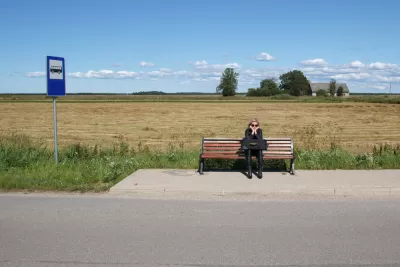
Transportation in rural America is often hard to access for older adults, writes Deon J. Hampton for NBC News. “Millions of older adults living in rural America no longer drive and don’t have adequate access to alternative transportation that can assist them with rides to banks, pharmacies and other important places, said Baruch Feigenbaum, senior managing director for transportation policy at the Reason Foundation.”
Despite an additional $2 billion in federal funding allocated to rural transit, many elderly Americans in rural areas will still face transportation challenges, writes Hampton. While nonprofit organizations work to fill the gap, many lack adequate funding and can only operate minimal services.
“One way to make rural transit more accessible for older adults nationwide — including those who are disabled or have low incomes — is to use various forms of federal funding to dole out more grant money for nonprofit organizations like the Rural Transit Service in New York, transportation experts say.” Rural Transit Service has been hailed as a “national model for what an organization can do with the right resources,” writes Hampton.
“Some transit experts reiterated that rural America is just too vast to completely lean on those types of alternative transit systems for the majority of older adults in remote places,” but increased funding can boost programs that already provide low-cost, on-demand services.
Read the full story: Transportation gaps may persist for rural older adults despite infrastructure dollars

Building Age-Friendly Homes
Designing for the unique needs of elderly people can help them maintain social connections and mental acuity.

Preparing Transportation Systems for the ‘Silver Tsunami’
More Americans than ever will age beyond their safe ability to drive. How will they meet their mobility needs in a car-centric society?

New Mexico Aging Department Commits to Helping Seniors Age ‘In Place’ and ‘Autonomously’ in New Draft Plan
As New Mexico’s population of seniors continues to grow, the state’s aging department is proposing expanded initiatives to help seniors maintain their autonomy while also supporting family caregivers.

Planetizen Federal Action Tracker
A weekly monitor of how Trump’s orders and actions are impacting planners and planning in America.

California plans to bury El Niño’s downpour
If the state plays its cards right, it may be able to store a billion acre-feet of El Niño’s water in aquifers.

Desperate measures: Advocates weigh draining Lake Powell to fill Colorado River
Draining the reservoir could reduce evaporation losses by a couple hundred thousand acre-feet.

US buildings threatened, destroyed by fires set to triple by 2060
Researchers found a high fire risk for socioeconomically vulnerable neighborhoods in the American West.

LA residents may be allowed to paint their own crosswalks
Councilwoman Katy Yaroslavsky put out a motion instructing the Los Angeles Department of Public Transportation to study the feasibility of allowing volunteers to paint crosswalks.

Dallas moves to overhaul its zoning code
The city's zoning reform will allow more multi-family and mixed-use developments.

FREE Course: Walkable City 1: Why Walkability?
After describing his path towards focusing on walkability as the essence of good planning, Jeff Speck marches through his five principal reasons for making more walkable places.
Reinventing Malls: Planning Alchemy—Turning Gray Fields Into Gold
The course focuses on the opportunities and imperatives that shape reinvention of mall sites.

City of Rosemead
Rutgers University, Edward J. Bloustein School of Planning and Public Policy
One Hundred Miles
Hunter College, City University of New York (CUNY)
The Architects Foundation
University of Cincinnati Online
City of Cambridge
Montrose County
The Pocatello Development Authority