After facing community opposition and a call for more deeply affordable housing units, developers withdrew their proposal for Harlem’s One45, prompting questions about the future of the site.


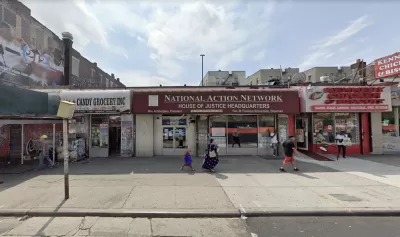
Developers have withdrawn a proposal that would have built two mixed-use towers in Harlem, reports Nick Garber in Patch, in part due to opposition from community members and Harlem Councilmember Kristin Richardson Jordan. The proposal was withdrawn “hours before it was set to be voted on by a City Council committee,” Garber writes. “Besides affordability, opponents also expressed concerns over the buildings' height, and the potential for added traffic and crowding at a nearby subway station.”
While the initial proposal would have contained hundreds of affordable housing units—units that Richardson Jordan said would not be “actually affordable to the community”—, Garber writes that “the block will eventually be transformed regardless — now, likely with a fully market-rate project that will still displace the block's current tenants, including the National Action Network.” According to an article in The Gothamist by Gwynne Hogan, “the developer made several rounds of last-minute concessions,” eventually increasing the subsidized units to 50 percent.
“Having failed to get the zoning changes needed for One45, developers Bruce Teitelbaum and his partners will likely build a combination of market-rate condominiums, a self-storage facility and an unspecified community facility, according to a source familiar with the plans.” The source also noted that the new project would likely be built using non-union labor.
FULL STORY: Harlem's One45 Project Defeated; Storage, Condos Likely Replacement


One Fourth of East Harlem Housing Set to Lose Affordability
The area could lose up to 500 units of affordable housing every year for the next 30 years if the city doesn't extend existing protections.
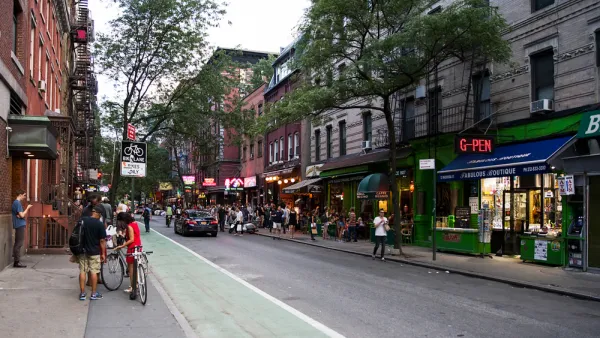
Gentrification Up Close in N.Y.C.'s West Village
A former resident of the iconic neighborhood reflects on its past, present, and future.

NYC Planning Head Defends Growth-Oriented Policies
Acknowledging anti-development sentiments currently simmering at an "all-time high," New York's planning director Marisa Lago defended de Blasio administration policies like mandatory inclusionary housing.

The state-sanctioned urbicide of Austin
People don’t kill cities. Freeways do.

US to reduce Colorado River water deliveries to Mexico
A new Colorado Treaty amendment reduces Mexico’s Colorado River water allocation by 250,000 acre feet.

New Jersey’s second-largest city bans standalone data centers
Jersey City will continue to allow co-location facilities, such as those meant for research institutions that store their own data.

Amtrak not solely to blame for New Jersey commuter rail's unreliability, report finds
A new study from the Garden State Initiative found that NJ Transit’s budget grew 20% across a 4 year period, but reliability declined significantly over the same period.

EPA erases limits on planet-warming pollution from power plants
Under Monday’s plan, power plants would still have some limits on how much mercury, arsenic and other contaminants they can emit.

Phoenix announces new on-demand transit service, more frequent RAPID buses
Both new services will launch in October, and are part of Phoenix's Project Effective Access Solutions for Easing Congestion.

FREE Course: Walkable City 1: Why Walkability?
After describing his path towards focusing on walkability as the essence of good planning, Jeff Speck marches through his five principal reasons for making more walkable places.
Reinventing Malls: Planning Alchemy—Turning Gray Fields Into Gold
The course focuses on the opportunities and imperatives that shape reinvention of mall sites.

Eagle County Government
Harvard University Graduate School of Design
Nashville Planning Department
The Architects Foundation
University of Cincinnati Online
The Pocatello Development Authority
The Urban Renewal Agency of the City of Pocatello
Journal of the American Planning Association