High housing costs and low supply are making it harder for American families to move as household dynamics and job opportunities change.


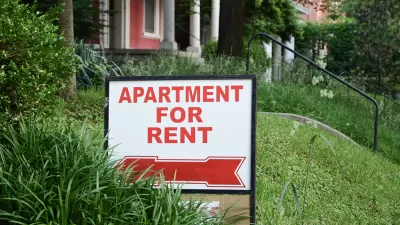
Under current housing market conditions, writes Emily Badger in The New York Times, “The simplest and most affordable decision for many Americans will be to stay put — even if their homes become too small, too big, too crowded, too far from work, too isolated from family, or too much to maintain.”
This could pose a problem for the economy, Badger writes, as households find it harder to “change their homes to match their changing lives” and workers have a hard time finding homes near the best job opportunities. “In the mid-1980s, about one in five people in America moved annually, most of them within the same county. By 2021, that number had fallen to one in 12.” Today, “New mortgage applications and home sales have fallen. Money spent remodeling housing has soared. And renters are renewing their leases at record levels.”
Badger notes that “today the most prosperous parts of the country also have the most expensive housing. That deters people from moving where they might find better jobs, ultimately constraining America’s economic growth, economists say.”
As the article points out, “All of this matters, he said, not just because people need to move for better jobs, or better-fitting homes. America remains deeply segregated by race and income, and research shows that the neighborhoods where children grow up influence their fortunes in life.”
Read the full story: When the Best Available Home Is the One You Already Have

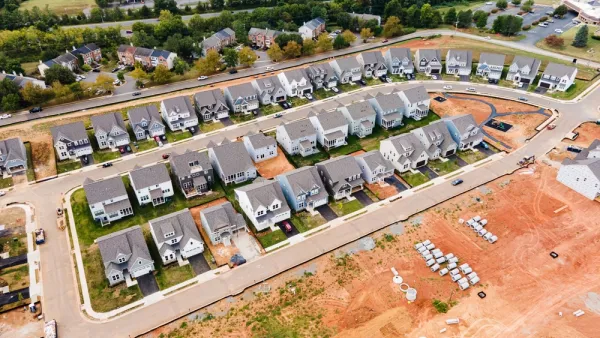
A Big Picture of the US Housing Market
A new report highlights the factors driving up housing costs around the country.
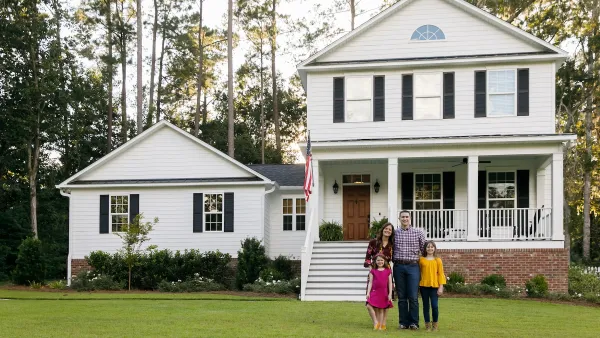
Report: Housing is becoming an 'inherited advantage'
As housing costs soar, buying a home is becoming unaffordable to a large swath of American families.
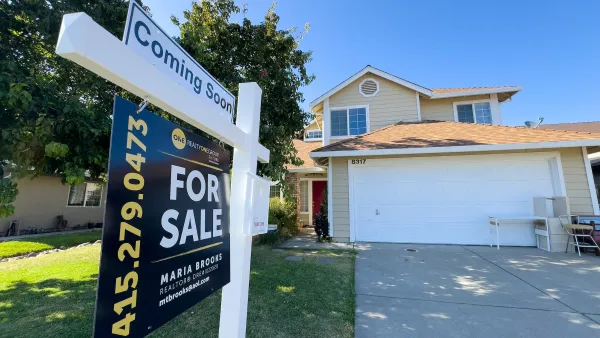
'Starter' homes cost over $1M in 242 US cities
Once concentrated in coastal regions, cities with starter homes valued at over $1 million are now spread across 26 states.

Planetizen Federal Action Tracker
A weekly monitor of how Trump’s orders and actions are impacting planners and planning in America.

California plans to bury El Niño’s downpour
If the state plays its cards right, it may be able to store a billion acre-feet of El Niño’s water in aquifers.

Chicago breaks ground on $3 billion megadevelopment
The new neighborhood, titled Foundry Park, will one day host 3,700 residences.

Want to study the Missouri River? Soon, you may need unanimous approval from 10 states
Legislation would require 10 governors’ permission to study or build projects moving water outside the basin.

Desperate measures: Advocates weigh draining Lake Powell to fill Colorado River
Draining the reservoir could reduce evaporation losses by a couple hundred thousand acre-feet.

This road in NYC is infamously dangerous — and Mamdani can't fix it
New York City's Ocean Parkway is known for reckless driving, but the power to implement safety measures lies with the state rather than the city.

FREE Course: Walkable City 1: Why Walkability?
After describing his path towards focusing on walkability as the essence of good planning, Jeff Speck marches through his five principal reasons for making more walkable places.
Reinventing Malls: Planning Alchemy—Turning Gray Fields Into Gold
The course focuses on the opportunities and imperatives that shape reinvention of mall sites.

City of Rosemead
Rutgers University, Edward J. Bloustein School of Planning and Public Policy
One Hundred Miles
Hunter College, City University of New York (CUNY)
The Architects Foundation
University of Cincinnati Online
City of Cambridge
Montrose County
The Pocatello Development Authority