As investors continue to eye mobile home parks as a profitable opportunity, current residents, many elderly and low-income, face steep rent hikes and possible eviction.


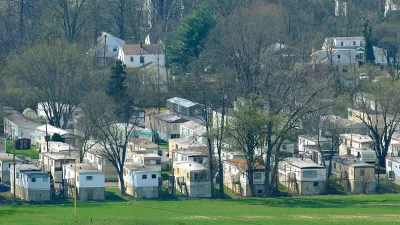
"With prices and rents for all kinds of housing soaring in many parts of the country, demand for manufactured housing is climbing. Many young professional families and college students turn to mobile home parks as a final vestige of relatively affordable housing," reports Sophie Kasakove in The New York Times. But as more investors seek to take advantage of mobile home parks as affordable redevelopment opportunities, this once-affordable housing option faces extinction.
Last year, after a campaign led by residents of the Sans Souci mobile home park near Boulder, Colorado, the state enacted a law that requires mobile home park owners to notify residents of their intent to sell, giving them the opportunity to purchase the property themselves. Planetizen previously amplified an NPR story detailing the challenges faced by residents attempting to form ownership coops as they fight the rising threat of eviction.
"But in the two years since Colorado’s opportunity-to-purchase law went into effect, only Sans Souci and two other parks have been sold to residents," writes Kasakove. "In 20 cases, park owners failed to notify residents in compliance with the law before selling, according to data from the state Department of Local Affairs. In others, residents were notified but struggled to coalesce quickly enough to make a purchase offer."
Now, Colorado State Representative Andrew Boesenecker has introduced legislation that beefs up the opportunity-to-purchase law by requiring owners to let residents or government agencies make the first offer and limiting rent increases to 3 percent per year. "Another bill is being drafted that would give residents access to a loan fund that would help them compete with private equity firms, many of which receive government-sponsored financing to purchase parks."
FULL STORY: Investors Are Buying Mobile Home Parks. Residents Are Paying a Price.

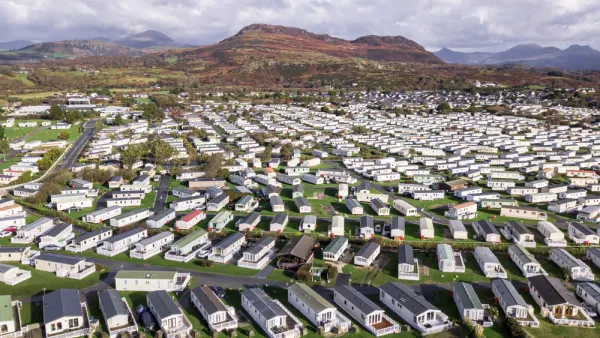
Mobile Home Parks Becoming Unaffordable as Investors Buy Up Properties
Longtime residents of mobile home parks are seeing their land rents go up as corporate investors seek to increase profits, aided in part by federally-backed loans.
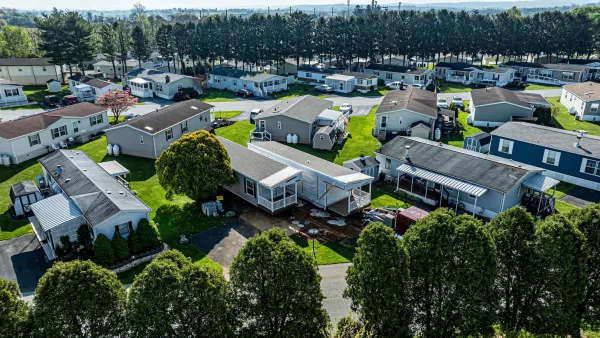
Should the public sector buy mobile home parks?
One writer argues that the crisis facing the nation's mobile home owners warrants public intervention.
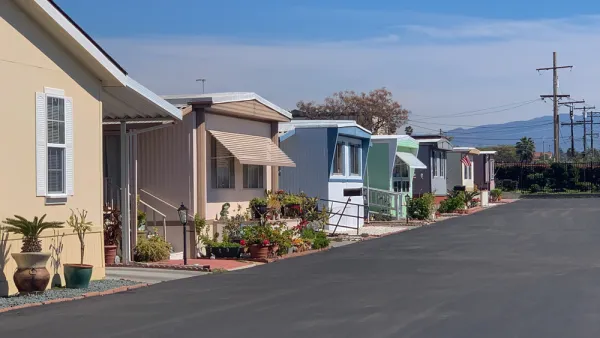
Protecting America’s Manufactured Housing
Governments at all levels are finally waking up to the benefits of protecting and encouraging the production of factory-built homes, which offer an affordable, efficient form of housing that many Americans depend on.

The state-sanctioned urbicide of Austin
People don’t kill cities. Freeways do.

US to reduce Colorado River water deliveries to Mexico
A new Colorado Treaty amendment reduces Mexico’s Colorado River water allocation by 250,000 acre feet.

New Jersey’s second-largest city bans standalone data centers
Jersey City will continue to allow co-location facilities, such as those meant for research institutions that store their own data.

Amtrak not solely to blame for New Jersey commuter rail's unreliability, report finds
A new study from the Garden State Initiative found that NJ Transit’s budget grew 20% across a 4 year period, but reliability declined significantly over the same period.

EPA erases limits on planet-warming pollution from power plants
Under Monday’s plan, power plants would still have some limits on how much mercury, arsenic and other contaminants they can emit.

Phoenix announces new on-demand transit service, more frequent RAPID buses
Both new services will launch in October, and are part of Phoenix's Project Effective Access Solutions for Easing Congestion.

FREE Course: Walkable City 1: Why Walkability?
After describing his path towards focusing on walkability as the essence of good planning, Jeff Speck marches through his five principal reasons for making more walkable places.
Reinventing Malls: Planning Alchemy—Turning Gray Fields Into Gold
The course focuses on the opportunities and imperatives that shape reinvention of mall sites.

Eagle County Government
Harvard University Graduate School of Design
Nashville Planning Department
The Architects Foundation
University of Cincinnati Online
The Pocatello Development Authority
The Urban Renewal Agency of the City of Pocatello
Journal of the American Planning Association