New York City saw its deadliest year for people living in shelters or public spaces, with the pandemic and a rise in deadly overdoses fueling a fatal epidemic.


"Last year, 640 unhoused people died in shelters, hospitals or the streets, 4 percent higher than in 2020, when COVID-19 first struck New York City," reports David Brand, despite the city's shelter population being at its lowest level in 10 years.
"A rise in drug overdoses fueled the lethal increase and accounted for at least 237 deaths between July 1, 2020 and June 30, 2021, up from 131 the previous year, according to an annual report compiled by the city’s health and social services agencies." The report notes that "DHS staff administered naloxone 1,107 times last calendar year and reversed 928 overdoses."
According to a DHS statement, "Our annual report continues to reflect the numerous challenges the unprecedented COVID-19 pandemic presented across the DSS-DHS system, which, in addition to its impact on the physical health of our clients, also exacerbated the ongoing challenges related to mental health and substance use that New Yorkers experiencing homelessness—and our nation writ-large—are increasingly encountering."
Poverty, and homelessness in particular, are determinants of poor health outcomes the report notes. People who experience homelessness have a greater incidence of chronic illness, a lower rate of preventive health treatment, a higher risk of violence and a decreased life expectancy than the general population, the report continues.
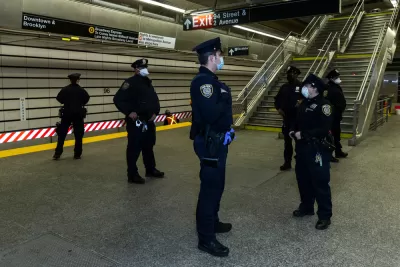
Advocates call the deaths preventable, saying the city must bolster its social safety net and increase access to affordable housing. Mayor Eric Adams has received criticism for his "Subway Safety" plan, which removes unhoused people from the city's subway but has not, so far, supplemented enforcement with social services. "Between Feb. 21 and 27, police ejected 455 people from trains and arrested 143 others, but outreach workers only managed to place 22 people into shelters, the Mayor’s Office said."
Read the full story: 2021 Was Deadliest Year on Record for Homeless New Yorkers

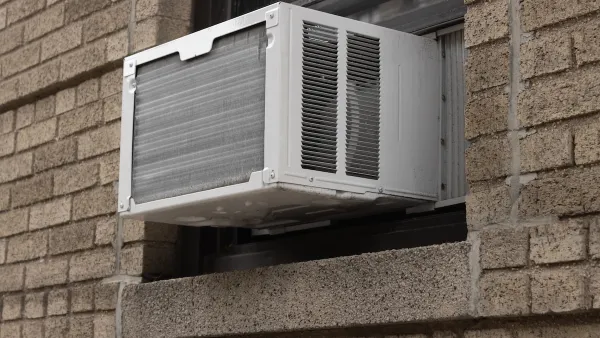
Thousands of NYC Shelter Residents Lack Air Conditioning
Even in the depths of extreme heat, many shelters prohibit residents from installing AC units.
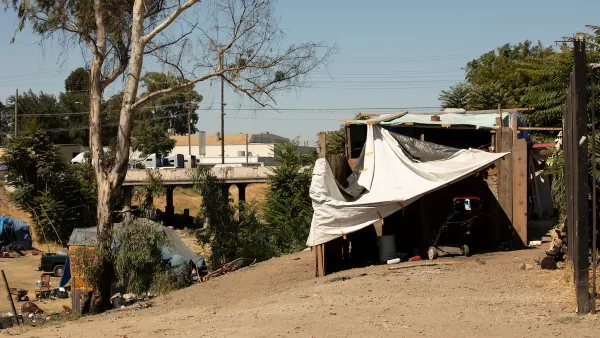
Study: Homeless People Face Higher Mortality Risk
Unhoused adults are more than three times as likely to die in any given year as their housed counterparts, research shows.

Michigan Capital's $640K ‘Pod’ Homes for Homeless Residents not Approved for Winter Use
Lansing officials approved a plan to purchase 50 modular micro-housing units as emergency shelter for the city’s unhoused residents.

Planetizen Federal Action Tracker
A weekly monitor of how Trump’s orders and actions are impacting planners and planning in America.

California plans to bury El Niño’s downpour
If the state plays its cards right, it may be able to store a billion acre-feet of El Niño’s water in aquifers.

Chicago breaks ground on $3 billion megadevelopment
The new neighborhood, titled Foundry Park, will one day host 3,700 residences.

Satanic Place Names
From streams and lakes to valleys and canyons, I mapped more than 1,000 places named after the Devil.

California High-Speed Rail Authority CEO resigns after $600,000 scandal
Under Ian Choudri, the authority used taxpayer dollars to fund first class flights and trips to nightclubs.

Want to study the Missouri River? Soon, you may need unanimous approval from 10 states
Legislation would require 10 governors’ permission to study or build projects moving water outside the basin.

FREE Course: Walkable City 1: Why Walkability?
After describing his path towards focusing on walkability as the essence of good planning, Jeff Speck marches through his five principal reasons for making more walkable places.
Reinventing Malls: Planning Alchemy—Turning Gray Fields Into Gold
The course focuses on the opportunities and imperatives that shape reinvention of mall sites.

City of Rosemead
Rutgers University, Edward J. Bloustein School of Planning and Public Policy
One Hundred Miles
Hunter College, City University of New York (CUNY)
The Architects Foundation
University of Cincinnati Online
City of Cambridge
Montrose County
The Pocatello Development Authority