Lansing officials approved a plan to purchase 50 modular micro-housing units as emergency shelter for the city’s unhoused residents.



Lansing, Michigan plans to install 50 modular micro-housing units in an effort to provide more emergency shelter for unhoused residents, reports Jordyn Hermani for the Associated Press. Lansing officials plan to identify a city-owned location for the shelters.
The city agreed to purchase 50 units from a project in Kalamazoo that never materialized. The 50 units, which are not approved for winter use, will cost $640,000 to buy and roughly $750,000 per year to maintain.
Lansing officials made the decision to purchase the pods in August after the city began cracking down on homeless encampments. The city expects the site, once selected, to be ready for occupancy by June 2026.
In a public meeting, some residents questioned the city’s plan for transitioning people out of the pods and into more secure, long-term housing. Deyanira Nevárez Martínez, an assistant professor at Michigan State and candidate for Lansing city council, pointed out the potential for a “slippery slope” to communities viewing modular micro-housing as a solution, not a temporary stopgap, for homelessness.
FULL STORY: Michigan’s capital plans new approach to homelessness: A pod city

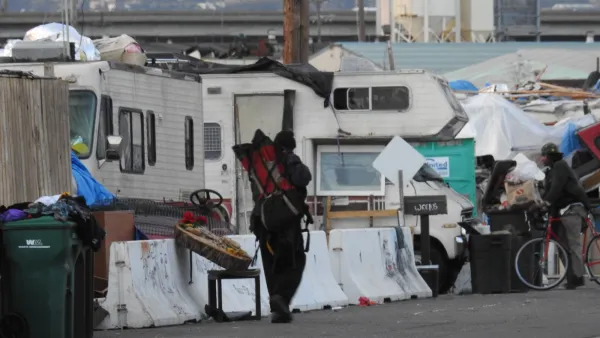
Oakland Mayor, City Council Offer ‘Radically Different’ Plans for Reducing Homelessness
Mayor Barbara Lee wants to reduce encampment sweeps and focus on improving sanitation while city council members want to increase enforcement, particularly against illegally parked RVs.
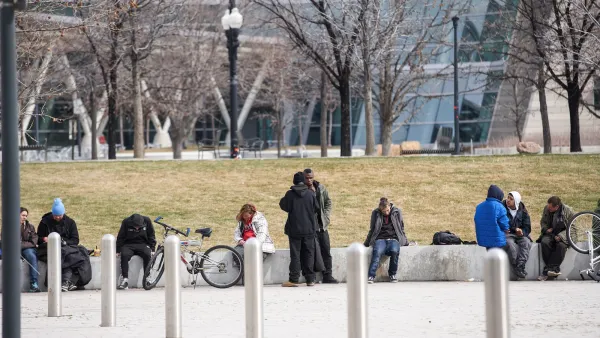
Utah Shelter Plan Criticized as ‘Homeless Detention Camp’
A proposal to build a 1,300-bed shelter campus faces backlash from advocates concerned that it would be akin to a detention center.

The 120 Year Old Tiny Home Villages That Sheltered San Francisco’s Earthquake Refugees
More than a century ago, San Francisco mobilized to house thousands of residents displaced by the 1906 earthquake. Could their strategy offer a model for the present?

The state-sanctioned urbicide of Austin
People don’t kill cities. Freeways do.

US to reduce Colorado River water deliveries to Mexico
A new Colorado Treaty amendment reduces Mexico’s Colorado River water allocation by 250,000 acre feet.

New Jersey’s second-largest city bans standalone data centers
Jersey City will continue to allow co-location facilities, such as those meant for research institutions that store their own data.

Amtrak not solely to blame for New Jersey commuter rail's unreliability, report finds
A new study from the Garden State Initiative found that NJ Transit’s budget grew 20% across a 4 year period, but reliability declined significantly over the same period.

EPA erases limits on planet-warming pollution from power plants
Under Monday’s plan, power plants would still have some limits on how much mercury, arsenic and other contaminants they can emit.

Phoenix announces new on-demand transit service, more frequent RAPID buses
Both new services will launch in October, and are part of Phoenix's Project Effective Access Solutions for Easing Congestion.

FREE Course: Walkable City 1: Why Walkability?
After describing his path towards focusing on walkability as the essence of good planning, Jeff Speck marches through his five principal reasons for making more walkable places.
Reinventing Malls: Planning Alchemy—Turning Gray Fields Into Gold
The course focuses on the opportunities and imperatives that shape reinvention of mall sites.

Eagle County Government
Harvard University Graduate School of Design
Nashville Planning Department
The Architects Foundation
University of Cincinnati Online
The Pocatello Development Authority
The Urban Renewal Agency of the City of Pocatello
Journal of the American Planning Association