Mass upzoning could give developers and homeowners the flexibility to build new housing where it's most needed.


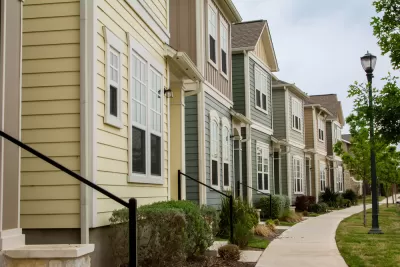
With zoning reform efforts underway in cities and states around the country, Daniel Herriges undertakes the question of how blanket upzoning would actually affect property values.
Herriges focuses on the push to "upzone everything a little" by legalizing the construction of middle-density housing such as fourplexes and Accessory Dwelling Units (ADUs) on single-family lots, which some critics fear will lead to rampant speculation and redevelopment by investors.
According to Herriges, zoning can only restrict development potential, not create it. Rather, "What creates that potential is genuine demand for the product: the finished building." In other words, upzoning will only result in development in places where the demand for development is already there. "Zoning does act as a limiting ingredient in places where more intense development would be economically viable right now: where there would be many ready buyers if it simply weren't illegal."
With zoning restrictions, cities build up unmet demand that drives up housing costs and drives residents to seek out more affordable peripheral areas, encouraging sprawl. Herriges supports "broad but incremental upzoning" that will allow development to occur where demand—and potential profits—are highest, redistributing "where that development happens, on balance away from the suburban fringe and a small handful of hot neighborhoods."
Read the full story: What Would Mass Upzoning *Actually* Do to Property Values?

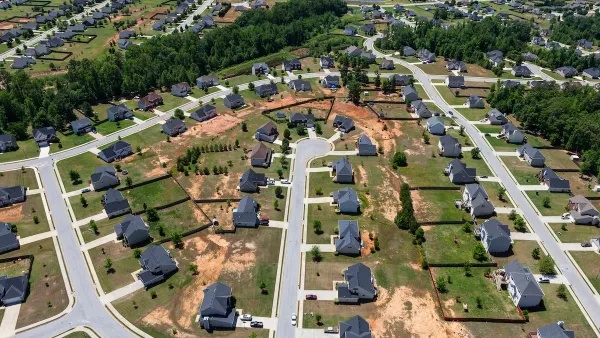
Commentary: Minimum Lot Sizes Drive Up Housing Costs
How making residential building requirements more flexible can ease the housing crisis and make neighborhoods more livable for more households.

Seattle Works To Revise Comprehensive Plan
The city has developed five concepts for updating its comprehensive plan to increase density and reverse the legacy of exclusionary zoning.
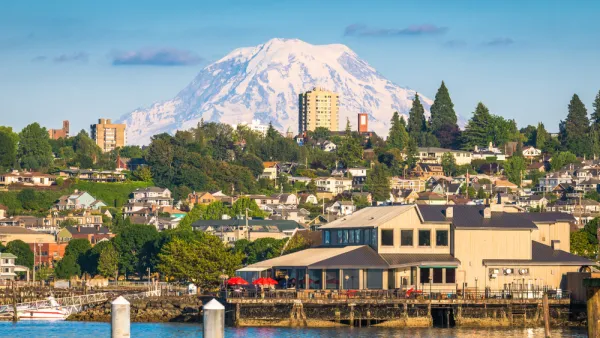
Tacoma Density Plan Moves to Phase Two
The Home in Tacoma plan would amend the city's zoning code to include more 'missing middle' housing types and encourage infill development.

Planetizen Federal Action Tracker
A weekly monitor of how Trump’s orders and actions are impacting planners and planning in America.

The state-sanctioned urbicide of Austin
People don’t kill cities. Freeways do.

US to reduce Colorado River water deliveries to Mexico
A new Colorado Treaty amendment reduces Mexico’s Colorado River water allocation by 250,000 acre feet.

Nation's most wind-powered state turns to coal as data centers increase energy demand
For the first time in decades, Iowa has increased its generation of coal power.

NYC cools commuters with city's first rain garden above a bus stop
New York City officials say the plants in the rain garden can absorb 16 gallons of rainwater during heavy storms.

Brightline West’s future may rely on $6 billion federal loan
The company has until Nov. 2 to make a $400 million equity investment into its proposed high-speed rail line.

FREE Course: Walkable City 1: Why Walkability?
After describing his path towards focusing on walkability as the essence of good planning, Jeff Speck marches through his five principal reasons for making more walkable places.
Reinventing Malls: Planning Alchemy—Turning Gray Fields Into Gold
The course focuses on the opportunities and imperatives that shape reinvention of mall sites.

Greater Baltimore Committee
Eagle County Government
Harvard University Graduate School of Design
The Architects Foundation
University of Cincinnati Online
The Pocatello Development Authority
The Urban Renewal Agency of the City of Pocatello
Journal of the American Planning Association