The rapidly spreading Omicron variant and its viral competitor, the Delta variant, are setting new case records globally and in the U.S.



Infections from the Omicron and Delta variants have topped the previous infection record set by a close descendant of the original strain of the coronavirus, reports Jinshan Hong for Bloomberg Prognosis on Dec. 27, 2021.
The more than 1.44 million worldwide infections smashed the prior record after factoring out a day in December 2020 when Turkey backdated a significant number of cases. A more conservative gauge -- the seven-day rolling average that smooths out one-time fluctuations and holiday reporting irregularities -- is also at an all-time high, owing to a tidal wave of omicron infections.
The highly mutated and most transmissible variant yet, omicron is fast becoming the dominant strain globally as it evades immunity normally provided by vaccines and previous infections. The seven-day rolling average of cases on Monday stood at about 841,000, a jump of 49% from a month ago, when omicron was first identified in southern Africa.
The New York Times global tracker recorded the 7-day average for Wednesday (Dec. 29) at 1.015 million, +62% in the past 2 weeks. The daily average of deaths was 6,200, [–14%] in the past 2 weeks.
"Governments already are warning that infections and hospitalizations may soar following the holidays, setting a grim tone as the world heads into the third year of the pandemic," adds Hong.
The silver lining is that daily Covid deaths haven’t significantly increased. The seven-day rolling average of deaths has hovered at about 7,000 since mid-October after falling from a delta-driven peak, despite the emergence of omicron.
U.S. infection record
A record was also set in the U.S.on Monday with over half a million cases recorded according to The New York Times U.S. coronavirus tracker (click on their interactive graph titled, "New reported Cases"), meaning that over a third of the global cases recorded on Dec. 27 were Americans. The seven-day average for Dec. 28, 267,000, broke last winter's record set on Jan 11, 2021, of 251,000.
On Dec. 29, average daily cases had already topped 300,00, up 153% in the past two weeks.
In keeping with the guidance noted in a recent post given by Dr. Ashish Jha, dean of the Brown School of Public Health, here are the other two health metrics for Wednesday to consider during the Omicron wave:
- Hospitalizations: 75,500 (7-day average), +11% in past 2 weeks
- Deaths: 1,200 (7-day average), [–7%] in past 2 weeks
Not all Omicron
In an unusual correction, the U.S. Centers for Disease Control and Prevention revised the share of infections resulting from the two prevalent variants. Nathaniel Weixel of The Hill reports on Dec. 28:
According to agency data, omicron accounted for about 59 percent of all U.S. infections as of Dec. 25. Previously, the CDC said the omicron variant comprised 73 percent of all cases for the week ending Dec. 18. But that number has now been revised to 22.5 percent of all cases.
The new estimates mean that while a majority of new infections are attributed to the omicron variant, the delta variant has not been sidelined, and still accounts for about 41 percent of infections.
Weixel reminds us what to expect from so-called 'mild infections' due to Omicron which is considered to be less virulent than Delta.
While evidence appears to show an omicron infection may be more mild for people who are fully vaccinated, experts say the experience is not likely to be pleasant, and people with such infections should expect to be sick for multiple days.
Related in Planetizen:
- Your Date With Omicron, December 29, 2021
- A Tidal Wave of Omicron Coming,' December 16, 2021
- Omicron Variant: No Good Science Goes Unpunished, November 30, 2021
FULL STORY: World Hits Record Daily Covid Cases as Omicron Mars Christmas


Your Date With Omicron
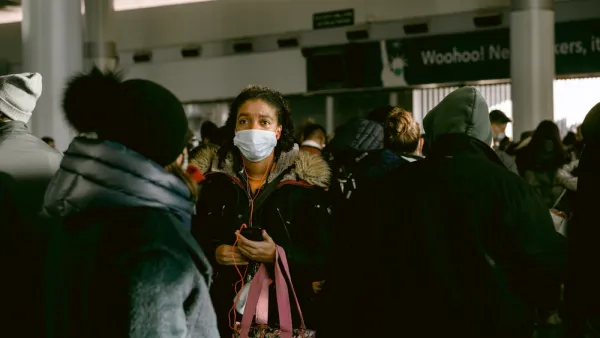
“All of us have a date with omicron,” Dr. Amesh Adalja, a senior scholar at the Johns Hopkins Center for Health Security, told The Associated Press on Dec. 20, adding "...and the best way you can encounter this is to be fully vaccinated.”
After Omicron
Don't count on Omicron ending the pandemic, cautioned America's top infectious disease expert on Jan. 17. "Get ready to learn new Greek letters," warned the Associated Press as daily COVID deaths topped the peak set in the Delta wave.
Second Anniversary of the COVID-19 Pandemic
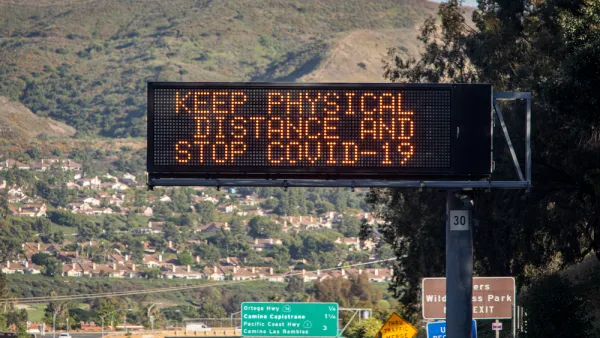
March 11 marked the second anniversary of WHO's declaration of the pandemic and the beginning of its third year. Cases continue to plummet in the U.S. and plateau globally while war in Europe has overshadowed the virus that has killed 6 million.

The state-sanctioned urbicide of Austin
People don’t kill cities. Freeways do.

US to reduce Colorado River water deliveries to Mexico
A new Colorado Treaty amendment reduces Mexico’s Colorado River water allocation by 250,000 acre feet.

New Jersey’s second-largest city bans standalone data centers
Jersey City will continue to allow co-location facilities, such as those meant for research institutions that store their own data.

Amtrak not solely to blame for New Jersey commuter rail's unreliability, report finds
A new study from the Garden State Initiative found that NJ Transit’s budget grew 20% across a 4 year period, but reliability declined significantly over the same period.

EPA erases limits on planet-warming pollution from power plants
Under Monday’s plan, power plants would still have some limits on how much mercury, arsenic and other contaminants they can emit.

Phoenix announces new on-demand transit service, more frequent RAPID buses
Both new services will launch in October, and are part of Phoenix's Project Effective Access Solutions for Easing Congestion.

FREE Course: Walkable City 1: Why Walkability?
After describing his path towards focusing on walkability as the essence of good planning, Jeff Speck marches through his five principal reasons for making more walkable places.
Reinventing Malls: Planning Alchemy—Turning Gray Fields Into Gold
The course focuses on the opportunities and imperatives that shape reinvention of mall sites.

Eagle County Government
Harvard University Graduate School of Design
Nashville Planning Department
The Architects Foundation
University of Cincinnati Online
The Pocatello Development Authority
The Urban Renewal Agency of the City of Pocatello
Journal of the American Planning Association