A coalition of environmental scored a victory this month, when the U.S. Army Corps of Engineers canceled an expensive, and controversial, flood control project.


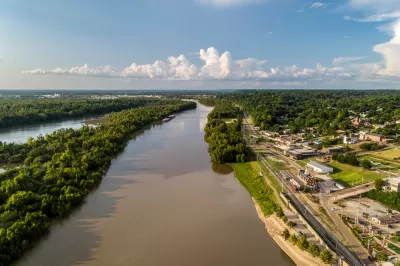
The Associated Press reports that U.S. Army Corps of Engineers has canceled the $450 million Yazoo Pumps flood control project planned in Mississippi for the flatlands between the Mississippi and Yazoo rivers.
Environmental groups, including American Rivers, the National Audubon Society, the Sierra Club, Healthy Gulf, and Earthjustice, sued the Army Corps to delay the Yazoo Pumps Project. The aforementioned environmental groups put out a press release to celebrate the project's cancelation and describe the basis for their legal challenge.
The Yazoo Pumps would have drained 14,000 cubic-feet-per-second of floodwaters from farmland in the area, but the environmental group argued that the plan would leave most local communities vulnerable. "Corps data shows only 17% of the backwater would receive any flood relief from the Pumps," according to the press release.
FULL STORY: Corps cancels Mississippi flood project that EPA rejected

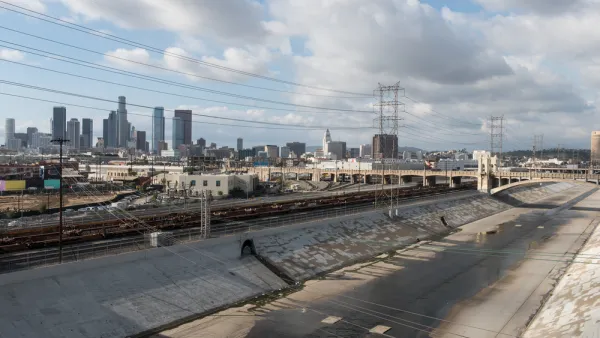
Los Angeles Wants its River Back From the Feds
Regional officials don't think the federal government is doing enough to warrant continued ownership of the Los Angeles River flood control channels that cut a 40-mile path through the city and county.
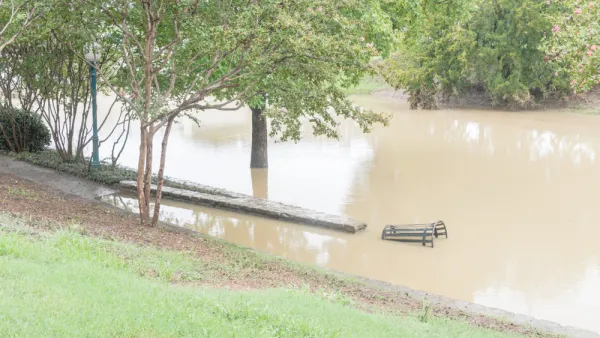
Fort Worth Spending More on Flood Control; Still Well Short of What’s Needed
Fort Worth could spend $136 million on stormwater infrastructure and flood control over the next five years. In all, the city needs more like $1 billion of investment.
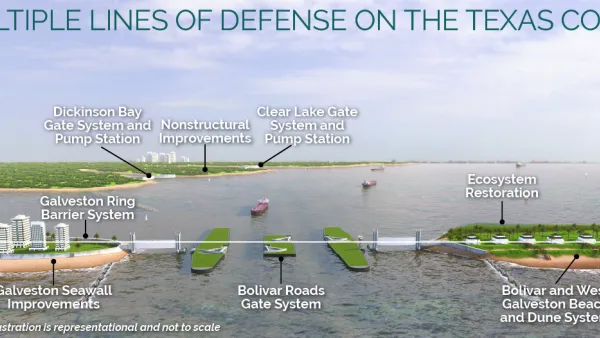
$31 Billion ‘Ike Dike’ Hurricane Protection Project Moving Through Congress
Congress authorized the $31 billion ‘Ike Dike’ sea-level rise adaptation project, along with a laundry list of other water infrastructure projects.

Planetizen Federal Action Tracker
A weekly monitor of how Trump’s orders and actions are impacting planners and planning in America.

The state-sanctioned urbicide of Austin
People don’t kill cities. Freeways do.

US to reduce Colorado River water deliveries to Mexico
A new Colorado Treaty amendment reduces Mexico’s Colorado River water allocation by 250,000 acre feet.

Mamdani overhauls NYC's Vision Zero plan with 100 new policy goals
The overhaul aims to reduce traffic deaths and make streets safer for pedestrians, cyclists and drivers through lower speed limits, new safety infrastructure and more.

Amtrak not solely to blame for New Jersey commuter rail's unreliability, report finds
A new study from the Garden State Initiative found that NJ Transit’s budget grew 20% across a 4 year period, but reliability declined significantly over the same period.

EPA erases limits on planet-warming pollution from power plants
Under Monday’s plan, power plants would still have some limits on how much mercury, arsenic and other contaminants they can emit.

FREE Course: Walkable City 1: Why Walkability?
After describing his path towards focusing on walkability as the essence of good planning, Jeff Speck marches through his five principal reasons for making more walkable places.
Reinventing Malls: Planning Alchemy—Turning Gray Fields Into Gold
The course focuses on the opportunities and imperatives that shape reinvention of mall sites.

Eagle County Government
Harvard University Graduate School of Design
Nashville Planning Department
The Architects Foundation
University of Cincinnati Online
The Pocatello Development Authority
The Urban Renewal Agency of the City of Pocatello
Journal of the American Planning Association