The proposal would reform the inspection process to improve coordination between departments and institute a fine for landlords who don't make requested repairs.



Houston City Councilmember Letitia Plummer "is workshopping an inspection reform proposal to target dangerous or below-standard apartment conditions" after witnessing "deplorable conditions" in Houston rental properties, writes Jen Rice.
"Under Plummer’s proposal, all multi-family property owners who don’t make repairs requested by tenants and the city will be charged a $250 annual fee until all issues are resolved," with the proceeds funding the hiring of more inspectors. "The proposal stems from two amendments to the city's 2022 budget Plummer tried to pass in June," which were referred to a council committee "for further discussion" by the city's mayor in June. Of Houston's 427,000 occupied rental units, 32 percent are classified as Class C–"older properties in fair or worse shape, in need of maintenance"–while 10 percent of those units, inhabited by over 100,000 people, are classified as Class D, having the oldest and worst conditions.
With apartment inspections currently spread out over four city departments–"the health department, fire department, police department, and public works department"–the "reform proposed by Plummer would aim to improve coordination between departments by developing new risk-assessment profiles for multifamily properties, increasing the number of inspections and creating a method of sharing data across agencies."
FULL STORY: Landlords could be held more accountable under a newly proposed Houston apartment inspection process

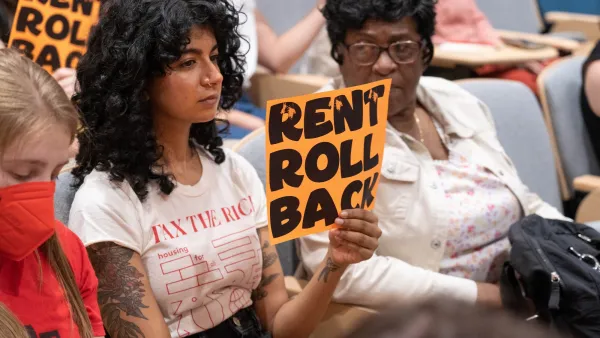
What Happened to ‘Renter’s Choice’ Legislation?
Years ago, officials in dozens of cities and states showed interest in passing legislation that required landlords to accept alternatives to the traditional lump-sum security deposit. Today, much of that momentum has diminished.
How New California Housing Laws Will Impact Renters
Laws going into effect this year will affect regulations around security deposits, credit checks, and even e-scooters.
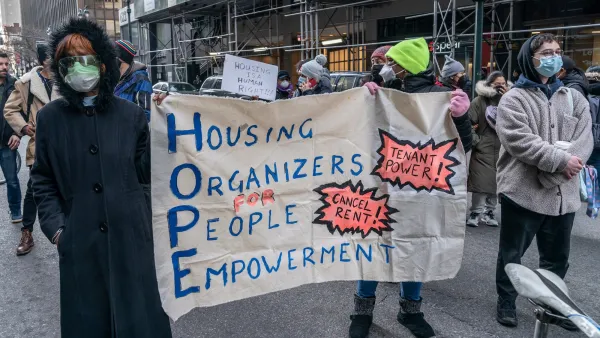
NYC 'Rental Ripoff' report calls for crackdown on negligent landlords
The report outlines strategies for empowering renters and transferring properties from 'low-road' landlords to those who focus on improved tenant outcomes.

Planetizen Federal Action Tracker
A weekly monitor of how Trump’s orders and actions are impacting planners and planning in America.

The state-sanctioned urbicide of Austin
People don’t kill cities. Freeways do.

US to reduce Colorado River water deliveries to Mexico
A new Colorado Treaty amendment reduces Mexico’s Colorado River water allocation by 250,000 acre feet.

5 New England states march closer to 800 megawatt wind energy project
Securing federal approval for the project may be complicated under the Trump administration, which has historically been hostile towards domestic wind power.

Baltimore to break ground on $50 million Transit Priority Project
The project will bring faster bus trips, safer streets and better bike connections to Baltimore.

Airbnb launches $250 million 'last-dollar financing' housing accelerator, makes first investment in Austin
The company will put $6.4 million towards affordable housing development in Texas’ capital.

FREE Course: Walkable City 1: Why Walkability?
After describing his path towards focusing on walkability as the essence of good planning, Jeff Speck marches through his five principal reasons for making more walkable places.
Reinventing Malls: Planning Alchemy—Turning Gray Fields Into Gold
The course focuses on the opportunities and imperatives that shape reinvention of mall sites.

Eagle County Government
Harvard University Graduate School of Design
Nashville Planning Department
The Architects Foundation
University of Cincinnati Online
The Pocatello Development Authority
The Urban Renewal Agency of the City of Pocatello
Journal of the American Planning Association