If you thought residential buildings had reached their maximum potential for livable height, just wait a few years.


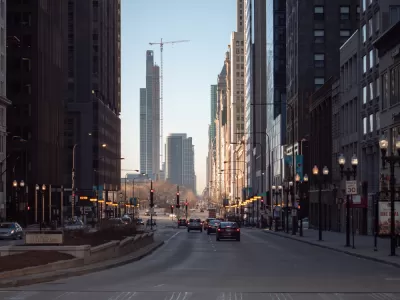
"Advances in concrete, elevators, and engineering have created a new breed of buildings," according to an article by James Tarmy.
These new supertall residential towers continue to grow, both in size and controversy, as new products come online, taller than the preceding generation. According to Tarmy, residents of these buildings might be in a for a few surprises, like in the example that opens the article, 432 Park in New York City.
At 432 Park, chandeliers often sway with the building, and creaking sounds can be heard on gusty nights. Elevators have been shut down in high wind because their cables were shaking too much to be safe. Right before Labor Day, the entire building had to clear out for about two days during extensive repairs to the building’s electrical systems. It’s hardly what residents thought they’d be getting for their $20 million-plus investments.
While the swaying is to be expected and buildings like 432 Park are subject to city, state, and international standards, each generation of supertall residential towers "is a proving ground for the next," writes Tarmy. This generation is abundant, in addition to being increasingly tall.
"From 1991 to 2001, an average of twelve 200-meter-plus structures went up around the world each year. From 2011 to 2021, the annual average was 112, according to a report by the Council on Tall Buildings & Urban Habitat," writes Tarmy. "The average height of the 100 tallest buildings in the world has increased 41% since 2001, from 284 meters to 399."
The article also provides details about some of the lessons contributing to the ever increasing height of residential supertall buildings—like what we've learned about wind vortices and construction materials.
Read the full story: Luxury Supertowers Are Going Even Higher (Don’t Mind the Swaying!)

Skyscraper Proposed for Austin Would Be Tallest in Texas
The skylines are starting to catch up to the hype about everything being bigger in Texas.
More Skyscrapers Coming Soon to New York City's Skyline
After a decade of skyward expansion, even more skyscrapers are on the horizon in Manhattan.
New Residences in New York Aim High
Matt Shaw updates the status of New York's efforts to catch up with the global rise in super-tall residential skyscrapers.

Planetizen Federal Action Tracker
A weekly monitor of how Trump’s orders and actions are impacting planners and planning in America.

The state-sanctioned urbicide of Austin
People don’t kill cities. Freeways do.

US to reduce Colorado River water deliveries to Mexico
A new Colorado Treaty amendment reduces Mexico’s Colorado River water allocation by 250,000 acre feet.

Nation's most wind-powered state turns to coal as data centers increase energy demand
For the first time in decades, Iowa has increased its generation of coal power.

NYC cools commuters with city's first rain garden above a bus stop
New York City officials say the plants in the rain garden can absorb 16 gallons of rainwater during heavy storms.

Brightline West’s future may rely on $6 billion federal loan
The company has until Nov. 2 to make a $400 million equity investment into its proposed high-speed rail line.

FREE Course: Walkable City 1: Why Walkability?
After describing his path towards focusing on walkability as the essence of good planning, Jeff Speck marches through his five principal reasons for making more walkable places.
Reinventing Malls: Planning Alchemy—Turning Gray Fields Into Gold
The course focuses on the opportunities and imperatives that shape reinvention of mall sites.

Greater Baltimore Committee
Eagle County Government
Harvard University Graduate School of Design
The Architects Foundation
University of Cincinnati Online
The Pocatello Development Authority
The Urban Renewal Agency of the City of Pocatello
Journal of the American Planning Association