Since voters approved a measure expanding Seattle's light rail network, construction and land costs have soared, adding billions to the projected price tag.


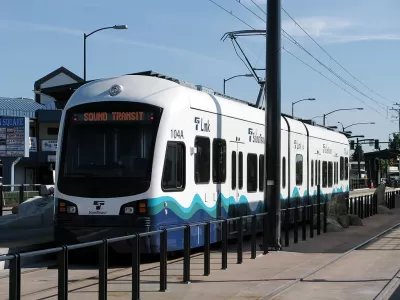
Seattle's Sound Transit agency "has a $6 billion to $8 billion funding shortfall to build nine rail extensions and two bus-rapid transit routes promised in the voter-approved Sound Transit 3 measure," reports Michelle Baruchman. "Consultants this spring found that the deficit resulted from inaccuracies in early cost estimates along with rapid land and construction price increases." As Baruchman wrote in an earlier story, "[c]ost estimates for extending Sound Transit light rail to both Ballard and West Seattle have risen by about $5 billion," amounting to a 50% increase over prior estimates.
While federal aid could help bridge the funding gap, "Sound Transit’s board is considering new construction schedules, known as a 'realignment,' that postpone most opening dates two to 10 years in an attempt to manage tax revenue."
The Seattle Times asks readers to submit their questions about potential delays. "A realignment vote could come Aug. 5."
FULL STORY: What questions do you have about possible Sound Transit 3 delays?

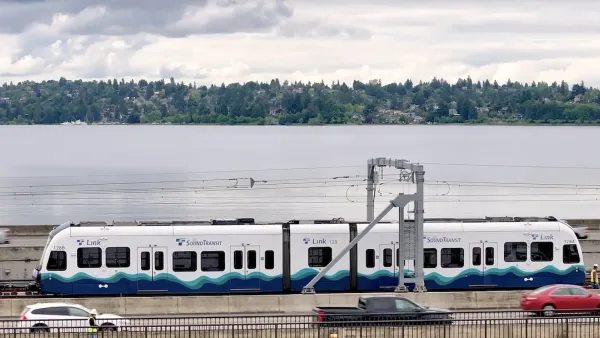
Floating Light Rail Bridge Crossing Marks Historic Moment for Seattle Transit
Once testing is complete, Sound Transit will open the world’s first light rail line that uses a floating bridge connecting downtown Seattle to the Eastside.

West Seattle Link Expansion Could Cost $7 Billion
Sound Transit is moving forward with a proposed route despite severe cost overruns, throwing other major rail projects into question.
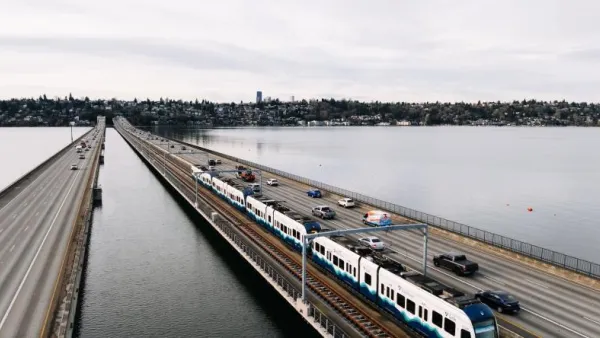
Seattle’s Floating Light Rail Bridge to Open March 28
The new East Link segment of King County’s light rail system crosses Lake Washington on a first-of-its-kind floating bridge.

Planetizen Federal Action Tracker
A weekly monitor of how Trump’s orders and actions are impacting planners and planning in America.

The state-sanctioned urbicide of Austin
People don’t kill cities. Freeways do.

US to reduce Colorado River water deliveries to Mexico
A new Colorado Treaty amendment reduces Mexico’s Colorado River water allocation by 250,000 acre feet.

5 New England states march closer to 800 megawatt wind energy project
Securing federal approval for the project may be complicated under the Trump administration, which has historically been hostile towards domestic wind power.

Baltimore to break ground on $50 million Transit Priority Project
The project will bring faster bus trips, safer streets and better bike connections to Baltimore.

Airbnb launches $250 million 'last-dollar financing' housing accelerator, makes first investment in Austin
The company will put $6.4 million towards affordable housing development in Texas’ capital.

FREE Course: Walkable City 1: Why Walkability?
After describing his path towards focusing on walkability as the essence of good planning, Jeff Speck marches through his five principal reasons for making more walkable places.
Reinventing Malls: Planning Alchemy—Turning Gray Fields Into Gold
The course focuses on the opportunities and imperatives that shape reinvention of mall sites.


Eagle County Government
Harvard University Graduate School of Design
Nashville Planning Department
The Architects Foundation
University of Cincinnati Online
The Pocatello Development Authority
The Urban Renewal Agency of the City of Pocatello
Journal of the American Planning Association