From big cities to small towns, the share of homes with selling prices above $1 million is rising quickly.


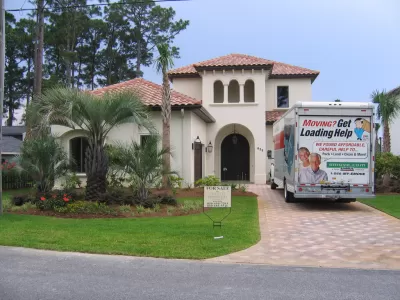
An analysis from Point2 "looked at the share of homes above $1 million, $3 million and $5 million (where available) to rank these places according to the availability of luxury housing," writes Andra Hopulele.
"According to the National Association of REALTORS® (NAR), the number of homes sold for more than $1 million rose by 81% to 17,216 in February, from 9,635 one year earlier." San Francisco, whose median home price is $1.5 million, "has the highest share of homes above $1 million and the highest percentage of high-end properties priced over $3 million, but Los Angeles dominates the ranking when it comes to the share of high-end homes for sale above $5 million."
Smaller cities also had high percentages of luxury inventory. "In Glendora, CA, 41.2% of the entire inventory of homes for sale is represented by luxury homes with an asking price above $1 million. Four other small markets boast a share of luxury inventory above 10%: Aliso Viejo, CA; Placentia, CA; Queen Creek, AZ and Galveston, TX." And "[w]ith nearly 70% of its entire inventory above the million-dollar mark, Santa Clarita earns the title of most luxurious mid-sized market."
"At the other end of the ranking, El Paso, TX would seem to be the least luxurious of all 30 large cities: No homes are for sale over $3 million nor $5 million. In fact, only 0.6% of all homes for sale are more than $1 million, meaning this Texas city is the most affordable large market."
Read the full story: American Cities with the Highest Share of Luxury Homes for Sale
U.S. Home Sales to Foreign Buyers Drop by Almost 10 Percent
International purchases of homes on the U.S. housing market slowed in the last year.
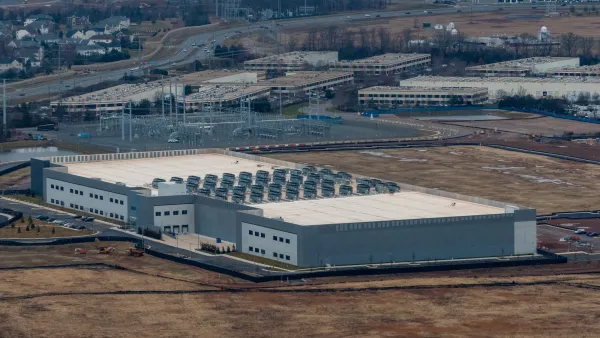
Data center developer offers over $4M per acre to buy out homeowners
Data center builders are outbidding home builders for land, prompting concerns about competition with housing.
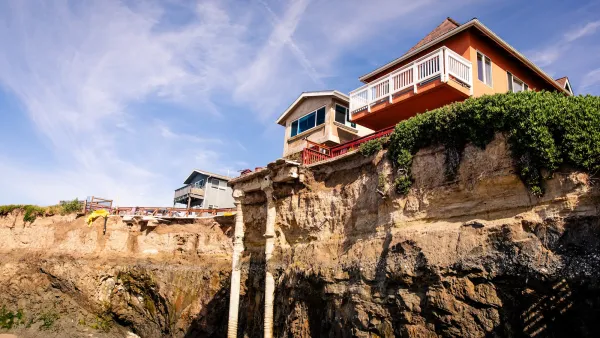
Zillow Deleted Climate Risk From California Listings. This Climate Expert Wants to Bring it Back.
While difficult to estimate for individual homes, experts argue that home buyers should have access to data about flood and wildfire risk, extreme heat, and other climate hazards in the area.

Planetizen Federal Action Tracker
A weekly monitor of how Trump’s orders and actions are impacting planners and planning in America.

California plans to bury El Niño’s downpour
If the state plays its cards right, it may be able to store a billion acre-feet of El Niño’s water in aquifers.

Desperate measures: Advocates weigh draining Lake Powell to fill Colorado River
Draining the reservoir could reduce evaporation losses by a couple hundred thousand acre-feet.

Mamdani’s pied-à-terre tax survives legal challenge
A panel of judges found that the plaintiffs failed to demonstrate injury as a result of New York City's implementation of the tax.

Eastern Nebraska is running out of electricity
Data centers and electrification are straining eastern Nebraska’s grid, throttling economic development.

Seattle passes record-breaking transit services expansion
Proposition 1 will double the city’s transit tax to add 95,000 more bus trips and preserve 180,000 bus trips annually.

FREE Course: Walkable City 1: Why Walkability?
After describing his path towards focusing on walkability as the essence of good planning, Jeff Speck marches through his five principal reasons for making more walkable places.
Reinventing Malls: Planning Alchemy—Turning Gray Fields Into Gold
The course focuses on the opportunities and imperatives that shape reinvention of mall sites.

City of Rosemead
Rutgers University, Edward J. Bloustein School of Planning and Public Policy
One Hundred Miles
University of Michigan School for Environment and Sustainability (SEAS)
Hunter College, City University of New York (CUNY)
The Architects Foundation
City of Cambridge
Montrose County
The Pocatello Development Authority