A redesign costing a mere $12 million transformed the main street of the desert city of Lancaster, Calif., from an ordinary retail strip to a genuine place. If Lancaster can do it, any city can.


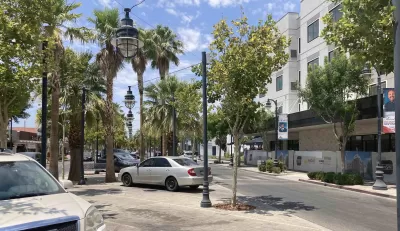
The BLVD, which is the brand name that refers to a nine-block stretch of Lancaster Boulevard, began life as a 1950s-style one-story retail strip in the heart of Lancaster, near the city's Southern Pacific (now Metrolink) station. It was and is the type where storefronts, rather than parking stalls, abut the sidewalk and where curb cuts don't cut through every single block. Even in its early heyday, it was surely nothing special, but vastly preferable to a bunch of strip malls.
I don't want to presume that The BLVD has solved all of Lancaster's problems or made the desert bloom. I also don't want to presume that, as much as progressive planners (myself included) might tout density and walkabilty, that residents of Lancaster don't like their single-family homes and multilane boulevards. But I have to believe that they appreciate an alternative. The BLVD might occupy just a few short blocks–and the average Lancaster resident might not go there more than a few times a year–but it provides at least one place that's special and pleasant in a place that is spectacular but also bleak.
Read the full story: Lancaster's BLVD Delivers

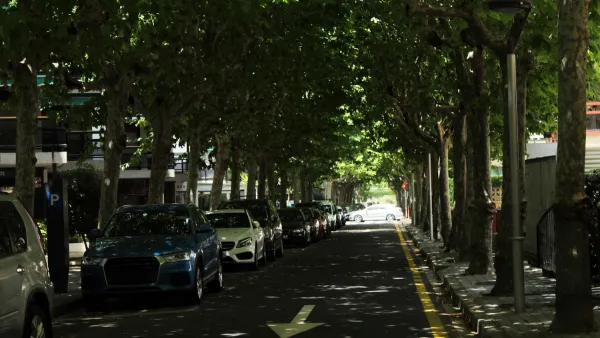
Research: More Complex Streets Are Safer
Streets that offer more perceived obstacles and distractions can force drivers to slow down and drive more carefully.

First US Hydrogen Public Utility to Launch in California
The project will serve as an intermediary between clean hydrogen providers and consumers.
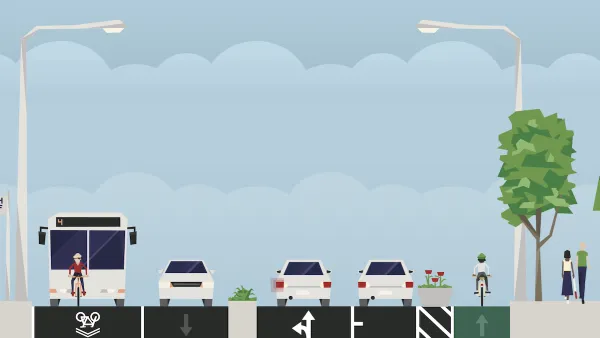
Reimagining Your Street
How to use free online tools to redesign your local streetscape.

Planetizen Federal Action Tracker
A weekly monitor of how Trump’s orders and actions are impacting planners and planning in America.

Data reveals that NYC’s bet on congestion pricing has paid off
After almost two years of the program, reports show positive impacts on traffic and air quality and no disruptions to parking.
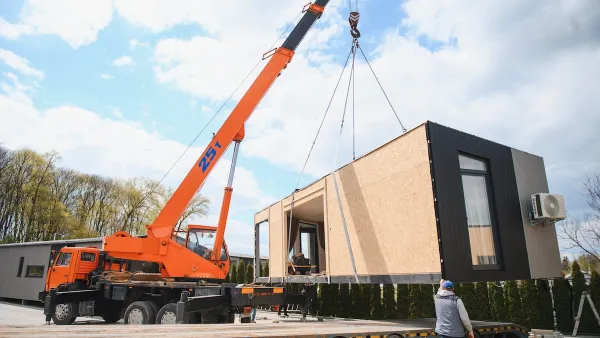
HUD modernizes 50-year-old manufactured housing framework
The Next Generation Manufactured Housing Action Plan establishes new energy-efficiency standards for manufactured homes, and new guidelines for anchoring them.

California voters weigh $11.25 billion housing bond
Prop. 1, combined with other funding, would support over 40,000 new rental units in California.

Connecticut is turning landfills into green infrastructure
Twenty-nine solar arrays have been built, or approved to be built, on top of Connecticut landfills.

Trump guts ‘win-win’ solar energy program for rural farmers
The U.S. Department of Agriculture’s changes have made virtually all solar power ineligible for funding through the Rural Energy for America Program.

FREE Course: Walkable City 1: Why Walkability?
After describing his path towards focusing on walkability as the essence of good planning, Jeff Speck marches through his five principal reasons for making more walkable places.
Reinventing Malls: Planning Alchemy—Turning Gray Fields Into Gold
The course focuses on the opportunities and imperatives that shape reinvention of mall sites.

One Hundred Miles
County of Mendocino
planning NEXT
The Architects Foundation
University of Cincinnati Online
Montrose County
Northern Illinois Transit Authority (NITA)
The Pocatello Development Authority