Walker contemplates the implications of the science fiction staple that continues to fascinate and engage writers and technologists.


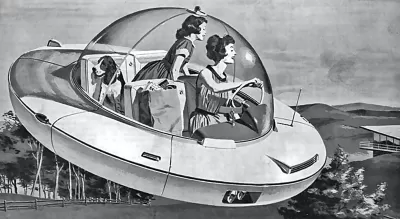
Musing on a tweet by Scott Edgar that asserts that "a sizeable share of contemporary science fiction is really just bad faith rationales for not building bus lanes," Jarrett Walker examines the concept of flying cars in Ada Palmer's "Terra Ignota" books, which take place in "a 25th Century world where automated flying Uber has crushed all other modes of transport, creating a dreaded concentration of monopoly power from which flow the crises that drive the plot."
In the books, conflicts are resolved by a system of "neutral justice." But, Jarrett writes, "a city that functions (rather than just symbolizes) needs a much finer shared web of legal and cultural systems. There must still be rules about where you can land a flying car, or what you can throw in a sewer drain that goes to the local river, or whether you can build a factory next to people’s homes. In the absence of such rules, we must imagine the libertarian urban world that the unrestrained flying car would make."
Jarrett questions whether "we should want to 'abolish geography', as so many transport gadget inventors have promised over the years," and how it would affect our conception of citizenship and civic engagement. "[I]n a world of such universal travel, [have] all these places become so identical that you might as well work from home?" In "a placeless society where you and your neighbor listen to different news sources to the point that you have incompatible views about reality," "would you still be able to cooperate about fixing the fence or agreeing on quiet hours?"
FULL STORY: Where Flying Cars Take Us: A Science Fiction Excursion

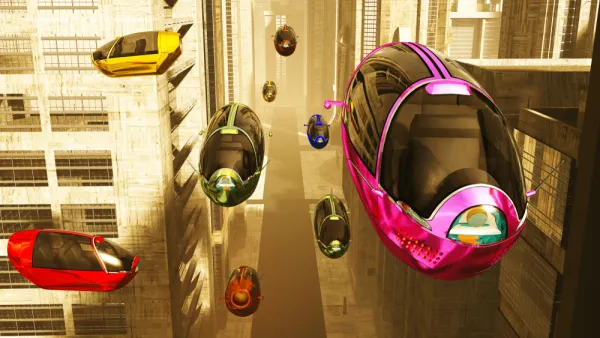
A Transit Consultant's Take on Flying Cars
A journalist asked, so Jarrett Walker answered.
March Must-Reads: Top 10 Articles From Last Month
Seattle may roll back a development fee as housing permits plummet, an ambitious Google-led project in the heart of San Jose goes sideways, and a list of sci-fi books to feed your futurist dreams.
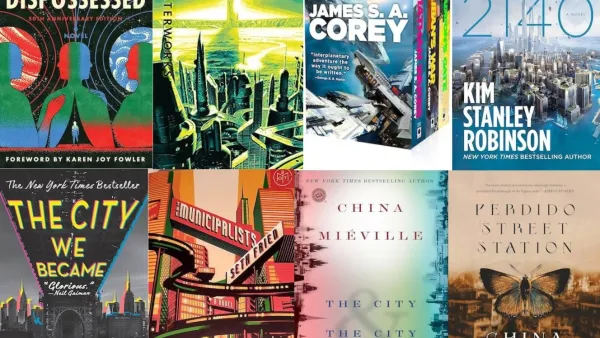
Eight Sci-Fi Books That Teach Urbanists the Dos and Don’ts of the Future
Science fiction has long painted a picture of the city of the future. What if it’s our roadmap out of dystopia?

Planetizen Federal Action Tracker
A weekly monitor of how Trump’s orders and actions are impacting planners and planning in America.

The state-sanctioned urbicide of Austin
People don’t kill cities. Freeways do.

US to reduce Colorado River water deliveries to Mexico
A new Colorado Treaty amendment reduces Mexico’s Colorado River water allocation by 250,000 acre feet.

5 New England states march closer to 800 megawatt wind energy project
Securing federal approval for the project may be complicated under the Trump administration, which has historically been hostile towards domestic wind power.

Baltimore to break ground on $50 million Transit Priority Project
The project will bring faster bus trips, safer streets and better bike connections to Baltimore.

Airbnb launches $250 million 'last-dollar financing' housing accelerator, makes first investment in Austin
The company will put $6.4 million towards affordable housing development in Texas’ capital.

FREE Course: Walkable City 1: Why Walkability?
After describing his path towards focusing on walkability as the essence of good planning, Jeff Speck marches through his five principal reasons for making more walkable places.
Reinventing Malls: Planning Alchemy—Turning Gray Fields Into Gold
The course focuses on the opportunities and imperatives that shape reinvention of mall sites.

Eagle County Government
Harvard University Graduate School of Design
Nashville Planning Department
The Architects Foundation
University of Cincinnati Online
The Pocatello Development Authority
The Urban Renewal Agency of the City of Pocatello
Journal of the American Planning Association