Supporters of the Big Sky Passenger Rail Authority argue that a new train could spur economic development and provide a valuable service for the state's non-driving residents.


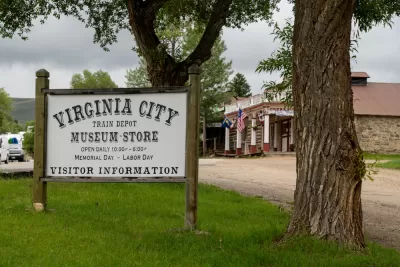
A statewide coalition is "working to revive passenger rail in southern Montana," reports Surya Milner for High Country News. If completed, "the line would span 600 miles and connect the state’s residents, including elderly, disabled and non-mobile people, to doctor’s appointments, shopping centers and one another."
The project is aimed at providing an accessible mode of transportation for the state's residents, many of whom don't have access to private vehicles. The coalition, named the Big Sky Passenger Rail Authority, "was the brainchild of Missoula County Commissioner Dave Strohmaier. In 2020, Strohmaier rallied support from a dozen urban and rural counties, passed a joint resolution among county commissions to create the authority, and began meeting with Amtrak and Montana’s congressional representatives to discuss funding and infrastructure. Strohmaier wants to revive the rail line that ran from Chicago through southern Montana to Seattle from 1971 to 1979." Supporters of the proposed rail line argue that better passenger rail could be "an engine of equity across a politically and economically divided state." A train, they claim, could present a "significant opportunity to provide enhanced transportation" for the state's residents as well as "an opportunity for business expansion or development." Currently, close to 20% of Montana residents don't have a driver's license.
The project isn't without its detractors. "Local hesitation, coupled with a state Legislature that’s been slow to pursue public transportation, makes for a tough battle." But "the coalition is optimistic that the Biden administration’s commitment to building out transportation infrastructure nationwide is a harbinger of expanded transit across the state," and that "the stars have aligned politically to make something big happen" when it comes to reviving passenger rail.
FULL STORY: Montana counties band together to reinvigorate passenger rail

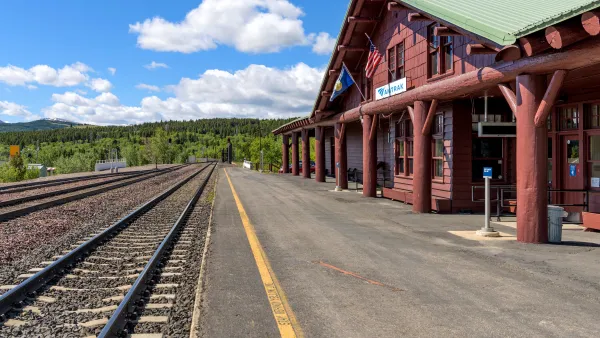
More Passenger Rail Coming to Montana
Planning is underway to restore a 45-year-defunct regional passenger rail line connecting southern Montana to Billings and Amtrak’s east-west Empire Builder line from Seattle to Chicago.
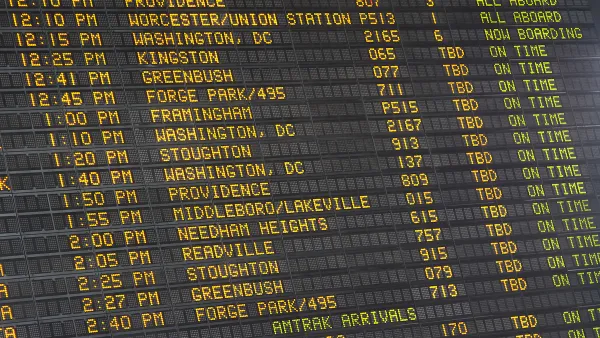
The Bright Future of U.S. Passenger Rail
High-speed rail may still be a distant vision in the United States, but conventional passenger rail is having a resurgence.
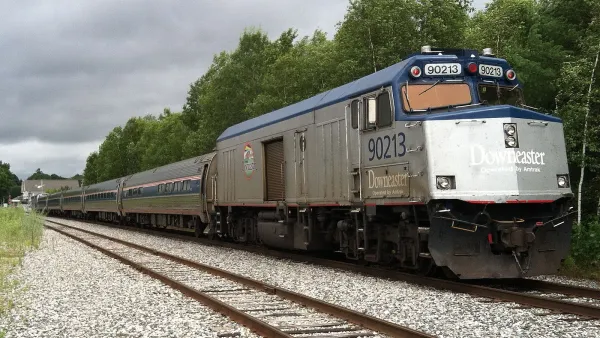
What States Can Learn From the Success of Maine's Downeaster Train
As Amtrak gears up to plan expansion projects supported by new federal funding, states can take some advocacy lessons from Maine's popular Downeaster train.

The state-sanctioned urbicide of Austin
People don’t kill cities. Freeways do.

US to reduce Colorado River water deliveries to Mexico
A new Colorado Treaty amendment reduces Mexico’s Colorado River water allocation by 250,000 acre feet.

New Jersey’s second-largest city bans standalone data centers
Jersey City will continue to allow co-location facilities, such as those meant for research institutions that store their own data.

Amtrak not solely to blame for New Jersey commuter rail's unreliability, report finds
A new study from the Garden State Initiative found that NJ Transit’s budget grew 20% across a 4 year period, but reliability declined significantly over the same period.

EPA erases limits on planet-warming pollution from power plants
Under Monday’s plan, power plants would still have some limits on how much mercury, arsenic and other contaminants they can emit.

Phoenix announces new on-demand transit service, more frequent RAPID buses
Both new services will launch in October, and are part of Phoenix's Project Effective Access Solutions for Easing Congestion.

FREE Course: Walkable City 1: Why Walkability?
After describing his path towards focusing on walkability as the essence of good planning, Jeff Speck marches through his five principal reasons for making more walkable places.
Reinventing Malls: Planning Alchemy—Turning Gray Fields Into Gold
The course focuses on the opportunities and imperatives that shape reinvention of mall sites.

Eagle County Government
Harvard University Graduate School of Design
Nashville Planning Department
The Architects Foundation
University of Cincinnati Online
The Pocatello Development Authority
The Urban Renewal Agency of the City of Pocatello
Journal of the American Planning Association