The city is using the redistributed money to purchase hotels for permanent housing and provide supportive services.


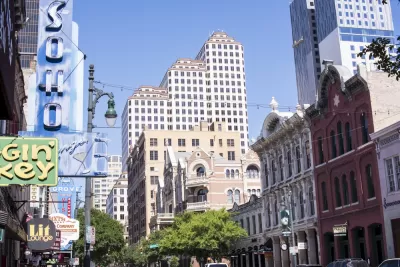
Austin has purchased the first of what the city council hopes will be many hotels to be used as permanent housing for people who were previously unhoused, reports Alissa Walker for Curbed. The $6.5 million in funding for the project comes as part of a $20 million package that was recently redistributed from Austin's police budget as part of an experiment in reallocating police funding to social services.
"In addition to funding housing, including a new shelter to protect families facing domestic violence, the reconfigured budget proposes a plan to replace police officers with social workers to respond to nonviolent 911 calls, meaning the people who are the first point of contact for unhoused residents will be armed with mental-health training and access to shelter beds instead of guns," writes Walker. Councilmember Greg Casar emphasized the link between homelessness and police funding, citing the ineffectiveness of criminalizing the unhoused instead of funding supportive programs. "We know that policing and jails doesn’t solve homelessness. Housing does," he said.
Opponents of the plan are fighting back with a ban on public camping likely headed to the next state ballot and threats of a statewide anti-camping ordinance from Texas Governor Greg Abbott. If passed, such legislation would make life even more difficult for people experiencing homelessness.
FULL STORY: Austin Experiments With Moving Police Dollars to Homeless Housing

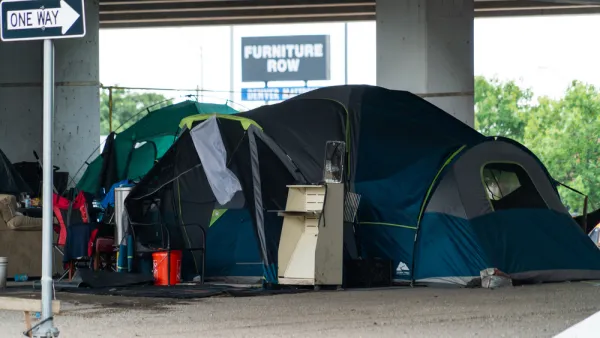
Austin Selects Two Potential Sites for Sanctioned Encampments
The city plans to install temporary housing and facilities as part of its efforts to reduce homelessness and help people move into permanent housing.
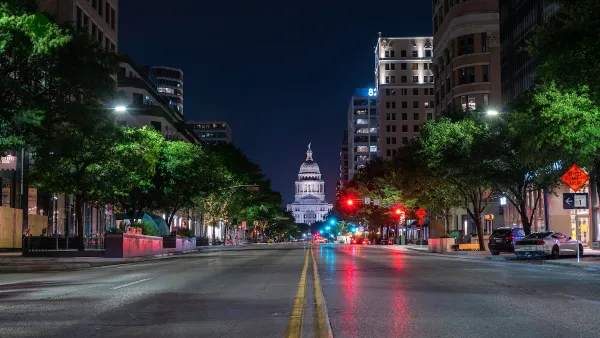
Austin Creates Homeless Strategy Office
The new office is dedicated to consolidating the city’s efforts to house unhoused residents.
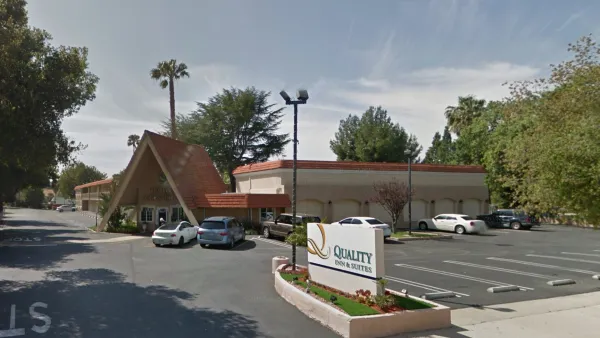
California's hotel-to-housing program put 13,500 people into homes
A CalMatters analysis evaluates the success of the state's pandemic-era homeless housing program.

The state-sanctioned urbicide of Austin
People don’t kill cities. Freeways do.

US to reduce Colorado River water deliveries to Mexico
A new Colorado Treaty amendment reduces Mexico’s Colorado River water allocation by 250,000 acre feet.

New Jersey’s second-largest city bans standalone data centers
Jersey City will continue to allow co-location facilities, such as those meant for research institutions that store their own data.

Amtrak not solely to blame for New Jersey commuter rail's unreliability, report finds
A new study from the Garden State Initiative found that NJ Transit’s budget grew 20% across a 4 year period, but reliability declined significantly over the same period.

EPA erases limits on planet-warming pollution from power plants
Under Monday’s plan, power plants would still have some limits on how much mercury, arsenic and other contaminants they can emit.

Phoenix announces new on-demand transit service, more frequent RAPID buses
Both new services will launch in October, and are part of Phoenix's Project Effective Access Solutions for Easing Congestion.

FREE Course: Walkable City 1: Why Walkability?
After describing his path towards focusing on walkability as the essence of good planning, Jeff Speck marches through his five principal reasons for making more walkable places.
Reinventing Malls: Planning Alchemy—Turning Gray Fields Into Gold
The course focuses on the opportunities and imperatives that shape reinvention of mall sites.

Eagle County Government
Harvard University Graduate School of Design
Nashville Planning Department
The Architects Foundation
University of Cincinnati Online
The Pocatello Development Authority
The Urban Renewal Agency of the City of Pocatello
Journal of the American Planning Association