The State of Place blog is offering a pop quiz designed to help you diagnose the kind of post-2020 city-maker you are.


With so many tough lessons learned (fingers crossed!) in 2020, State of Place offers the quiz as an opportunity to take stock of how the world is changing—and how the roles of planners and designers are changing in response.
"So the question is, who will you be as a Citymaker in 2021 and beyond? What approaches or tools will you adopt? What new challenges will you face head on? What will be your role in creating a new narrative around what is - and should be - normal?"
The quiz is intended to be both fun and informative, with a focus on placemaking, technology, and equity. The author of this post took the quiz and the results were that I am a "Whole is Bigger than the Sum of its Parts" planner.
[Update: The quiz does not require an email to complete. Use the grey option under the big orange button on the quiz.]
Read the full story: Quiz: What Kind of Post-2020 Citymaker Are You?
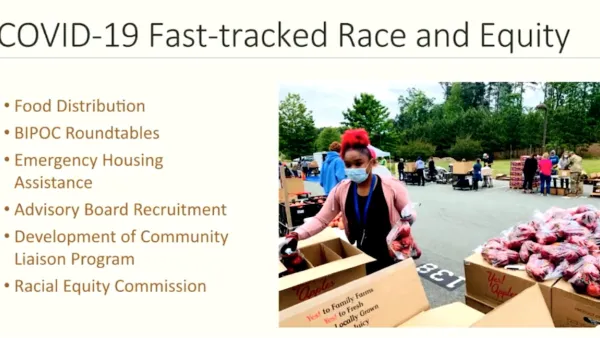
Equity and 'Righting Past Wrongs' to Start the 2021 National Planning Conference
The American Planning Association's 2021 National Planning Conference started streaming this morning, with an obvious focus on equity and the historical role of the planning profession in perpetuating systemic racism.
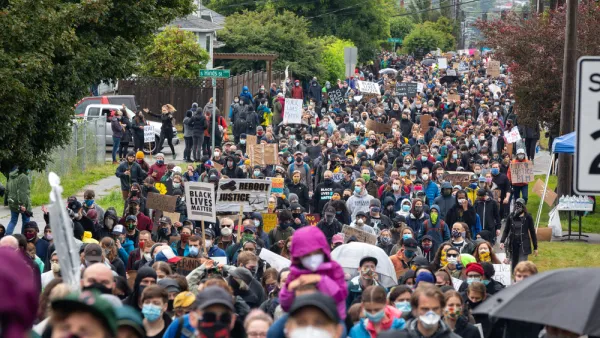
Stories of Resilience From 2020
A year of intense challenges also offers a chance to break from the unsustainable, inequitable status quo.
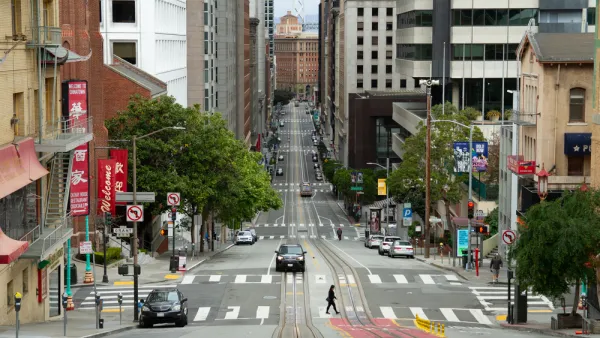
Planning and the Pandemic: Trends From 2020
If ever there was a doubt about the sheer depth and breadth of intersectionality found in the practice and theory of planning, the pandemic provides daily reminders.

Planetizen Federal Action Tracker
A weekly monitor of how Trump’s orders and actions are impacting planners and planning in America.

California plans to bury El Niño’s downpour
If the state plays its cards right, it may be able to store a billion acre-feet of El Niño’s water in aquifers.

Desperate measures: Advocates weigh draining Lake Powell to fill Colorado River
Draining the reservoir could reduce evaporation losses by a couple hundred thousand acre-feet.

Mamdani’s pied-à-terre tax survives legal challenge
A panel of judges found that the plaintiffs failed to demonstrate injury as a result of New York City's implementation of the tax.

Eastern Nebraska is running out of electricity
Data centers and electrification are straining eastern Nebraska’s grid, throttling economic development.

Seattle passes record-breaking transit services expansion
Proposition 1 will double the city’s transit tax to add 95,000 more bus trips and preserve 180,000 bus trips annually.

FREE Course: Walkable City 1: Why Walkability?
After describing his path towards focusing on walkability as the essence of good planning, Jeff Speck marches through his five principal reasons for making more walkable places.
Reinventing Malls: Planning Alchemy—Turning Gray Fields Into Gold
The course focuses on the opportunities and imperatives that shape reinvention of mall sites.

City of Rosemead
Rutgers University, Edward J. Bloustein School of Planning and Public Policy
One Hundred Miles
University of Michigan School for Environment and Sustainability (SEAS)
Hunter College, City University of New York (CUNY)
The Architects Foundation
City of Cambridge
Montrose County
The Pocatello Development Authority