Historic White's Ferry, which has crossed the Potomac River between Virginia and Maryland since the late 18th century, has announced that it will cease operations.


"The last remaining ferry boat to shuttle traffic across the Potomac River announced on Monday it would immediately cease operations due to a centuries-old legal dispute over its landing on the Virginia side of the river," reports Martin Austermuhle.
"Historic White’s Ferry, which has run ferry service between Montgomery County on the Maryland side and Loudoun County on the Virginia side since the late 1700s, said that a Virginia court had ruled that 'no public landing exists on the Virginia shoreline at White’s Ferry Road and the ferry is prohibited from landing at that location in Virginia,'" adds Austermuhle.
Austermuhle adds the entire backstory on the ferry and the dispute, and also notes political support on both sides of the river for resolving the conflict and restarting ferry service.
Joseph Choi also picked up the news for The Hill.
Read the full story: White’s Ferry, Last Remaining Ferry Crossing On Potomac River, Shuts Down Amid Legal Dispute
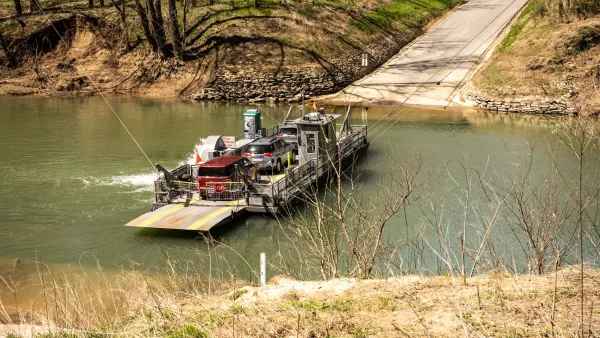
Nation’s Shortest Car Ferry Travels Just 200 Feet in a National Park
The Green River Ferry shuttles cars in a 30-second trip.
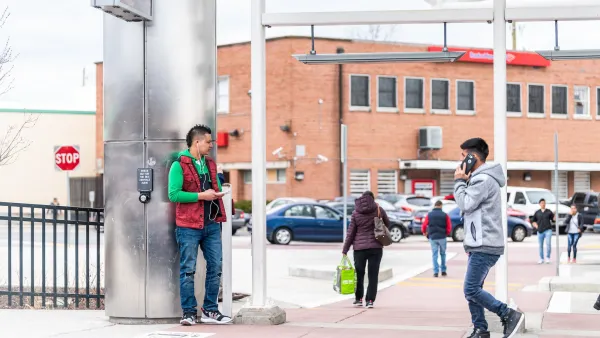
Montgomery County Residents Reject New Sidewalks, Citing Flooding and ‘Stranger Danger’
County officials nixed a proposal from MCDOT to build new sidewalks on streets near a future transit station.

NYC's Ferry System is Quietly Breaking Ridership Records
The system, which is planning an expansion, carried over 7.4 million passengers in 2024.

Planetizen Federal Action Tracker
A weekly monitor of how Trump’s orders and actions are impacting planners and planning in America.

California plans to bury El Niño’s downpour
If the state plays its cards right, it may be able to store a billion acre-feet of El Niño’s water in aquifers.

Desperate measures: Advocates weigh draining Lake Powell to fill Colorado River
Draining the reservoir could reduce evaporation losses by a couple hundred thousand acre-feet.

In Texas, data centers are swallowing promised parkland
Residents who moved to Taylor, Texas for a rural community now have to contend with three data centers in their backyard.

How a Chicago-sized wind farm beat the odds and powered on
The project spanned five presidential administrations and a standoff with a U.S. military base.

MTA gives itself 30 days to transform pit into basketball court
The site has been under construction since 2022; the city originally estimated it would finish the court in 2024.

FREE Course: Walkable City 1: Why Walkability?
After describing his path towards focusing on walkability as the essence of good planning, Jeff Speck marches through his five principal reasons for making more walkable places.
Reinventing Malls: Planning Alchemy—Turning Gray Fields Into Gold
The course focuses on the opportunities and imperatives that shape reinvention of mall sites.


City of Rosemead
Rutgers University, Edward J. Bloustein School of Planning and Public Policy
One Hundred Miles
Hunter College, City University of New York (CUNY)
The Architects Foundation
University of Cincinnati Online
City of Cambridge
Montrose County
The Pocatello Development Authority