As expected, air travel in the United States reached heights not seen since before the pandemic, but still fell well short of the norm.


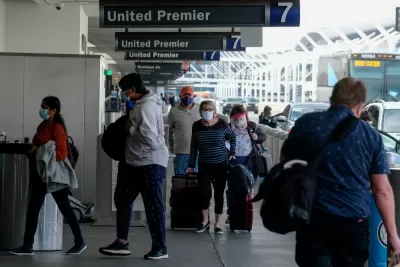
"Nearly 10 million people hopped on planes during the 10-day Thanksgiving period that ended Sunday, including four days with more than 1 million passengers and some of the busiest travel days of the COVID-19 era," reports Kyle Arnold.
"Still, some 1.18 million people traveled through TSA checkpoints on Sunday, the most since March, the agency reported Monday. A total of 9.4 million people went through TSA checkpoints between Nov. 20 and 29."
Those numbers seem like a lot in context of the pandemic, but they are 60 percent lower that the numbers from a year ago.
The numbers fall in line with the predictions listed in a recent blog post by Devin Partida, which noted that the high numbers relative to the pandemic norm, while still be low compared to the pre-pandemic norm, are kind of a lose-lose for the country. Less travel and tourism will have negative effects on the economy of most U.S. cities, but high travel numbers will have negative effects for the spread of the coronavirus.
FULL STORY: 9.4 million passengers during Thanksgiving week set pandemic-era airport records

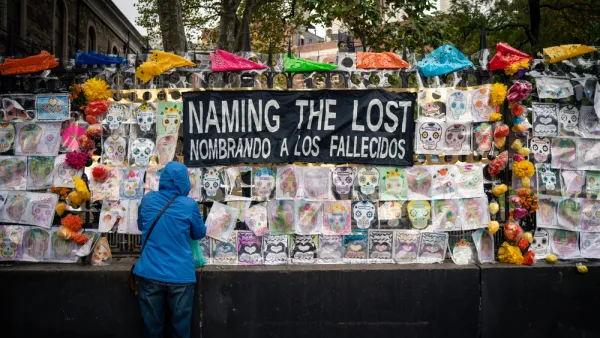
Haves and Have Nots: Planning and the Deep Divides of the Pandemic
The latest in a series of compendia gathering news and analysis about the effects of the COVID-19 on the built and natural environments—now and long into the future.
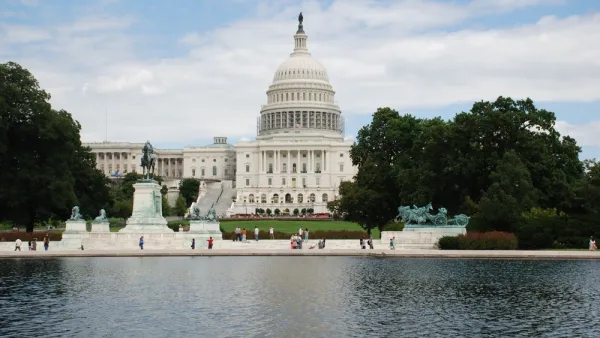
Proposed $1.9 Trillion Stimulus Includes $30 Billion Each for Transit and Rent Relief
Democrats in Congress are moving forward with a massive COVID stimulus package—with or without Republicans.
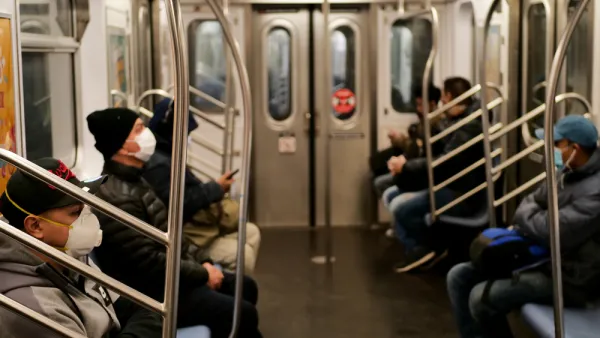
CDC's New Face Mask Requirement on Transit Takes Effect Tuesday
Travelers will be required to properly wear a face mask when riding all forms of public transportation, e.g., ride-share, bus, train, ferry, or plane. The rule applies to transportation hubs and boarding platforms. Not just any face-covering will do.

The state-sanctioned urbicide of Austin
People don’t kill cities. Freeways do.

US to reduce Colorado River water deliveries to Mexico
A new Colorado Treaty amendment reduces Mexico’s Colorado River water allocation by 250,000 acre feet.

New Jersey’s second-largest city bans standalone data centers
Jersey City will continue to allow co-location facilities, such as those meant for research institutions that store their own data.

Amtrak not solely to blame for New Jersey commuter rail's unreliability, report finds
A new study from the Garden State Initiative found that NJ Transit’s budget grew 20% across a 4 year period, but reliability declined significantly over the same period.

EPA erases limits on planet-warming pollution from power plants
Under Monday’s plan, power plants would still have some limits on how much mercury, arsenic and other contaminants they can emit.

Phoenix announces new on-demand transit service, more frequent RAPID buses
Both new services will launch in October, and are part of Phoenix's Project Effective Access Solutions for Easing Congestion.

FREE Course: Walkable City 1: Why Walkability?
After describing his path towards focusing on walkability as the essence of good planning, Jeff Speck marches through his five principal reasons for making more walkable places.
Reinventing Malls: Planning Alchemy—Turning Gray Fields Into Gold
The course focuses on the opportunities and imperatives that shape reinvention of mall sites.

Eagle County Government
Harvard University Graduate School of Design
Nashville Planning Department
The Architects Foundation
University of Cincinnati Online
The Pocatello Development Authority
The Urban Renewal Agency of the City of Pocatello
Journal of the American Planning Association