As the coronavirus outbreak surges across the country, many rural communities are now seeing an unprecedented spike in infections and hospitalizations.


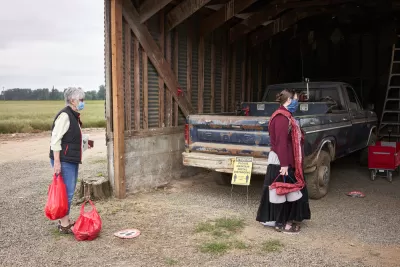
While most discussions about COVID-19 have focused on cities, many rural communities are actually experiencing increases in infections and hospitalizations. This is very concerning, especially since these areas typically lack the medical personnel and infrastructure to address outbreaks of diseases.
As Will Stone of NPR reports in the source article, "The pandemic's grip on rural America is especially alarming because many of these less populated areas rely on small hospitals, which don't have the beds or staff to absorb a crush of patients, especially those who require high levels of care." Small hospitals have had to transfer patients to major metropolitan areas where they can receive a higher level of care or when there are simply not enough staffed beds.
The surge in rural America is not consistent across the United States. For example, some communities got hit during the spring and summer when there were big outbreaks at food processing plants. The article indicates that rural counties in states like Kansas, Montana, South Dakota, and Nebraska now have some of the highest rates of infections per capita in the country. COVID-19 poses unique challenges for rural areas which tend to have an older population with higher rates of poverty and chronic disease than suburban and urban areas. Also, once the pandemic gets into rural communities, containing the spread can be especially challenging because they don't have the same public health resources and staff as more urban areas.
Planetizen Correspondent Irvin Dawid has also detailed the rural experience of the pandemic throughout the long months of surges and social distancing:
- North Dakota Physicians Plead for State and Local Leaders to Mandate Masks (October 21, 2020)
- Wisconsin in Crisis (October 11, 2020)
- The Changing Geography of the Pandemic (August 27, 2020)
- Pandemic's New Phase: Spreading to Rural and Urban Areas Alike (August 9, 2020)
- Will the Coronavirus Spare Rural America? (April 13, 2020)
FULL STORY: COVID-19 Surges In Rural Communities, Overwhelming Some Local Hospitals

Building Rural Resilience
Rural areas have been attracting a lot attention for news sources traditionally devoted to urban news and information. A new report from the Brookings Institution is the latest example.
3 Myths About Rural America and How to Debunk Them
The effort to debunk common myths about rural America in academia and the news media continues.

Beleaguered Texas Hospital to Ration Treatment of COVID Patients
A second county in the Rio Grande Valley has issued an unenforceable stay-at-home order to reduce transmission of the coronavirus. Its one overwhelmed hospital will implement a triage system to determine which patients to treat and whom to reject.

Planetizen Federal Action Tracker
A weekly monitor of how Trump’s orders and actions are impacting planners and planning in America.

The state-sanctioned urbicide of Austin
People don’t kill cities. Freeways do.

US to reduce Colorado River water deliveries to Mexico
A new Colorado Treaty amendment reduces Mexico’s Colorado River water allocation by 250,000 acre feet.

Mamdani overhauls NYC's Vision Zero plan with 100 new policy goals
The overhaul aims to reduce traffic deaths and make streets safer for pedestrians, cyclists and drivers through lower speed limits, new safety infrastructure and more.

Amtrak not solely to blame for New Jersey commuter rail's unreliability, report finds
A new study from the Garden State Initiative found that NJ Transit’s budget grew 20% across a 4 year period, but reliability declined significantly over the same period.

EPA erases limits on planet-warming pollution from power plants
Under Monday’s plan, power plants would still have some limits on how much mercury, arsenic and other contaminants they can emit.

FREE Course: Walkable City 1: Why Walkability?
After describing his path towards focusing on walkability as the essence of good planning, Jeff Speck marches through his five principal reasons for making more walkable places.
Reinventing Malls: Planning Alchemy—Turning Gray Fields Into Gold
The course focuses on the opportunities and imperatives that shape reinvention of mall sites.

Eagle County Government
Harvard University Graduate School of Design
Nashville Planning Department
The Architects Foundation
University of Cincinnati Online
The Pocatello Development Authority
The Urban Renewal Agency of the City of Pocatello
Journal of the American Planning Association