A nationwide network of bike and pedestrian trails could give drivers new options for planning their next cross-country adventure.


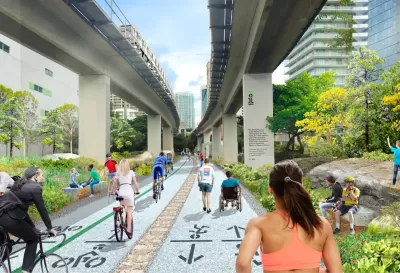
Recently unveiled in Miami, the Underline is a ten-mile-long path intended for pedestrian and bike use, and an important addition to Miami's walking and cycling infrastrucuture. "[B]ut it’s also part of a larger, interstate network of trails that will eventually make it possible to ride from Florida to Maine with little interaction with cars. And even that enormous project is itself just a small part of an even bigger dream: a network of protected bike lanes connecting cities across the country, making it possible to bike from city to city—and ocean to ocean—safely," writes Adele Peters.
Dennis Markatos-Soriano, executive director of the East Coast Greenway Alliance, says that the kind of economic stimulus the United States needs is embodied by infrastructure projects like the East Coast Greenway project that includes the Underline. Markatos-Soriano says that the construction of greenways promote even more jobs than highway construction, and without the deleterious effects.
"Other ambitious greenway projects are underway, including the Great American Rail-Trail, a cross-country path that aims to connect Washington, D.C., with the State of Washington. More than 1,900 miles of the likely route are already open for biking; the total route will cover 3,700 miles; the East Coast Greenway, traveling up and down the East Coast, has 1,000 miles completed out of 3,000," Peters reports.
Greenway advocates say that the construction of expanded bike infrastructure projects of this nature would not only support long-distance trips from city to city but also promote everyday commutes via bike and on foot.
Read the full story: Imagine a transcontinental network of protected bike paths

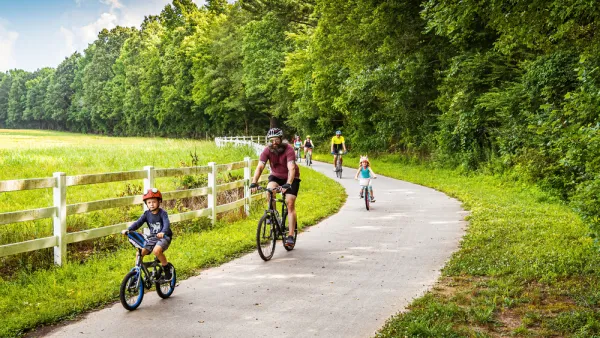
The East Coast Greenway Is Stitching Together a 3,000-Mile Trail Network
The ever-evolving greenway connects biking and walking trails from Maine to Florida.
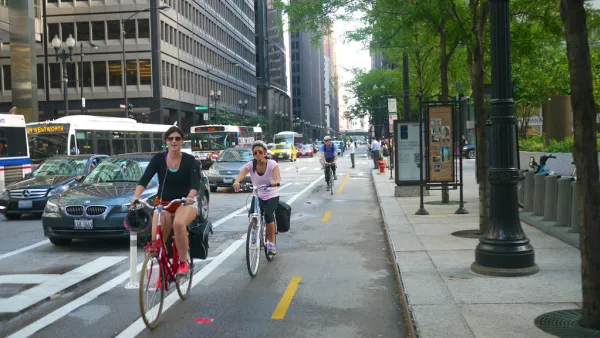
Cycling Rates Remain High Across the Country
The bike boom that began during the pandemic shows no signs of abating, according to a new report.
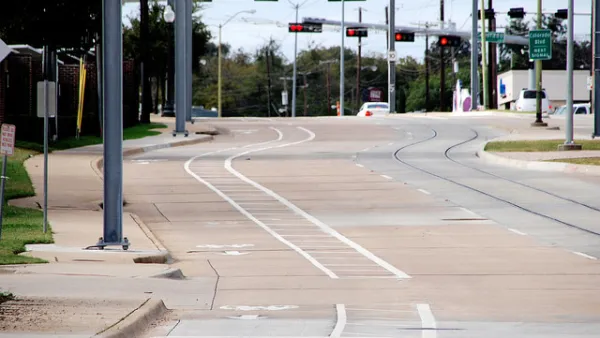
Dallas Makes First-Ever Annual Commitment to its Bike Lane Program
Dallas is making new commitments to alternative transportation options—the latest example is found in a budget expenditure for several bike lane projects.

Planetizen Federal Action Tracker
A weekly monitor of how Trump’s orders and actions are impacting planners and planning in America.

California plans to bury El Niño’s downpour
If the state plays its cards right, it may be able to store a billion acre-feet of El Niño’s water in aquifers.

Chicago breaks ground on $3 billion megadevelopment
The new neighborhood, titled Foundry Park, will one day host 3,700 residences.

Satanic Place Names
From streams and lakes to valleys and canyons, I mapped more than 1,000 places named after the Devil.

California High-Speed Rail Authority CEO resigns after $600,000 scandal
Under Ian Choudri, the authority used taxpayer dollars to fund first class flights and trips to nightclubs.

Want to study the Missouri River? Soon, you may need unanimous approval from 10 states
Legislation would require 10 governors’ permission to study or build projects moving water outside the basin.

FREE Course: Walkable City 1: Why Walkability?
After describing his path towards focusing on walkability as the essence of good planning, Jeff Speck marches through his five principal reasons for making more walkable places.
Reinventing Malls: Planning Alchemy—Turning Gray Fields Into Gold
The course focuses on the opportunities and imperatives that shape reinvention of mall sites.

City of Rosemead
Rutgers University, Edward J. Bloustein School of Planning and Public Policy
One Hundred Miles
Hunter College, City University of New York (CUNY)
The Architects Foundation
University of Cincinnati Online
City of Cambridge
Montrose County
The Pocatello Development Authority