The Montgomery County Council approved a property tax break as an incentive for high-rise rental developments located on Metro station properties.


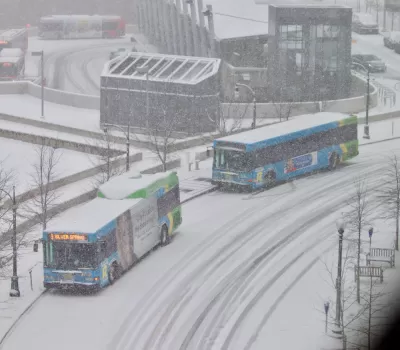
"Housing developers will get an incentive from Montgomery County to develop high-rise buildings on Metro station properties — a break on property taxes for 15 years," reports Briana Adhikusuma. Any residential high-rises would be the first of their kind on Metro properties in the county, according to the article.
"The bill requires that development on Metro station properties be at least 50% rental housing. For eligible properties, 100% of the property tax would be exempted — a payment in lieu of taxes would be made for a period of 15 years," adds Adhikusuma for more details on the new tax break.
County officials have estimated that at least 8,600 housing units could be added to Metro station properties in the county. The Metro Red Line currently offers rail transit service in the county, though the forthcoming, long-delayed Purple Line light rail has entered a new phase of uncertainty as contractors are threatening to walk off the job and leave the project in limbo.
A lot more details about the political debate that preceded the new tax break's adoption are included in the article.
FULL STORY: Council passes tax incentive for housing developments on Metro stations

Big Tax Cut for Transit Oriented Housing Clears Executive Veto in Maryland
The Montgomery County Council wants a tax break for transit oriented development whether County Executive Marc Elrich likes it or not.
Zoning Changes Would Allow Transit-Oriented Multi-Family Development in Montgomery County
Montgomery County, Maryland wants to put its zoning where its transit is—it's just the latest in a string of transit-oriented land use reforms for the famously suburban county.
Study: Cuyahoga County Suburbs Ready for TOD
The growth of transit-oriented development in the Cleveland region is being hindered by zoning codes that limit housing density and excessive parking requirements that drive up construction costs, new research suggests.

The state-sanctioned urbicide of Austin
People don’t kill cities. Freeways do.

US to reduce Colorado River water deliveries to Mexico
A new Colorado Treaty amendment reduces Mexico’s Colorado River water allocation by 250,000 acre feet.

New Jersey’s second-largest city bans standalone data centers
Jersey City will continue to allow co-location facilities, such as those meant for research institutions that store their own data.

Amtrak not solely to blame for New Jersey commuter rail's unreliability, report finds
A new study from the Garden State Initiative found that NJ Transit’s budget grew 20% across a 4 year period, but reliability declined significantly over the same period.

EPA erases limits on planet-warming pollution from power plants
Under Monday’s plan, power plants would still have some limits on how much mercury, arsenic and other contaminants they can emit.

Phoenix announces new on-demand transit service, more frequent RAPID buses
Both new services will launch in October, and are part of Phoenix's Project Effective Access Solutions for Easing Congestion.

FREE Course: Walkable City 1: Why Walkability?
After describing his path towards focusing on walkability as the essence of good planning, Jeff Speck marches through his five principal reasons for making more walkable places.
Reinventing Malls: Planning Alchemy—Turning Gray Fields Into Gold
The course focuses on the opportunities and imperatives that shape reinvention of mall sites.

Eagle County Government
Harvard University Graduate School of Design
Nashville Planning Department
The Architects Foundation
University of Cincinnati Online
The Pocatello Development Authority
The Urban Renewal Agency of the City of Pocatello
Journal of the American Planning Association