A new report explores the untapped housing opportunities for the region around New York City, and suggests planning tools for adding hundreds of thousands of housing units without building hundreds of thousands of new buildings.


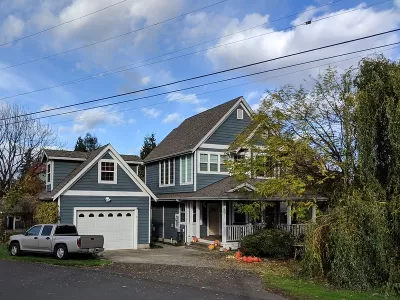
A new report from the Regional Plan Association charts a path for the region, encompassing New Jersey, New York, and Connecticut, to hundreds of thousands of new homes by allowing accessory dwelling units (ADUs) and the construction of two- or three-family homes (i.e., duplexes and triplexes).
The "Be my Neighbor" report offers key recommendations, explains ADUs, addresses the segregation effects of traditional zoning, and attempts to overcome misconceptions about density in residential neighborhoods.
Key recommendations for the entire region include statewide policies to make it easier to build ADUs and do conversions, including by implementing zoning changes, easing parking requirements, and providing technical assistance to property owners interested in adding units. For New York City's specific situation, the report recommends specific zoning changes, discouraging multi-family conversions, expanding the city's basement apartment program, and rethinking off-street parking requirements for duplexes and triplexes.
Read the full story: Be my Neighbor


NYC’s ‘ADU for You’ Initiative Offers Pre-approved Plans and Financing Tools
The project pairs pre-approved plans with financing and other tools to help more homeowners build accessory units.

Iowa Legalizes Accessory Dwelling Units
A new law will allow property owners to build ADUs on single-family lots starting on July 1.
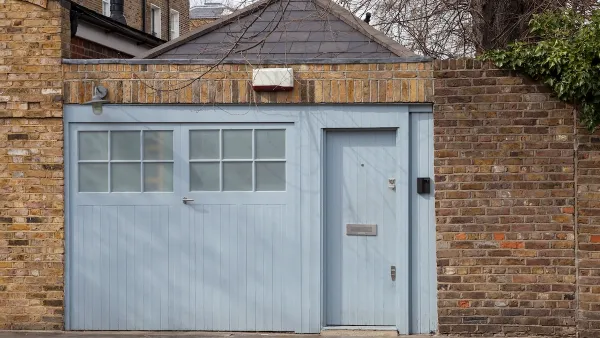
Are ADUs New Jersey’s Affordable Housing Solution?
Accessory units can bring gentle density increases and boost the housing supply with minimal impact on local infrastructure.

Planetizen Federal Action Tracker
A weekly monitor of how Trump’s orders and actions are impacting planners and planning in America.

California plans to bury El Niño’s downpour
If the state plays its cards right, it may be able to store a billion acre-feet of El Niño’s water in aquifers.

Chicago breaks ground on $3 billion megadevelopment
The new neighborhood, titled Foundry Park, will one day host 3,700 residences.

California High-Speed Rail Authority CEO resigns after $600,000 scandal
Under Ian Choudri, the authority used taxpayer dollars to fund first class flights and trips to nightclubs.

Want to study the Missouri River? Soon, you may need unanimous approval from 10 states
Legislation would require 10 governors’ permission to study or build projects moving water outside the basin.

Desperate measures: Advocates weigh draining Lake Powell to fill Colorado River
Draining the reservoir could reduce evaporation losses by a couple hundred thousand acre-feet.

FREE Course: Walkable City 1: Why Walkability?
After describing his path towards focusing on walkability as the essence of good planning, Jeff Speck marches through his five principal reasons for making more walkable places.
Reinventing Malls: Planning Alchemy—Turning Gray Fields Into Gold
The course focuses on the opportunities and imperatives that shape reinvention of mall sites.

City of Rosemead
Rutgers University, Edward J. Bloustein School of Planning and Public Policy
One Hundred Miles
Hunter College, City University of New York (CUNY)
The Architects Foundation
University of Cincinnati Online
City of Cambridge
Montrose County
The Pocatello Development Authority