Once again, New Zealand shows the way! The national government's new urban development policy will eliminate off-street parking requirements and remove low height-limits near transit stations to encourage more efficient infill development.


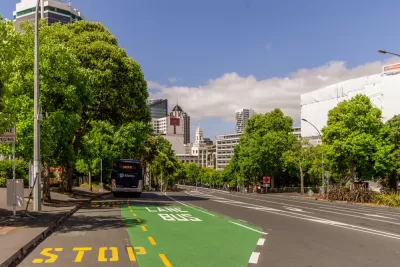
"In a dramatic move to reshape New Zealand’s towns and cities, the Government will stop councils from imposing height limits of less than six-storeys and force them to accept developments with no carparks (i.e., off-street parking)," reports Henry Cooke.
"Urban Development Minister Phil Twyford’s National Policy Statement on Urban Development, quietly released on [July 23, 2020], aims to increase the density of housing in urban centres by setting rules for planning decisions made by local councils," adds Cooke.
"The overall intention of the plan is to dramatically increase housing development in urban areas – particularly housing that is very close to public transport. In all urban areas with more than 10,000 people, district plans will not be allowed to include minimum car parking requirements, other than for accessible carparks."
More details are available by clicking on the link for the source article.


Planners Working on Parking Reform Legislation in Raleigh
Raleigh, North Carolina is the latest in a series of cities pursuing a significant departure from the 20th century planning status quo.

Parking Reforms Under Consideration in St. Paul
Two options for significant parking reforms are under consideration in St. Paul. The City Council could decide to eliminate parking requirements entirely as soon as this summer.

Well Done, Kiwis! New Zealand Delivers Big Planning Policy Reforms
New Zealand’s new national urban development policy prohibits parking minimums and increases allowable building heights near transit stations. This is a watershed moment for the country’s cities and towns.

Planetizen Federal Action Tracker
A weekly monitor of how Trump’s orders and actions are impacting planners and planning in America.

The state-sanctioned urbicide of Austin
People don’t kill cities. Freeways do.

US to reduce Colorado River water deliveries to Mexico
A new Colorado Treaty amendment reduces Mexico’s Colorado River water allocation by 250,000 acre feet.

5 New England states march closer to 800 megawatt wind energy project
Securing federal approval for the project may be complicated under the Trump administration, which has historically been hostile towards domestic wind power.

Baltimore to break ground on $50 million Transit Priority Project
The project will bring faster bus trips, safer streets and better bike connections to Baltimore.

Airbnb launches $250 million 'last-dollar financing' housing accelerator, makes first investment in Austin
The company will put $6.4 million towards affordable housing development in Texas’ capital.

FREE Course: Walkable City 1: Why Walkability?
After describing his path towards focusing on walkability as the essence of good planning, Jeff Speck marches through his five principal reasons for making more walkable places.
Reinventing Malls: Planning Alchemy—Turning Gray Fields Into Gold
The course focuses on the opportunities and imperatives that shape reinvention of mall sites.

Eagle County Government
Harvard University Graduate School of Design
Nashville Planning Department
The Architects Foundation
University of Cincinnati Online
The Pocatello Development Authority
The Urban Renewal Agency of the City of Pocatello
Journal of the American Planning Association