The story is similar in Washington, D.C., Philadelphia, Los Angeles, Miami, Cincinnati, and Boston: scenes of widespread destruction—the fires, looting, and property damage of civil unrest—sow the seeds for redevelopment and gentrification.


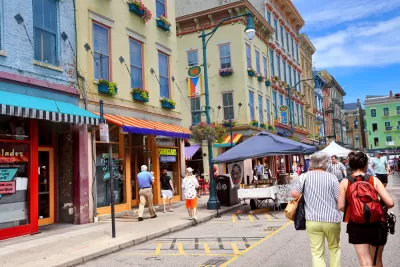
Emily Badger and Quoctrung Bui report on a story familiar in cities around the United States, where "high-end development rises directly on top of Black neighborhoods that suffered the greatest damage during civil unrest decades ago."
"The sheer scale of harm to Black neighborhoods — from the conditions that led to unrest, from the buildings that burned then, from the years of neglect that followed — made it easier, when the time finally came years later, for developers and new businesses and residents to amass wealth," explain Badger and Bui.
"Many of these neighborhoods had bargain real estate, but also grand old housing stock, close to downtown, close to transit, with built-in commercial corridors. They also had vacant land and city-owned lots that could be assembled into larger developments."
The article drills down into geographic and historical specifics for examples from a number of U.S. cities, acknowledging that not all neighborhoods that have faced destruction and disinvestment meet the same fate, but for those that do, the history of violence is directly connected to the realities of contemporary gentrification.
Back in June 2016, Colin Woodard provided in-depth analysis of the example from Cincinnati cited by Badger and Bui—the neighborhood of Over-the-Rhine, scene of civil unrest in 2001 that is now one of the Midwest's most prominent examples of "urban revitalization."
FULL STORY: Riots Long Ago, Luxury Living Today

Black Residents Leaving Cincinnati's Fast Growing Urban Area
The housing market in the neighborhood of Over-the-Rhine is a 'segregation machine.'
'Jumpstart Germantown' Aims for the Antidote to Gentrification
A new program based in the Germantown neighborhood in Philadelphia aims to encourage community ownership of urban re-investment.
Inside the Transformation of Deep Ellum
The Dallas neighborhood of Deep Ellum is the city's answer to SoHo in New York, the Mission in San Francisco, or the Arts District in Los Angeles—once gritty, now trendy.

Planetizen Federal Action Tracker
A weekly monitor of how Trump’s orders and actions are impacting planners and planning in America.

The state-sanctioned urbicide of Austin
People don’t kill cities. Freeways do.

US to reduce Colorado River water deliveries to Mexico
A new Colorado Treaty amendment reduces Mexico’s Colorado River water allocation by 250,000 acre feet.

Mamdani overhauls NYC's Vision Zero plan with 100 new policy goals
The overhaul aims to reduce traffic deaths and make streets safer for pedestrians, cyclists and drivers through lower speed limits, new safety infrastructure and more.

Amtrak not solely to blame for New Jersey commuter rail's unreliability, report finds
A new study from the Garden State Initiative found that NJ Transit’s budget grew 20% across a 4 year period, but reliability declined significantly over the same period.

EPA erases limits on planet-warming pollution from power plants
Under Monday’s plan, power plants would still have some limits on how much mercury, arsenic and other contaminants they can emit.

FREE Course: Walkable City 1: Why Walkability?
After describing his path towards focusing on walkability as the essence of good planning, Jeff Speck marches through his five principal reasons for making more walkable places.
Reinventing Malls: Planning Alchemy—Turning Gray Fields Into Gold
The course focuses on the opportunities and imperatives that shape reinvention of mall sites.

Eagle County Government
Harvard University Graduate School of Design
Nashville Planning Department
The Architects Foundation
University of Cincinnati Online
The Pocatello Development Authority
The Urban Renewal Agency of the City of Pocatello
Journal of the American Planning Association