The Dallas neighborhood of Deep Ellum is the city's answer to SoHo in New York, the Mission in San Francisco, or the Arts District in Los Angeles—once gritty, now trendy.


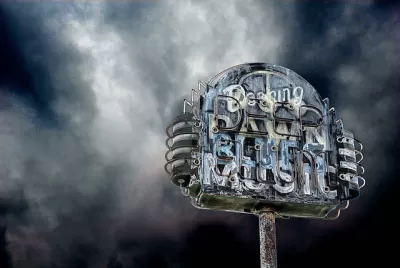
Tristan Hallman reports on the changes in Deep Ellum, a neighborhood in Dallas undergoing transformation as new residents and development investment arrive in a wave of urban revitalization.
Deep Ellum is having a moment. Parking can be hard to come by. Crowds fill the sidewalks day and night for barbecue and ice cream and live music and doughnuts and craft beer.
The problem, according to the premise examined by Hallman, is whether Deep Ellum is losing some of the essential "weirdness" that used to be the neighborhood's defining quality. On the other hand, some of the neighborhood's weirdness was a result of a repeated cycle of economic downturns and lack of investment, soe some stakeholders in the neighborhood now hope to leverage new residential population for the long-term stability of Deep Ellum.
Urban planner Patrick Kennedy is among the sources for the article—Kennedy's participation in the article ensures mentions of a proposal to remove I-345 adjacent to Deep Ellum and the catalyst for the neighborhood's revitalization originating from pedestrian friendly Elm Street.
Read the full story: FILED UNDERDALLAS AT 4 DAYS AGO
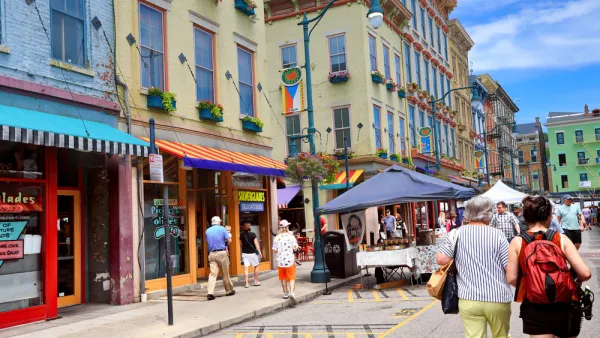
Past Civil Unrest Sets the Table for Today's Gentrification
The story is similar in Washington, D.C., Philadelphia, Los Angeles, Miami, Cincinnati, and Boston: scenes of widespread destruction—the fires, looting, and property damage of civil unrest—sow the seeds for redevelopment and gentrification.
'Jumpstart Germantown' Aims for the Antidote to Gentrification
A new program based in the Germantown neighborhood in Philadelphia aims to encourage community ownership of urban re-investment.
Black Residents Leaving Cincinnati's Fast Growing Urban Area
The housing market in the neighborhood of Over-the-Rhine is a 'segregation machine.'

Planetizen Federal Action Tracker
A weekly monitor of how Trump’s orders and actions are impacting planners and planning in America.

Washington state to charge fee to drivers with fuel-efficient cars
Revenue from the fee will go towards supporting the state’s highways.

Trump to blast ‘hydrocarbon highway’ through ‘world’s longest art gallery’
Environmental and historic preservation groups are suing to stop the project.

Data centers need power – lower income, rural residents pay the price
In 2025, data centers paid only 38% of the energy infrastructure costs linked to their growth, with households, especially rural and low-income residents, bearing the remaining burden.

MBTA Green Line project moved to next phrase of CIG program
The modernization effort will cost $4.08 billion.

22-mile pedestrian and bike path to encircle Atlanta by 2030
The project will also support affordable housing.

FREE Course: Walkable City 1: Why Walkability?
After describing his path towards focusing on walkability as the essence of good planning, Jeff Speck marches through his five principal reasons for making more walkable places.
Reinventing Malls: Planning Alchemy—Turning Gray Fields Into Gold
The course focuses on the opportunities and imperatives that shape reinvention of mall sites.

City of Charlotte
City of Rosemead
Rutgers University, Edward J. Bloustein School of Planning and Public Policy
University of Michigan School for Environment and Sustainability (SEAS)
Hunter College, City University of New York (CUNY)
The Architects Foundation
University District Partnership