The symbolism behind highway protests brings demonstrators to occupy Interstate 94 between St. Paul and Minneapolis.


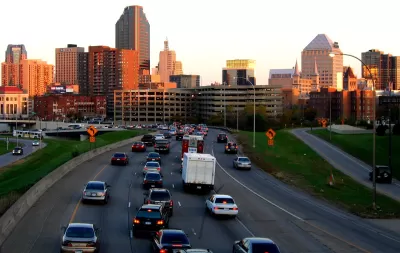
In the Twin Cities, demonstrators took to Interstate 94, marching from St. Paul to Minneapolis with numbers in the thousands to protest the murder of George Floyd. In light of ongoing organization against anti-black discrimination and police brutality, Interstate 94 stands as a reminder of infrastructure that tore a community apart. "It was this highway that, in the 1950s and ‘60s, tore apart the once-thriving neighborhood of Rondo — the heart of St. Paul’s largest African-American community — and helped spur decades of racial segregation in the region," writes Linda Poon.
Protestors are occupying highways across the country with similarly destructive histories. Little Rock, Arkansas' I-630, Memphis, Tennessee's I-40, and Cincinnati, Ohio's I-75 have all seen similar uprisings, according to Poon. Decisions behind the construction of highways illustrate the unjust policy that has made racism a systemic problem.
FULL STORY: The Racial Injustice of American Highways

COVID-19: What About Those Protests?
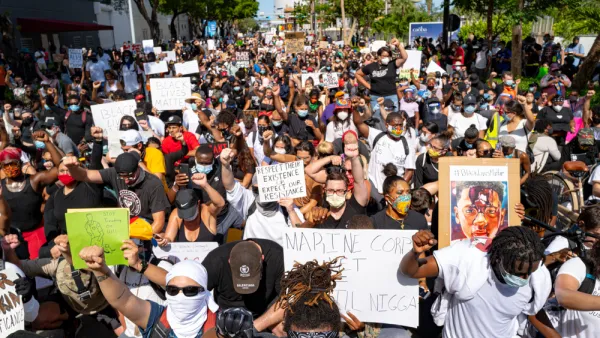
While not conclusive, evidence suggests that relatively few transmissions of the coronavirus occurred during the widespread protests that followed the death of George Floyd due to the outdoor settings, being in motion and wearing of masks.
Disorder is Not Destiny
Do protests and riots inevitably lead to crime waves and flight to suburbia? Not always.
Oklahoma House Approves Protections for Drivers Who Hit Protestors
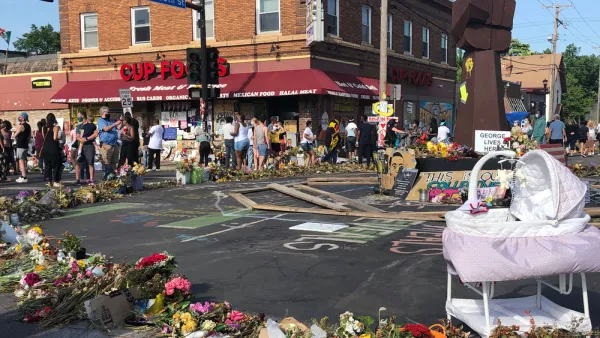
A heated debate and a party line vote in Oklahoma.

Planetizen Federal Action Tracker
A weekly monitor of how Trump’s orders and actions are impacting planners and planning in America.

The state-sanctioned urbicide of Austin
People don’t kill cities. Freeways do.

US to reduce Colorado River water deliveries to Mexico
A new Colorado Treaty amendment reduces Mexico’s Colorado River water allocation by 250,000 acre feet.

Mamdani overhauls NYC's Vision Zero plan with 100 new policy goals
The overhaul aims to reduce traffic deaths and make streets safer for pedestrians, cyclists and drivers through lower speed limits, new safety infrastructure and more.

Amtrak not solely to blame for New Jersey commuter rail's unreliability, report finds
A new study from the Garden State Initiative found that NJ Transit’s budget grew 20% across a 4 year period, but reliability declined significantly over the same period.

EPA erases limits on planet-warming pollution from power plants
Under Monday’s plan, power plants would still have some limits on how much mercury, arsenic and other contaminants they can emit.

FREE Course: Walkable City 1: Why Walkability?
After describing his path towards focusing on walkability as the essence of good planning, Jeff Speck marches through his five principal reasons for making more walkable places.
Reinventing Malls: Planning Alchemy—Turning Gray Fields Into Gold
The course focuses on the opportunities and imperatives that shape reinvention of mall sites.


Eagle County Government
Harvard University Graduate School of Design
Nashville Planning Department
The Architects Foundation
University of Cincinnati Online
The Pocatello Development Authority
The Urban Renewal Agency of the City of Pocatello
Journal of the American Planning Association