Transportation plans justified with pre-coronavirus data are now obsolete, according to a line of argument recently presented to the Maryland Transportation Authority.


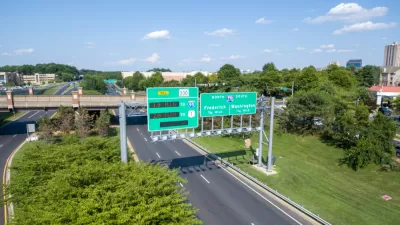
Bruce DePuyt reports from the April meeting of the Maryland Transportation Authority, where numerous critics showed up to urge the state to suspend a plan to widen two Washington, D.C. area highways with toll lanes.
"Many residents and activists who spoke during the public comment portion of the Maryland Transportation Authority’s April meeting opposed the plan to widen the Capital Beltway and Interstate 270 long before the COVID-19 crisis struck," according to DePuyt.
Critics are now arguing that the case for the new toll lanes has been built on data now obsolete as commuter and travel patterns could potentially shift over the long-term.
"Many companies and workers are teleworking for the first time. How many continue teleworking after the pandemic subsides is a question that transportation officials and industry consultants will study for some time," explains DePuyt.
There's little indication yet whether the Maryland Transportation Authority will act in accordance with the wishes of these critics.
FULL STORY: State Urged to Put Toll Lanes on Hold for Changes Ahead

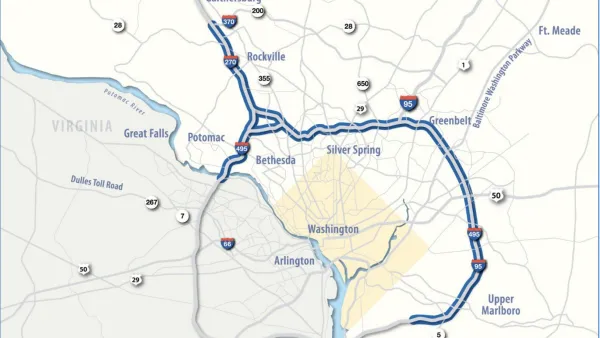
Maryland's Controversial Highway Widening Proposal Scaled Back
Interstate 270, the Capital Beltway, will no longer by widened as part of the I-495/I-270 Managed Lanes Project.
Maryland's Highway Expansion Project Out to Bid
Vocal opposition hasn't slowed the Maryland Department of Transportation's progress of the I-495/I-270 Managed Lanes Project.
Draft Environmental Impact Statement for Maryland's Big Highway Widening Project Released
The state of Maryland is moving forward with a highway widening plan that would spend $11 billion in a private-partnership to add toll lanes to two Capital Beltway highways.

Planetizen Federal Action Tracker
A weekly monitor of how Trump’s orders and actions are impacting planners and planning in America.

The state-sanctioned urbicide of Austin
People don’t kill cities. Freeways do.

US to reduce Colorado River water deliveries to Mexico
A new Colorado Treaty amendment reduces Mexico’s Colorado River water allocation by 250,000 acre feet.

Mamdani overhauls NYC's Vision Zero plan with 100 new policy goals
The overhaul aims to reduce traffic deaths and make streets safer for pedestrians, cyclists and drivers through lower speed limits, new safety infrastructure and more.

Amtrak not solely to blame for New Jersey commuter rail's unreliability, report finds
A new study from the Garden State Initiative found that NJ Transit’s budget grew 20% across a 4 year period, but reliability declined significantly over the same period.

EPA erases limits on planet-warming pollution from power plants
Under Monday’s plan, power plants would still have some limits on how much mercury, arsenic and other contaminants they can emit.

FREE Course: Walkable City 1: Why Walkability?
After describing his path towards focusing on walkability as the essence of good planning, Jeff Speck marches through his five principal reasons for making more walkable places.
Reinventing Malls: Planning Alchemy—Turning Gray Fields Into Gold
The course focuses on the opportunities and imperatives that shape reinvention of mall sites.

Eagle County Government
Harvard University Graduate School of Design
Nashville Planning Department
The Architects Foundation
University of Cincinnati Online
The Pocatello Development Authority
The Urban Renewal Agency of the City of Pocatello
Journal of the American Planning Association