Many elements of the plan for the Ballard-Interbay were never implemented, and its relevance as a planning document is over.


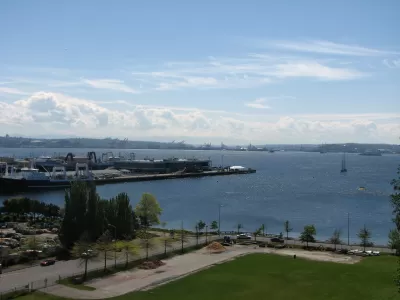
Ray Dubicki reflects on the Ballard Interbay Northend Manufacturing Industrial Center plan, which he says is outdated and essentially dead.
"The plan has failed. Its underlying assumptions are no longer viable, the many basis for its proposals changed, and its sunset passed. But since no new plan has replaced it and several parallel processes have referenced it, the BINMIC remains in place like the rusting hulk of a derelict boat polluting the Ship Canal," he writes.
Dubicki says that the mobility recommendations in the plan clearly highlight how it is no longer relevant. While other city and regional planning documents still reference the BINMIC, he argues that the time has come to let go of the "zombie plan."
"If a plan does not work, is not working, and has not worked, it’s our job to recognize that. Dragging along the carcass of a failed plan does real harm to the health of the city by impairing the function of institutions that manage growth and by overwhelming neighborhoods and infrastructure that have prepared for growth," concludes Dubicki.
FULL STORY: The BINMIC Industrial Plan is Dead

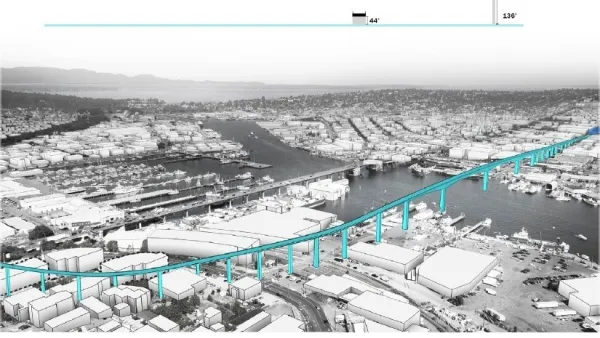
Criticisms for Two Seattle Transportation Studies
Two studies begin the process of spending billions of dollars for infrastructure in Ballard and Interbay in Seattle. According to this critique, the effort is off on the wrong foot.
New Long-Term Regional Plan for Puget Sound Approved
The regional planning organization for the four-county area around Puget Sound has adopted a new long-term plan for the future.
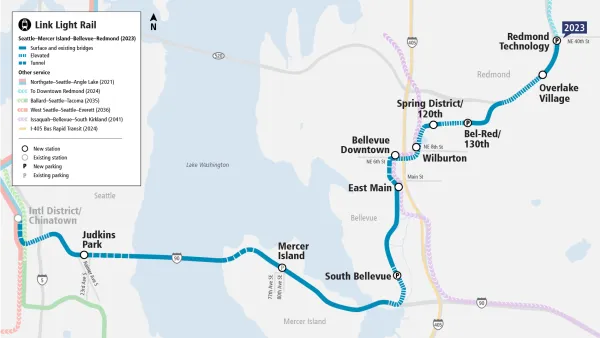
East Link Light Rail Plans Provoke Controversy in Seattle Suburb
A proposal to link local and regional buses with the East Link light rail expansion in Mercer Island, already under construction, threatens to boil over into the courtroom.

Planetizen Federal Action Tracker
A weekly monitor of how Trump’s orders and actions are impacting planners and planning in America.

The state-sanctioned urbicide of Austin
People don’t kill cities. Freeways do.

US to reduce Colorado River water deliveries to Mexico
A new Colorado Treaty amendment reduces Mexico’s Colorado River water allocation by 250,000 acre feet.

5 New England states march closer to 800 megawatt wind energy project
Securing federal approval for the project may be complicated under the Trump administration, which has historically been hostile towards domestic wind power.

Baltimore to break ground on $50 million Transit Priority Project
The project will bring faster bus trips, safer streets and better bike connections to Baltimore.

Airbnb launches $250 million 'last-dollar financing' housing accelerator, makes first investment in Austin
The company will put $6.4 million towards affordable housing development in Texas’ capital.

FREE Course: Walkable City 1: Why Walkability?
After describing his path towards focusing on walkability as the essence of good planning, Jeff Speck marches through his five principal reasons for making more walkable places.
Reinventing Malls: Planning Alchemy—Turning Gray Fields Into Gold
The course focuses on the opportunities and imperatives that shape reinvention of mall sites.

Eagle County Government
Harvard University Graduate School of Design
Nashville Planning Department
The Architects Foundation
University of Cincinnati Online
The Pocatello Development Authority
The Urban Renewal Agency of the City of Pocatello
Journal of the American Planning Association