Transportation planners must address equity issues in their work and involve the people most affected by the planning and policymaking process.


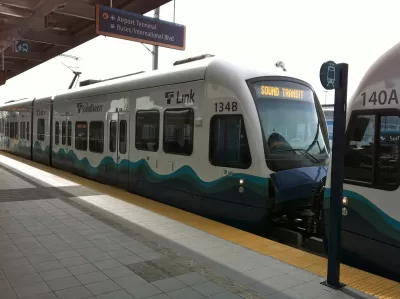
Issues of equity are relevant to transportation, writes Shannon Jordy, who shares a number of lessons learned from work at philanthropic and community organizations about ways transportation planners can ensure that equity is not overlooked.
Jordy says that data can hide the complexities of transportation issues and challenges. "Without disaggregating data – by gender, race and ethnicity, and class – there is no way to see the effects of an effort or a project on the communities it intends to serve."
Jordy also encourages a focus on problems rather than solutions as a way to efficiently reach the best outcomes. "By starting with the problem and sticking with it, preferably in the form of appropriate performance measures and metrics, folks never lose sight of the change they’re trying to effect."
Understanding how stories are told is also important in facilitating change, argues Jordy. "Numbers and data are great, but what sticks with those in power are the first-hand accounts of transit riders: their struggles and the impact of poor transit options on their quality of life. Those stories can’t come to the surface without engaging those who actually use public transit services."
In addition, transportation professionals should think broadly about partnerships and the ways mobility helps people access a range of services, says Jordy. Organizations also need to better reflect the communities they serve from staff up through management and leadership.
"Until the transportation field realizes it has a major equity problem, and that its workers are making race-, gender-, and class-neutral policies that are literally costing people’s lives and livelihoods, transportation practice will be a road to nowhere," adds Jordy.
Read the full story: Five Ways Transit Pros Can Get on Board the Equity Train


Turning a Gendered Lens on Transportation
People of different genders, ages, and abilities experience transportation differently. But policies aren’t designed that way.

America's 'roundabout city' is in … Indiana?
Carmel, Indiana has built over 150 roundabouts as part of a broader mobility and development strategy.

'Arrested mobility' and the fight for Black movement
Author Charles T. Brown explains how his experience growing up in rural Mississippi shaped his worldview and his current work for equitable transportation.

Planetizen Federal Action Tracker
A weekly monitor of how Trump’s orders and actions are impacting planners and planning in America.

The state-sanctioned urbicide of Austin
People don’t kill cities. Freeways do.

Colorado’s Largest Data Center Could Rise Next to Homes — Without a Public Hearing
The proposed campus would consume 11 times the power of Denver International Airport; as it has across the country, opposition mounts.

Nation's most wind-powered state turns to coal as data centers increase energy demand
For the first time in decades, Iowa has increased its generation of coal power.

NYC cools commuters with city's first rain garden above a bus stop
New York City officials say the plants in the rain garden can absorb 16 gallons of rainwater during heavy storms.

Brightline West’s future may rely on $6 billion federal loan
The company has until Nov. 2 to make a $400 million equity investment into its proposed high-speed rail line.

FREE Course: Walkable City 1: Why Walkability?
After describing his path towards focusing on walkability as the essence of good planning, Jeff Speck marches through his five principal reasons for making more walkable places.
Reinventing Malls: Planning Alchemy—Turning Gray Fields Into Gold
The course focuses on the opportunities and imperatives that shape reinvention of mall sites.

Greater Baltimore Committee
Eagle County Government
Harvard University Graduate School of Design
The Architects Foundation
University of Cincinnati Online
The Pocatello Development Authority
The Urban Renewal Agency of the City of Pocatello
Journal of the American Planning Association