A bi-partisan bill introduced in the U.S. Senate would inform better information sharing between federal agencies and local code-making powers to ensure more resilient infrastructure.


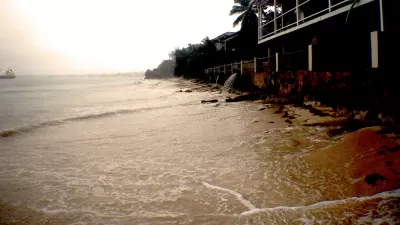
"U.S. Senators Tammy Baldwin (D-WI) and Marco Rubio (R-FL) today introduced new bipartisan legislation to help local communities and private firms build stronger infrastructure that will withstand severe weather events," according to a press release from Senator Baldwin's office, dated February 27, 2020.
"The Built to Last Act helps ensure federal, state, local and private buildings, roads, and other infrastructure are more resilient to extreme weather events by equipping standards-developing organizations that issue building codes and other standards with the best available information on weather-related risks, including floods, hurricanes and wildfires," according to the press release.
The only agencies compelled to new action under the proposed law—the National Oceanic and Atmospheric Administration (NOAA) and the National Institute of Standards and Technology (NIST)—would be required to share new information with local and state authorities. The bill has support from the American Planning Association, the American Society of Civil Engineers, Enterprise Community Partners, and the National Ready Mix Concrete Association.

Senate Bill Would Fund Climate Change Resilience in Coastal Communities
Grant and loan funding, new research, and a competition are some of the ideas included in the Coastal Communities Adaptation Act.

Planning Year in Review 2024: An Ongoing Housing Crisis, the Fight for Climate Resilience, and a Mixed Bag for Transportation
A pedestrian safety crisis, rising housing instability, and destructive extreme weather events set the stage for an eventful year.

Key Climate and Health Issues to Watch in 2025
The escalating health impacts of climate change, from extreme heat to sea level rise, highlight the urgent need for integrated medical education, proactive communication, and sustainable policy solutions to protect public health.

The state-sanctioned urbicide of Austin
People don’t kill cities. Freeways do.

US to reduce Colorado River water deliveries to Mexico
A new Colorado Treaty amendment reduces Mexico’s Colorado River water allocation by 250,000 acre feet.

New Jersey’s second-largest city bans standalone data centers
Jersey City will continue to allow co-location facilities, such as those meant for research institutions that store their own data.

Amtrak not solely to blame for New Jersey commuter rail's unreliability, report finds
A new study from the Garden State Initiative found that NJ Transit’s budget grew 20% across a 4 year period, but reliability declined significantly over the same period.

EPA erases limits on planet-warming pollution from power plants
Under Monday’s plan, power plants would still have some limits on how much mercury, arsenic and other contaminants they can emit.

Phoenix announces new on-demand transit service, more frequent RAPID buses
Both new services will launch in October, and are part of Phoenix's Project Effective Access Solutions for Easing Congestion.

FREE Course: Walkable City 1: Why Walkability?
After describing his path towards focusing on walkability as the essence of good planning, Jeff Speck marches through his five principal reasons for making more walkable places.
Reinventing Malls: Planning Alchemy—Turning Gray Fields Into Gold
The course focuses on the opportunities and imperatives that shape reinvention of mall sites.

Eagle County Government
Harvard University Graduate School of Design
Nashville Planning Department
The Architects Foundation
University of Cincinnati Online
The Pocatello Development Authority
The Urban Renewal Agency of the City of Pocatello
Journal of the American Planning Association