The people living in urban heat islands are much more likely to be inhabited by low-income people of color, and the roots of the environmental justice issue can be found in planning history.


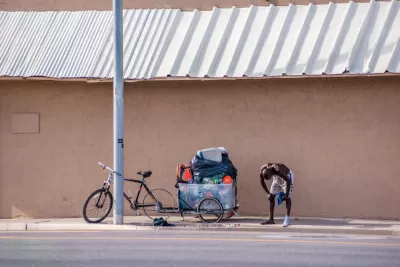
Kale Williams shares news of a new study that connects urban heat islands (areas where temperatures are exacerbated by the built environment) to a history of racist land use regulations.
Now, a new study from Portland State University is showing, for the first time, that areas prone to excessive heat are disproportionately populated by low-income communities and people of color due to racist housing policies that stretch back more than a century.
Williams summarizes more of the study's findings:
Nearly every city included in the study saw higher temperatures in neighborhoods that were historically subject to discriminatory housing policies, with poorer areas seeing averages temperatures about five degrees higher than their wealthier counterparts. And, of the 108 urban areas analyzed, Portland came in with the worst temperature discrepancy between rich and poor, a difference of almost 13 degrees.
Jeremy S. Huffman, Vivek Shandas, and Nicholas Pendleton wrote the study, which was published in the Climate journal.

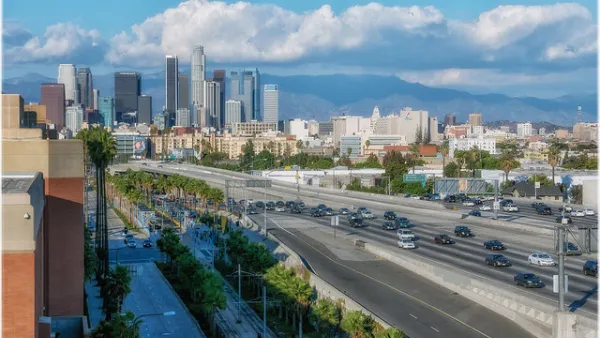
When Discussing Racist Monuments, Don't Forget Urban Freeways
The racist history of planning in Los Angeles is particularly evident in the way Interstate freeways were planned in the region.
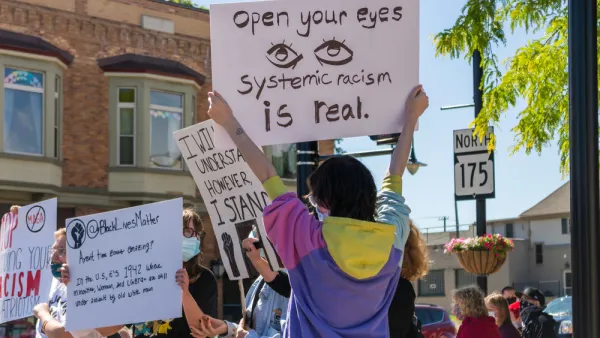
Planning Directors Commit to Change on Racial Inequities
Planning directors around the country have acknowledged the historic role of the planning profession in furthering the causes of racial discrimination and have publicly committed to change that history.
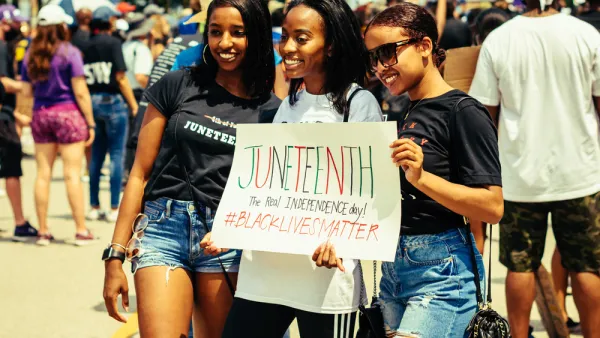
White House Marks Juneteenth by Pushing for Zoning Reforms
On a holiday that commemorates the end of slavery in the United States, the White House marked the occasion by discussion exclusionary zoning.

Planetizen Federal Action Tracker
A weekly monitor of how Trump’s orders and actions are impacting planners and planning in America.

The state-sanctioned urbicide of Austin
People don’t kill cities. Freeways do.

US to reduce Colorado River water deliveries to Mexico
A new Colorado Treaty amendment reduces Mexico’s Colorado River water allocation by 250,000 acre feet.

Brightline West’s future may rely on $6 billion federal loan
The company has until Nov. 2 to make a $400 million equity investment into its proposed high-speed rail line.

LA Metro’s ultimatum: no extra buses for LA28 if federal funding isn’t imminently secured
If Metro does not provide additional buses, LA28 organizers will have to find a new way to manage Olympic traffic. LA28’s budget does not include a line item for transit.

Colorado’s Largest Data Center Could Rise Next to Homes — Without a Public Hearing
The proposed campus would consume 11 times the power of Denver International Airport; as it has across the country, opposition mounts.

FREE Course: Walkable City 1: Why Walkability?
After describing his path towards focusing on walkability as the essence of good planning, Jeff Speck marches through his five principal reasons for making more walkable places.
Reinventing Malls: Planning Alchemy—Turning Gray Fields Into Gold
The course focuses on the opportunities and imperatives that shape reinvention of mall sites.

Eagle County Government
Harvard University Graduate School of Design
Nashville Planning Department
The Architects Foundation
University of Cincinnati Online
The Pocatello Development Authority
The Urban Renewal Agency of the City of Pocatello
Journal of the American Planning Association