Culdesac Tempe will offer will have apartments for 1,000 people and zero space for cars.


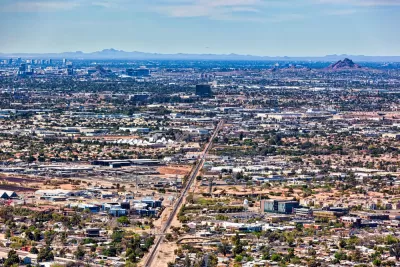
"A $140 million Arizona development is banning residents from bringing their own cars in favor of scooters, bikes and ride-sharing, testing demand for a new type of walkable neighborhood," reports Laura Kusisto in a paywalled article for the Wall Street Journal.
"The 1,000-person rental community, which broke ground this month in Tempe, won’t allow residents to park cars on site or in the surrounding area as a term of their leases," adds Kusisto of the project, called Culdesac Tempe.
A Medium post by the developers, Ryan Johnson and Jeff Berens, explains more details about the development, as well the thinking behind the project. There is clearly some ideology behind the effort, which Johnson and Behrens pitch as a way to break the cycle of car dependency in the Phoenix area. Johnson and Behrens also claim that Culdesac is the first "post-car real estate developer" in the United States.
"We’re undergoing the first major shift in transportation since the interstate highway system," according to the Medium post. "Private car ownership is giving ground to transportation that is on-demand, shared, and (on average) more environmentally friendly. That 1-mile trip to get ice cream is increasingly happening on shared bikes, electric scooters, or on foot. Lyft Shared and Uber Pool make daily trips more affordable. And there is a renewed interest in public transit investment, including the expansion of the light rail in Phoenix."
The project is already underway, with an opening data expected in Fall 2020.
Read the full story: Introducing Culdesac: Building car-free neighborhoods from scratch
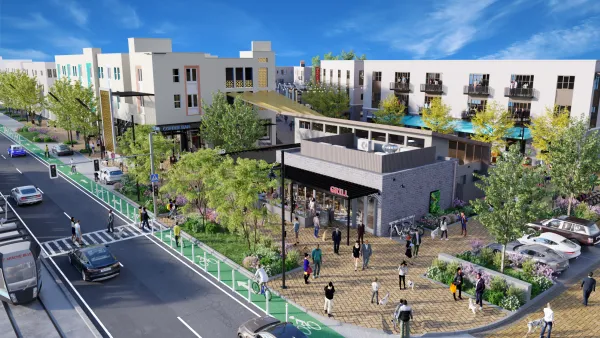
Tempe’s ‘Car-Free’ Planned Community: Miracle or Mirage?
Can a car-free community in an auto-oriented society truly achieve its goals?
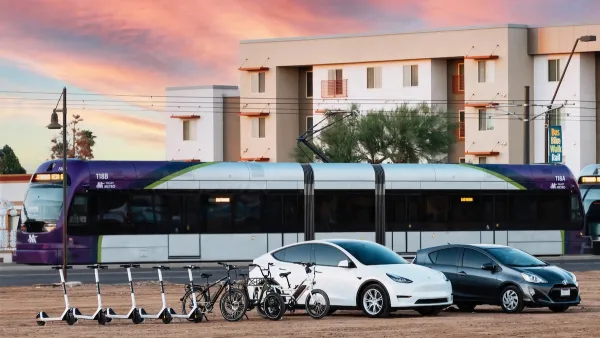
Arizona’s ‘Car-Free’ Community Takes Shape
Culdesac Tempe has been welcoming residents since last year.
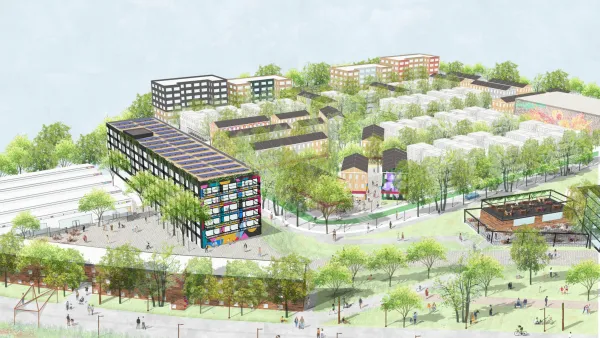
Tempe’s Car-Free Developers Headed to Atlanta
Culdesac, developer of a massive no-parking multi-family development in Arizona, is headed to Georgia.

Planetizen Federal Action Tracker
A weekly monitor of how Trump’s orders and actions are impacting planners and planning in America.

California plans to bury El Niño’s downpour
If the state plays its cards right, it may be able to store a billion acre-feet of El Niño’s water in aquifers.

Desperate measures: Advocates weigh draining Lake Powell to fill Colorado River
Draining the reservoir could reduce evaporation losses by a couple hundred thousand acre-feet.

US buildings threatened, destroyed by fires set to triple by 2060
Researchers found a high fire risk for socioeconomically vulnerable neighborhoods in the American West.

LA residents may be allowed to paint their own crosswalks
Councilwoman Katy Yaroslavsky put out a motion instructing the Los Angeles Department of Public Transportation to study the feasibility of allowing volunteers to paint crosswalks.

Dallas moves to overhaul its zoning code
The city's zoning reform will allow more multi-family and mixed-use developments.

FREE Course: Walkable City 1: Why Walkability?
After describing his path towards focusing on walkability as the essence of good planning, Jeff Speck marches through his five principal reasons for making more walkable places.
Reinventing Malls: Planning Alchemy—Turning Gray Fields Into Gold
The course focuses on the opportunities and imperatives that shape reinvention of mall sites.

City of Rosemead
Rutgers University, Edward J. Bloustein School of Planning and Public Policy
One Hundred Miles
Hunter College, City University of New York (CUNY)
The Architects Foundation
University of Cincinnati Online
City of Cambridge
Montrose County
The Pocatello Development Authority