A large development proposed for two parking lots near the city of Cincinnati's NFL stadium suddenly has a path forward.


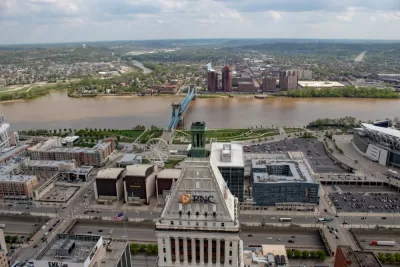
"A new deal to develop Cincinnati's riverfront is in the works, paving the way for future development on land closest to the Bengals Stadium, " report Sharon Coolidge and Scott Wartman.
Cincinnati City Councilman Greg Landsman is the source for the news about the controversial development of The Banks, which comprises two parking lots near Bengals Stadium. The project had been caught up in disagreements involving Cincinnati Mayor John Cranley. At the beginning of October, it looked like the project had stalled indefinitely in the City Council.
"The deal would address Cranley's concerns about parking the county guaranteed the Bengals. It would allow a proposed Banks music venue to go forward," according to the article.
"Cranley had accused the county of brokering a bad deal for taxpayers by promising the Bengals 3,200 surface parking spots for tailgating, which could have prevented development. County officials, for their part, said they brokered a deal good for taxpayers because it delayed expensive upgrades to the stadium and allowed for a music venue to be development at The Banks."
WCPO also reports more details of the deal between Mayor Cranley and Hamilton County Commissioner Todd Portune.
FULL STORY: Portune, Cranley broker riverfront development deal that paves way for development by Bengals stadium

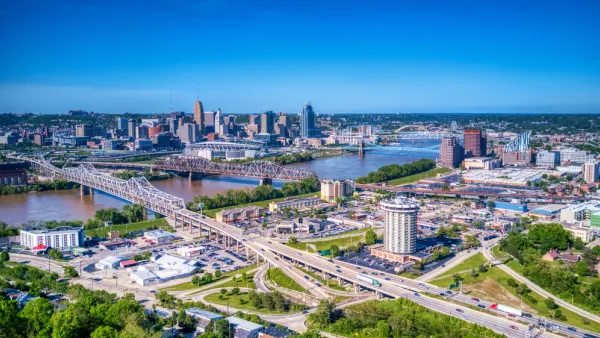
Major Waterfront Improvements Completing Construction South of Cincinnati
Developer Southbank Partners is putting the finishing touches on the second phase of the Riverfront Commons in Covington, Kentucky.
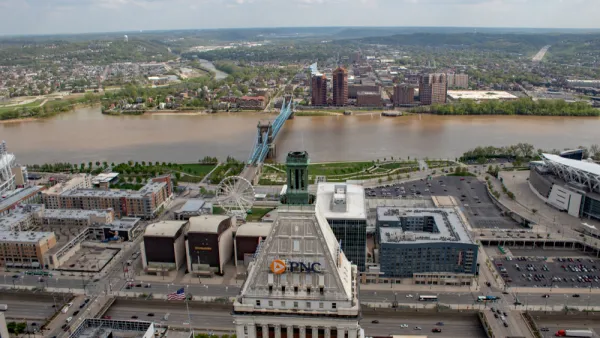
Open Container Laws Ditched in Cincinnati's The Banks Entertainment District
The trend toward the liberalization of outdoor drinking laws continues in Cincinnati. The turned is prevalent enough that this isn't even the first example of a "designated outdoor refreshment area" on the Ohio River.
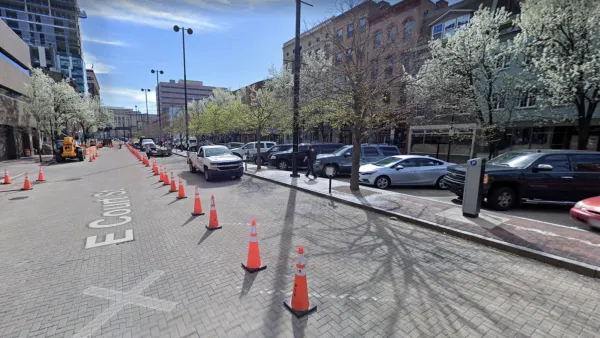
Major Street Redesign Planned in Cincinnati
The Court Street corridor in Cincinnati is getting a comprehensive makeover, with money approved last week by the City Council.

Planetizen Federal Action Tracker
A weekly monitor of how Trump’s orders and actions are impacting planners and planning in America.

The state-sanctioned urbicide of Austin
People don’t kill cities. Freeways do.

US to reduce Colorado River water deliveries to Mexico
A new Colorado Treaty amendment reduces Mexico’s Colorado River water allocation by 250,000 acre feet.

5 New England states march closer to 800 megawatt wind energy project
Securing federal approval for the project may be complicated under the Trump administration, which has historically been hostile towards domestic wind power.

Baltimore to break ground on $50 million Transit Priority Project
The project will bring faster bus trips, safer streets and better bike connections to Baltimore.

Airbnb launches $250 million 'last-dollar financing' housing accelerator, makes first investment in Austin
The company will put $6.4 million towards affordable housing development in Texas’ capital.

FREE Course: Walkable City 1: Why Walkability?
After describing his path towards focusing on walkability as the essence of good planning, Jeff Speck marches through his five principal reasons for making more walkable places.
Reinventing Malls: Planning Alchemy—Turning Gray Fields Into Gold
The course focuses on the opportunities and imperatives that shape reinvention of mall sites.

Eagle County Government
Harvard University Graduate School of Design
Nashville Planning Department
The Architects Foundation
University of Cincinnati Online
The Pocatello Development Authority
The Urban Renewal Agency of the City of Pocatello
Journal of the American Planning Association