With concerns about gentrification sometimes, and in some places, dominating the discussion, it can be difficult to advocate for revitalization.


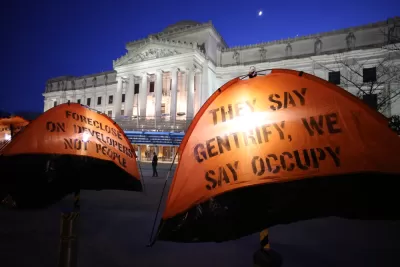
Miriam Axel-Lute provides a dispatch from the Reclaiming Vacant Properties 2019 conference, and specifically from a session titled "Advocating for Revitalization When All Anyone Wants to Talk About Is Gentrification"
According to Axel-Lute, this breakout session, packed with interested observers and participants, brainstormed ideas for messaging strategies in response to assumptions about gentrification and revitalization. After reviewing the substance of presentations by several panelists and the audience at the session, Axel-Lute lists a five strategies and a view sample messages for use in these challenging urban development scenarios.
More detail is included in the article, but here's the Axel-Lutes list of tips:
- "Make sure your market analysis is up-to-date, and share your reasons."
- "Don’t be dismissive of people’s concerns."
- "Remember that many kinds of fears get lumped under the term 'gentrification.'"
- "Acknowledge that community development hasn’t always gotten anti-displacement protections right in the past."
- "Involve residents in Planning."
And some sample messages, also with more details included in the article:
- 'Disinvestment displaces people too.'
- 'We’re serving people with neighborhood connections.'
- 'More LIHTC won’t necessarily help our renters.'
- 'We have space.'
- 'Stable neighborhoods are more protected against gentrification.'
FULL STORY: Talking About Revitalization When All Anyone Wants to Talk About Is Gentrification

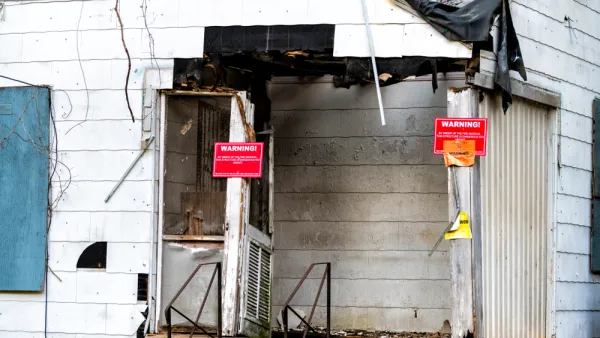
Vacant Properties Weren't Just a Foreclosure Crisis Problem
There are more vacant properties now than there were at the height of the foreclosure crisis in the United States, and many vacant properties are hanging around in growing cities with a shortage of affordable housing.
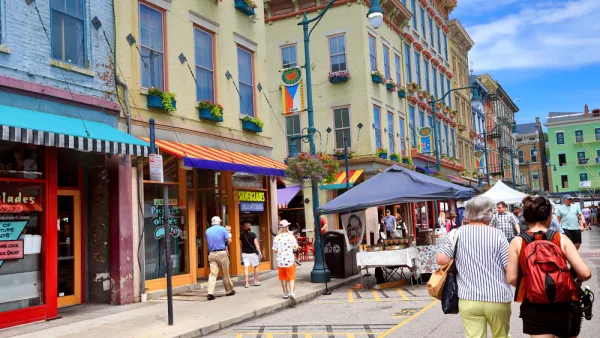
Black Residents Leaving Cincinnati's Fast Growing Urban Area
The housing market in the neighborhood of Over-the-Rhine is a 'segregation machine.'
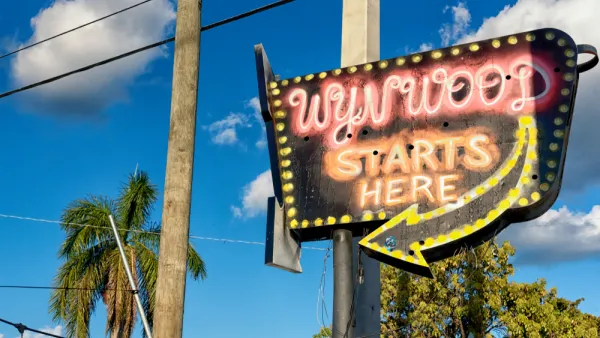
Revitalization Without Displacement: A New Model From Miami
Upzonings in working class neighborhoods usually provoke political opposition based on concerns about gentrification and displacement. But the new Wynwood Norte Neighborhood Revitalization District in Miami might have worked for a solution.

Planetizen Federal Action Tracker
A weekly monitor of how Trump’s orders and actions are impacting planners and planning in America.

The state-sanctioned urbicide of Austin
People don’t kill cities. Freeways do.

US to reduce Colorado River water deliveries to Mexico
A new Colorado Treaty amendment reduces Mexico’s Colorado River water allocation by 250,000 acre feet.

5 New England states march closer to 800 megawatt wind energy project
Securing federal approval for the project may be complicated under the Trump administration, which has historically been hostile towards domestic wind power.

Baltimore to break ground on $50 million Transit Priority Project
The project will bring faster bus trips, safer streets and better bike connections to Baltimore.

Airbnb launches $250 million 'last-dollar financing' housing accelerator, makes first investment in Austin
The company will put $6.4 million towards affordable housing development in Texas’ capital.

FREE Course: Walkable City 1: Why Walkability?
After describing his path towards focusing on walkability as the essence of good planning, Jeff Speck marches through his five principal reasons for making more walkable places.
Reinventing Malls: Planning Alchemy—Turning Gray Fields Into Gold
The course focuses on the opportunities and imperatives that shape reinvention of mall sites.

Eagle County Government
Harvard University Graduate School of Design
Nashville Planning Department
The Architects Foundation
University of Cincinnati Online
The Pocatello Development Authority
The Urban Renewal Agency of the City of Pocatello
Journal of the American Planning Association