Planned manufacturing districts (PMDs) are a way to protect valuable land, but their effectiveness as an economic development strategy has been inconsistent.



"The city of Chicago created [planned manufacturing districts] more than 30 years ago to preserve manufacturing jobs in the city during the height of the industry’s decline. And while PMDs can be a useful tool, the zoning designation alone has not shown itself to be the engine that can create enough jobs to reverse deindustrialization and revitalize communities suffering from decades of disinvestment," report Maria Ines Zamudio and Natalie Moore.
PMDs have slowed the loss of manufacturing jobs, but they face challenges, including shifts in the economy and development pressures. And levels of manufacturing in PMDs across Chicago have varied, with some districts thriving and seeing huge increases in overall jobs while others show minimal growth.
Community advocates argue that these districts also need to look at racial equity to ensure that jobs coming into these areas benefit residents of those communities. They also say that some of these industrial corridors need to step up regulations to provide better health and environmental protections.
Read the full story: Zoning Won't Save Manufacturing In Chicago

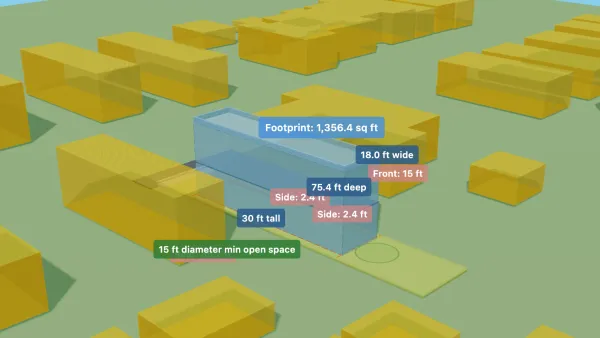
Interactive, 3D Chicago Zoning Map Lets You Visualize Potential Development
A new tool creates a visual model of potential development on Chicago lots based on the property’s specific zoning regulations.

‘Cut the Tape’ Report Takes Aim at Inefficiencies
A set of recommendations from the Chicago mayor’s office calls for streamlining city processes to stimulate more residential and commercial development.
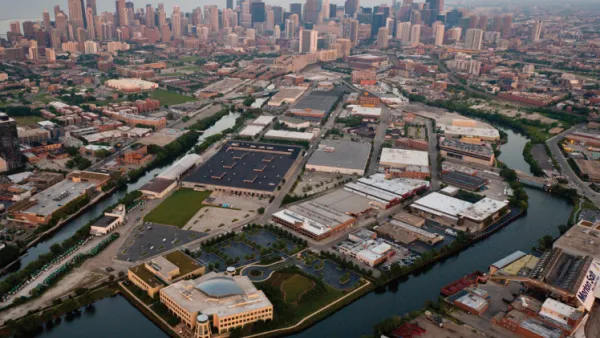
Chicago's New Approach to Air Quality Includes Zoning Changes
Improved air quality can help achieve equitable economic growth, according to Chicago's newly announced Air Quality Agenda.

Planetizen Federal Action Tracker
A weekly monitor of how Trump’s orders and actions are impacting planners and planning in America.

The state-sanctioned urbicide of Austin
People don’t kill cities. Freeways do.

US to reduce Colorado River water deliveries to Mexico
A new Colorado Treaty amendment reduces Mexico’s Colorado River water allocation by 250,000 acre feet.

Brightline West’s future may rely on $6 billion federal loan
The company has until Nov. 2 to make a $400 million equity investment into its proposed high-speed rail line.

LA Metro’s ultimatum: no extra buses for LA28 if federal funding isn’t imminently secured
If Metro does not provide additional buses, LA28 organizers will have to find a new way to manage Olympic traffic. LA28’s budget does not include a line item for transit.

Colorado’s Largest Data Center Could Rise Next to Homes — Without a Public Hearing
The proposed campus would consume 11 times the power of Denver International Airport; as it has across the country, opposition mounts.

FREE Course: Walkable City 1: Why Walkability?
After describing his path towards focusing on walkability as the essence of good planning, Jeff Speck marches through his five principal reasons for making more walkable places.
Reinventing Malls: Planning Alchemy—Turning Gray Fields Into Gold
The course focuses on the opportunities and imperatives that shape reinvention of mall sites.

Eagle County Government
Harvard University Graduate School of Design
Nashville Planning Department
The Architects Foundation
University of Cincinnati Online
The Pocatello Development Authority
The Urban Renewal Agency of the City of Pocatello
Journal of the American Planning Association