A new program that will incentivize scooter "juicers," the people who collect and charge electric scooters for a fee, to switch to green energy.


"The independent contractors who charge scooters for Lime [in Washington, D.C., and Montgomery County, Maryland] will now get incentives to use clean energy when 'juicing' their batteries," according to an article by Sarah Holder.
"Battery-charging, however, is far from the biggest carbon impact attributed to dockless mobility," adds Holder. But, still there is work to be done in several aspects of the supply and operations of electric scooters.
"Lime’s announcement comes on the heels of a report released in August by North Carolina State University, where researchers found that the supply chains that bring scooters to your neighborhoods and maintain them exact most of their carbon emissions toll."
The new charging program is designed to catalyze its community of "juicers" to make the switch. "To help chargers make the switch, Lime is partnering with Inspire, a company that provides Netflix-like subscriptions of 100-percent renewable energy streams to renters and homeowners," according to Holder. "Inspire will offer each Lime charger a $160 clean energy credit when they sign up, which will be deducted from their electric bill."
Read the full story: Lime Wants its Battery-Charging Gig Workers to Use Clean Energy

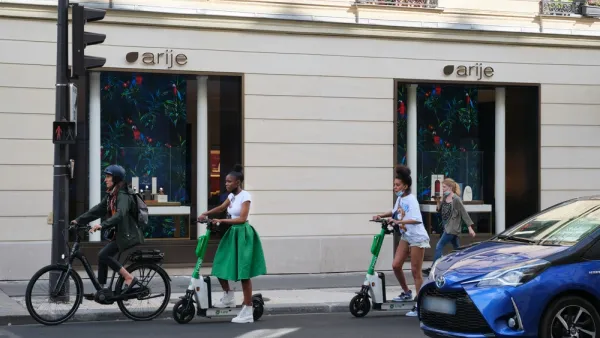
The Electric Scooter Rebound
The nascent electric scooter rental industry came close to total collapse during the pandemic, but riders are back in bigger numbers than ever and the companies hope to build momentum on growing concerns about the climate impacts of transportation.
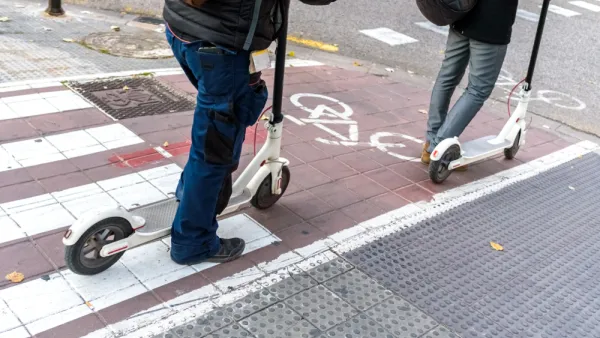
E-Scooter Helmet Laws Could Harm Ridership
Transportation experts warn that mandatory helmet laws for shared e-scooters could cripple the nascent industry and discourage casual rides.
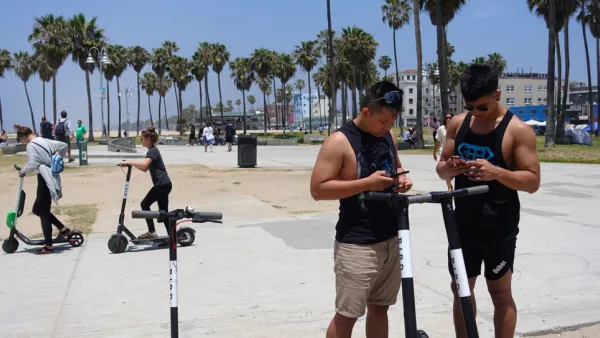
New York City Rolling Out First E-Scooters in the Spring
After years of outright banning them, New York City is finally giving e-scooters a chance to operate on its streets.

Planetizen Federal Action Tracker
A weekly monitor of how Trump’s orders and actions are impacting planners and planning in America.

The state-sanctioned urbicide of Austin
People don’t kill cities. Freeways do.

US to reduce Colorado River water deliveries to Mexico
A new Colorado Treaty amendment reduces Mexico’s Colorado River water allocation by 250,000 acre feet.

Nation's most wind-powered state turns to coal as data centers increase energy demand
For the first time in decades, Iowa has increased its generation of coal power.

NYC cools commuters with city's first rain garden above a bus stop
New York City officials say the plants in the rain garden can absorb 16 gallons of rainwater during heavy storms.

Brightline West’s future may rely on $6 billion federal loan
The company has until Nov. 2 to make a $400 million equity investment into its proposed high-speed rail line.

FREE Course: Walkable City 1: Why Walkability?
After describing his path towards focusing on walkability as the essence of good planning, Jeff Speck marches through his five principal reasons for making more walkable places.
Reinventing Malls: Planning Alchemy—Turning Gray Fields Into Gold
The course focuses on the opportunities and imperatives that shape reinvention of mall sites.

Greater Baltimore Committee
Eagle County Government
Harvard University Graduate School of Design
The Architects Foundation
University of Cincinnati Online
The Pocatello Development Authority
The Urban Renewal Agency of the City of Pocatello
Journal of the American Planning Association