The first deliverable in the process of updating the city of Detroit's zoning ordinance is publically available.



The Legislative Policy Division of the Detroit Planning Commission has taken the first steps toward overhauling the city's zoning ordinance, by releasing a "Zone Analytic"—i.e., an overview of the upcoming process and key recommendations that will guide the process.
Aaron Mondry breaks the news about the new Zone Analytic, describing the document as a "starting point for discussion' prior to drafting the new ordinance."
As noted by Mondry, the Zone Analytic calls for a new zoning ordinance that achieves four major goals:
- Making zoning simpler for everyone
- Neighborhood revival
- Corridor growth
- Job creation
According to Mondry, Detroit's new zoning ordinance is expected to adopt form-based regulations, while discarding some of the use-based regulations that have dominated zoning in Detroit in the past. "Underused, obsolete, and unnecessary overlay codes will be removed or reviewed," according to Mondry.
"Now that the first set of recommendations has been released, the Planning Commission will continue to take feedback from residents and stakeholders, who can do so through Zone Detroit’s website or at public meetings held before public comments close on November 1."
The city is working with consultant Code Studio to complete the project. Disclosure: the author of this post has worked with Code Studio professionally in the past.
Read the full story: Detroit outlines key recommendations for updating city’s zoning ordinance

Boston to Begin Zoning Code Update, Mayor Announces
It’s been nearly 60 years, but the city of Boston is finally ready to do a comprehensive rewrite of its zoning code.
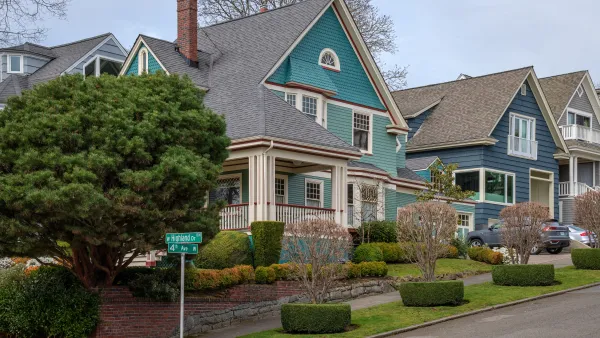
Opinion: Form-Based Codes Could Harm Seattle’s Housing Affordability
Form-based zoning codes can encourage mixed-use development and walkable neighborhoods, but focusing too much on aesthetic elements can drive up the cost of housing.

Maryland City Reveals Draft Form-Based Code
With the new zoning code, Frederick aims to shift away from use-based zoning regulations.

Planetizen Federal Action Tracker
A weekly monitor of how Trump’s orders and actions are impacting planners and planning in America.

California plans to bury El Niño’s downpour
If the state plays its cards right, it may be able to store a billion acre-feet of El Niño’s water in aquifers.

Desperate measures: Advocates weigh draining Lake Powell to fill Colorado River
Draining the reservoir could reduce evaporation losses by a couple hundred thousand acre-feet.

Mamdani’s pied-à-terre tax survives legal challenge
A panel of judges found that the plaintiffs failed to demonstrate injury as a result of New York City's implementation of the tax.

Eastern Nebraska is running out of electricity
Data centers and electrification are straining eastern Nebraska’s grid, throttling economic development.

Seattle passes record-breaking transit services expansion
Proposition 1 will double the city’s transit tax to add 95,000 more bus trips and preserve 180,000 bus trips annually.

FREE Course: Walkable City 1: Why Walkability?
After describing his path towards focusing on walkability as the essence of good planning, Jeff Speck marches through his five principal reasons for making more walkable places.
Reinventing Malls: Planning Alchemy—Turning Gray Fields Into Gold
The course focuses on the opportunities and imperatives that shape reinvention of mall sites.

City of Rosemead
Rutgers University, Edward J. Bloustein School of Planning and Public Policy
One Hundred Miles
University of Michigan School for Environment and Sustainability (SEAS)
Hunter College, City University of New York (CUNY)
The Architects Foundation
City of Cambridge
Montrose County
The Pocatello Development Authority