A new development promises to transform a gritty part of the Back Bay, according to this article from the Boston Globe.


Tim Logan reports: "A windblown, traffic-choked corner of the Back Bay could soon get a major makeover. But it’s going to take something that hasn’t happened here in four decades: a construction project above the Massachusetts Turnpike."
"Developers hope to start work early next year on a pair of towers that would be on a deck above the busy highway and Commuter Rail tracks, on the west side of Massachusetts Avenue between Boylston and Newbury streets," adds Logan. "The complicated project, seven years in the making, won a key vote from the Boston Planning & Development Agency on Thursday and now heads to the final stages of planning with state transportation officials."
The development of the two towers will also include significant investments in the public realm, like a two-story public plaza, a new entrance to the MBTA’s Hynes Convention Center Station, and new bike and bus lanes. A lot more detail and a rendering of the planned project can be found at the source article.
Read the full story: For the first time in four decades, new buildings could rise over the Mass. Pike

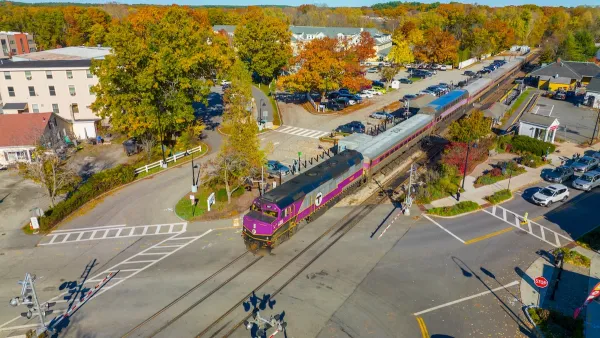
Massachusetts TOD Law Yielding Results
While some cities are fighting the state’s push to increase density near transit, others are already breaking ground on multifamily projects that will bring hundreds of new housing units online.
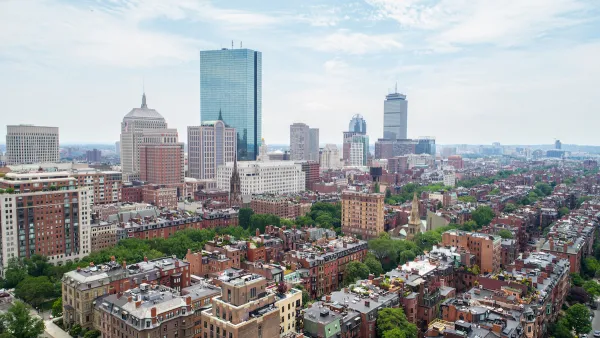
Boston Gets a New Planning Department
After 67 years since its formation, the Boston Planning and Development Agency is no more.
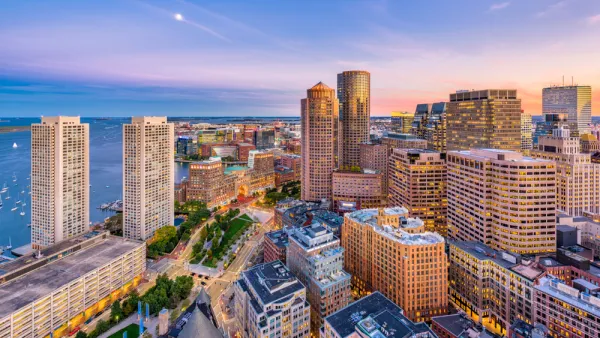
Boston Moves Zoning Reform Forward
The ‘Squares + Streets’ plan creates form-based zoning templates for neighborhoods that promote mixed use and denser housing near transit.

Planetizen Federal Action Tracker
A weekly monitor of how Trump’s orders and actions are impacting planners and planning in America.

California plans to bury El Niño’s downpour
If the state plays its cards right, it may be able to store a billion acre-feet of El Niño’s water in aquifers.

Desperate measures: Advocates weigh draining Lake Powell to fill Colorado River
Draining the reservoir could reduce evaporation losses by a couple hundred thousand acre-feet.

California city breaks ground on transit connector
The project includes three mobility hubs and a pedestrian bridge.

After public outcry, Massachusetts city releases housing development tracker
Cambridge’s tracker currently shows 250 housing projects in various stages of development.

40 years after approval, Chicago breaks ground on new park
The park honors Jean Baptiste Point du Sable, the city’s first permanent non-native settler.

FREE Course: Walkable City 1: Why Walkability?
After describing his path towards focusing on walkability as the essence of good planning, Jeff Speck marches through his five principal reasons for making more walkable places.
Reinventing Malls: Planning Alchemy—Turning Gray Fields Into Gold
The course focuses on the opportunities and imperatives that shape reinvention of mall sites.

City of Rosemead
Rutgers University, Edward J. Bloustein School of Planning and Public Policy
One Hundred Miles
Hunter College, City University of New York (CUNY)
The Architects Foundation
University of Cincinnati Online
City of Cambridge
Montrose County
The Pocatello Development Authority