In July, a local nonprofit closed down an entire street in the Ohio City neighborhood of Cleveland for a placemaking experiment that had to be partially dismantled before the three-month duration of the program was complete.


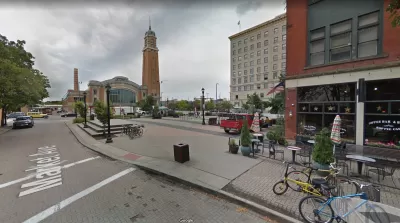
"The city may be having second thoughts about the temporary closure of Market Avenue in Ohio City, which has enabled the one-block street to function over the past month as a popular, tree-shaded park filled with colorful café tables and chairs," reports Steven Litt.
Safety concerns, however, led the city to remove the street furniture earlier this month. The nonprofit Ohio City Inc. had been granted a permit to close the street for three months. Apparently however, some city officials say that the street furniture was not part of the permit. "The city has asked Ohio City to present a safety plan showing how the furniture would be handled in case of an emergency," according to Litt.
"Ohio City pursued the street closure as a way to provide a new outdoor amenity for a rapidly growing neighborhood attracting new residents around bustling restaurants and shops near the West Side Market, the area’s traditional anchor," explains Litt, who also references a similar effort in the nearby city of Euclid, launched in 2018.
Read the full story: Ohio City’s Market Avenue street furniture removed as Cleveland rethinks park plan


Los Angeles to Test Road Closure Through Scenic Griffith Park
After a driver killed a cyclist on Griffith Park Drive in April, the city of Los Angeles is studying safety upgrades on streets in its famous park. The L.A. Times says the changes are part of a growing movement.
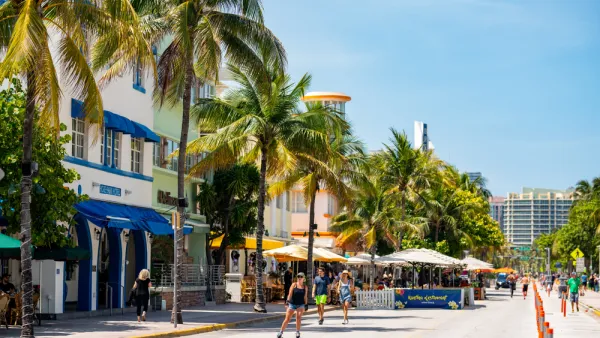
Cars Retake Their Place on Ocean Drive in Miami Beach
Ocean Drive in South Beach is the site of an ongoing pilot project in making space for pedestrians and businesses in space previously devoted to cars. Advocates and some local politicians don't like the direction that the experiment is headed.
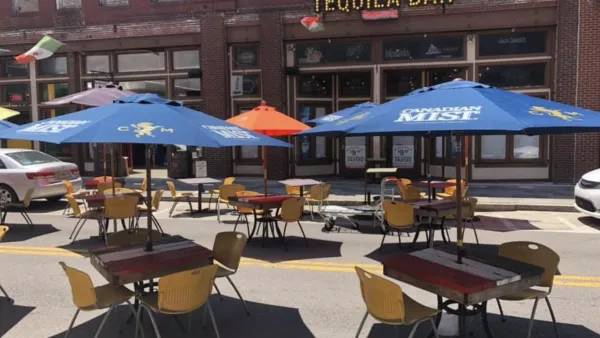
Tampa Closes Streets to Open Outdoor Space to Restaurants
A pilot project in Tampa is closing select streets to cars to allow more space for dine-in restaurant service.

Planetizen Federal Action Tracker
A weekly monitor of how Trump’s orders and actions are impacting planners and planning in America.

California plans to bury El Niño’s downpour
If the state plays its cards right, it may be able to store a billion acre-feet of El Niño’s water in aquifers.

Desperate measures: Advocates weigh draining Lake Powell to fill Colorado River
Draining the reservoir could reduce evaporation losses by a couple hundred thousand acre-feet.

California city breaks ground on transit connector
The project includes three mobility hubs and a pedestrian bridge.

After public outcry, Massachusetts city releases housing development tracker
Cambridge’s tracker currently shows 250 housing projects in various stages of development.

40 years after approval, Chicago breaks ground on new park
The park honors Jean Baptiste Point du Sable, the city’s first permanent non-native settler.

FREE Course: Walkable City 1: Why Walkability?
After describing his path towards focusing on walkability as the essence of good planning, Jeff Speck marches through his five principal reasons for making more walkable places.
Reinventing Malls: Planning Alchemy—Turning Gray Fields Into Gold
The course focuses on the opportunities and imperatives that shape reinvention of mall sites.

City of Rosemead
Rutgers University, Edward J. Bloustein School of Planning and Public Policy
One Hundred Miles
Hunter College, City University of New York (CUNY)
The Architects Foundation
University of Cincinnati Online
City of Cambridge
Montrose County
The Pocatello Development Authority