Peter Parker used to struggle to pay the rent, and many people can relate to the superhero's precarious housing situation over the years.



Nolan Gray writes about the housing struggles of Spider-Man's Peter Parker. "Repeatedly, Peter encounters the issue of housing affordability, a recurring challenge for him and Aunt May in the comics and a key issue in the Sam Rami films from 2002 to 2007."
Aunt May struggles with a mortgage she cannot pay and later is evicted. At various times in the Spider-Man video games and films, Parker is also either facing eviction or living in a single-room occupancy. "An ongoing tension between Parker and his affable immigrant landlord over late rent and poor maintenance extends through Spider-Man 3 (2007), an awkward relationship that should be familiar to most renters," says Gray.
More recently, Gray notes, Parker has gone from the everyman urban dweller to someone for whom money is not an issue. "Is a Peter Parker who doesn’t struggle with urban problems still Spider-Man?" he asks. While Gray believes the franchise will survive as it explores other interesting and timely themes, he still laments the fact that Peter Parker is not grappling with the same housing affordability issues that are challenging so many Americans.
Read the full story: The Low-Key Housing Politics of Spider-Man

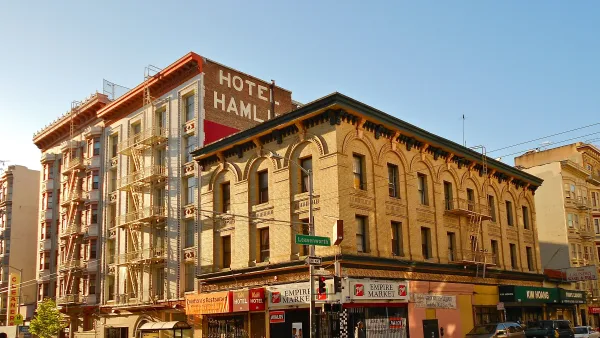
First-of-its-kind ‘ROOM Act’ Would Slash Restrictions on SROs, Co-living
The Institute for Justice developed model legislation that would reduce or eliminate zoning and building code barriers to low-cost, small and shared housing units.
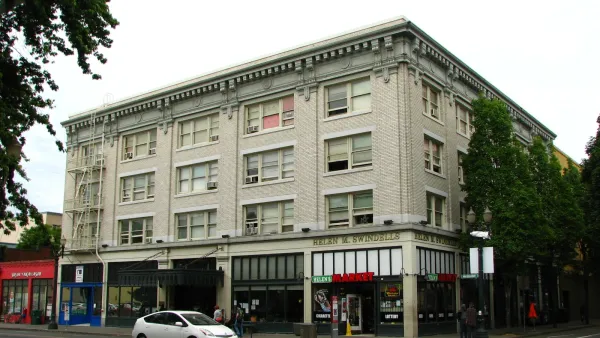
The Return of Rooming Houses
Popular in the early 20th century, the rooming house fell out of favor, with the type now banned in many cities. With no end to the housing crisis in sight, cities are rethinking their regulation of this affordable housing option.

SROs Are Getting People Off the Streets in Portland
Single-room-occupancy hotels are providing much-needed affordable housing for the city’s most vulnerable residents.

Planetizen Federal Action Tracker
A weekly monitor of how Trump’s orders and actions are impacting planners and planning in America.

California plans to bury El Niño’s downpour
If the state plays its cards right, it may be able to store a billion acre-feet of El Niño’s water in aquifers.

Desperate measures: Advocates weigh draining Lake Powell to fill Colorado River
Draining the reservoir could reduce evaporation losses by a couple hundred thousand acre-feet.

California city breaks ground on transit connector
The project includes three mobility hubs and a pedestrian bridge.

After public outcry, Massachusetts city releases housing development tracker
Cambridge’s tracker currently shows 250 housing projects in various stages of development.

40 years after approval, Chicago breaks ground on new park
The park honors Jean Baptiste Point du Sable, the city’s first permanent non-native settler.

FREE Course: Walkable City 1: Why Walkability?
After describing his path towards focusing on walkability as the essence of good planning, Jeff Speck marches through his five principal reasons for making more walkable places.
Reinventing Malls: Planning Alchemy—Turning Gray Fields Into Gold
The course focuses on the opportunities and imperatives that shape reinvention of mall sites.

City of Rosemead
Rutgers University, Edward J. Bloustein School of Planning and Public Policy
One Hundred Miles
Hunter College, City University of New York (CUNY)
The Architects Foundation
University of Cincinnati Online
City of Cambridge
Montrose County
The Pocatello Development Authority